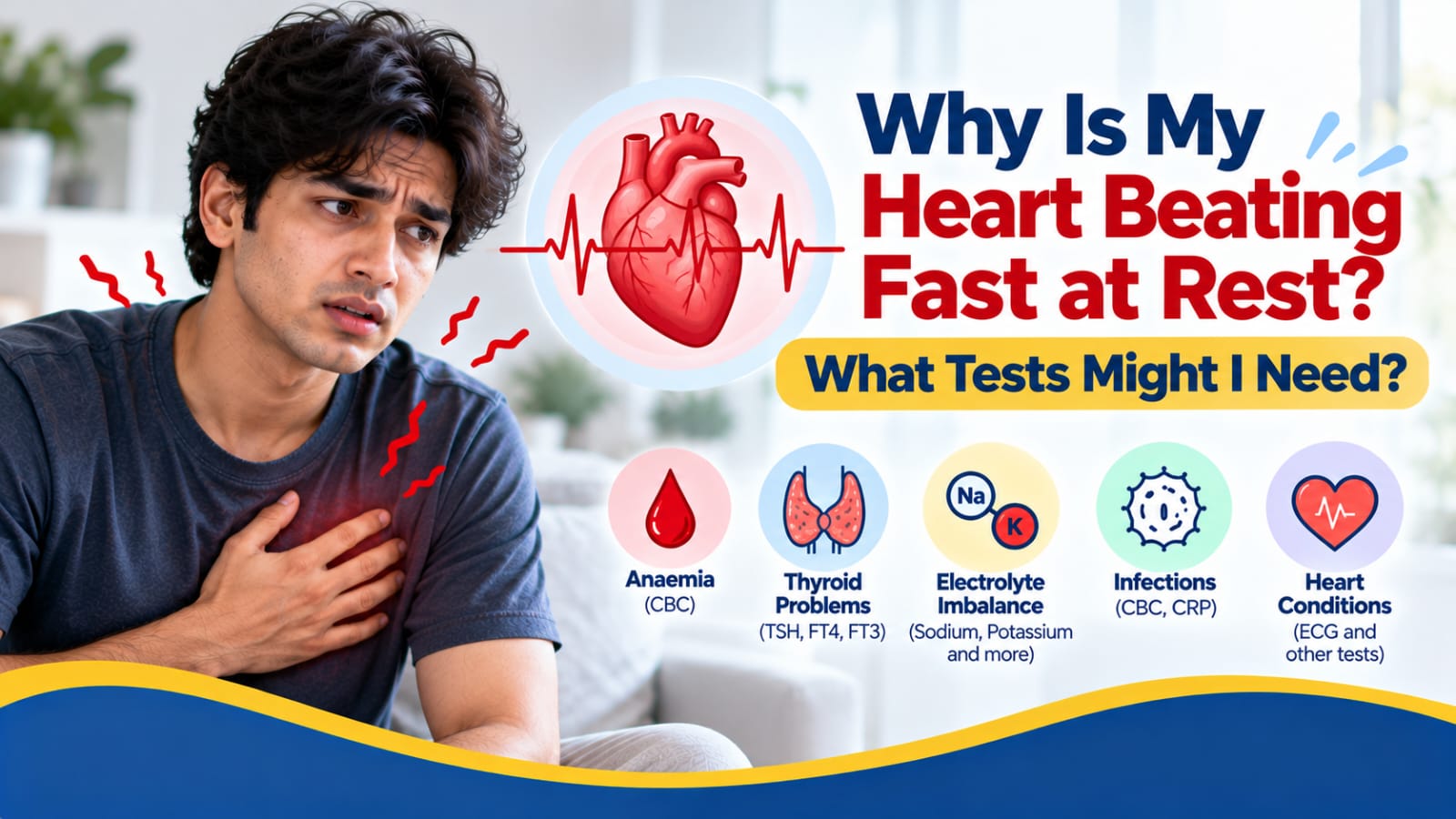
Have you ever been sitting quietly or lying in bed when you suddenly notice your heart beating faster than usual? Perhaps your heart feels like it is racing, pounding in your chest, or skipping beats even though you haven’t exercised.
A fast heartbeat at rest can feel worrying, especially when there is no obvious reason. Sometimes, it may be related to stress, anxiety, caffeine, dehydration, or a lack of sleep. In other cases, it can be associated with anaemia, thyroid problems, infections, abnormal heart rhythms, or other medical conditions.
But how fast is too fast? And which blood tests or other investigations can help identify the cause?
For most adults, a typical resting heart rate is around 60–100 beats per minute (bpm). A resting heart rate above 100 bpm is generally considered tachycardia, although its significance depends on the circumstances and the underlying cause.
Let’s explore the possible reasons for a fast heartbeat at rest, the tests your doctor may recommend, and when you should seek medical attention.
What Does It Mean When Your Heart Beats Fast at Rest?
Your heart rate naturally changes throughout the day. It increases during exercise, strong emotions, fever, and other activities that increase your body’s demand for oxygen.
When you are resting, your heart usually beats more slowly because your body’s demand for oxygen is lower.
For most adults, a resting heart rate between 60 and 100 bpm is considered typical. However, fitness levels, medications, age, and individual circumstances can influence this range.
A heart rate above 100 bpm while resting is called tachycardia. It does not automatically mean you have a heart condition. For example, your heart rate may temporarily rise when you are anxious, dehydrated, or unwell.
What matters is whether the fast heartbeat persists, occurs repeatedly without an obvious explanation, feels irregular, or is accompanied by other symptoms.
What Causes a Fast Heartbeat at Rest?
Several factors can cause your heart to beat faster than usual. Some are temporary, while others may require medical evaluation.
1. Stress and Anxiety
When you experience stress, your body releases hormones such as adrenaline. These hormones prepare your body to respond to a perceived threat and can increase your heart rate.
Anxiety and panic attacks can also cause palpitations, sweating, trembling, and a feeling of breathlessness.
However, a fast heartbeat should not automatically be blamed on anxiety, particularly if it occurs repeatedly without an obvious trigger or is accompanied by concerning symptoms.
2. Dehydration
Your body needs sufficient fluids to maintain normal blood circulation.
When you become dehydrated, your circulating blood volume may decrease. Your heart may compensate by beating faster to maintain adequate circulation.
Dehydration can occur after heavy sweating, prolonged exposure to heat, vomiting, diarrhoea, or inadequate fluid intake.
If you have a medical condition that requires fluid restriction, follow your healthcare professional’s advice rather than increasing your fluid intake on your own.
3. Anaemia or Low Haemoglobin
Anaemia occurs when your blood does not have enough healthy red blood cells or haemoglobin to carry oxygen effectively.
When oxygen delivery is reduced, your heart may need to work harder to supply your body’s tissues.
Other possible symptoms include:
- Persistent tiredness or weakness.
- Pale skin.
- Dizziness or light-headedness.
- Shortness of breath during activity.
- Headaches or reduced exercise tolerance.
Iron deficiency is one possible cause of anaemia, but vitamin B12 deficiency, folate deficiency, blood loss, and certain chronic conditions can also contribute.
A complete blood count (CBC) can help identify anaemia and determine whether further tests are needed.
4. Thyroid Problems
Your thyroid gland produces hormones that help regulate metabolism and many bodily functions, including heart rate.
An overactive thyroid, known as hyperthyroidism, can cause a persistently fast heartbeat or palpitations.
Other symptoms may include:
- Unexplained weight loss.
- Increased sweating or heat intolerance.
- Shaking hands.
- Difficulty sleeping.
- Frequent bowel movements.
- Feeling unusually restless or anxious.
A thyroid function test, usually starting with thyroid-stimulating hormone (TSH) and sometimes including free T4, can help investigate a suspected thyroid problem.
5. Fever or Infection
When your body is fighting an infection, your heart rate may increase. Fever can raise the body’s demand for oxygen and energy, contributing to a faster heartbeat.
Depending on your symptoms, your doctor may recommend a CBC, inflammatory markers, or other investigations to look for an underlying infection.
A fast heartbeat accompanied by high fever, confusion, severe weakness, difficulty breathing, or other signs of serious illness requires urgent medical assessment.
6. Caffeine, Nicotine, and Certain Medicines
Stimulants can increase heart rate or trigger palpitations in some people.
Possible triggers include:
- Coffee and energy drinks.
- Nicotine from smoking or other tobacco products.
- Some cold and decongestant medicines.
- Certain asthma medicines.
- Some prescription medications and supplements.
The effect varies from person to person. If your symptoms began after starting a medicine or changing your caffeine intake, discuss this with your doctor.
Do not stop prescribed medication without medical advice.
7. Abnormal Heart Rhythms
Sometimes, a fast heartbeat is caused by an abnormal electrical rhythm in the heart, known as an arrhythmia.
One example is supraventricular tachycardia (SVT), which can cause episodes of a suddenly rapid heartbeat. Other rhythm disturbances may cause a fast or irregular pulse.
Some arrhythmias begin and end abruptly, while others may persist.
An electrocardiogram (ECG) is an important initial test for assessing heart rhythm. If episodes occur intermittently, a short ECG may not capture them, and your doctor may recommend longer-term heart rhythm monitoring.
Which Tests Might I Need for a Fast Heartbeat?
There is no single blood test that can identify every cause of a fast heartbeat. The right investigations depend on your symptoms, heart rate, medical history, medications, and findings during examination.
Your doctor may recommend one or more of the following tests.
1. Complete Blood Count (CBC)
A CBC measures components of your blood, including haemoglobin, red blood cells, white blood cells, and platelets.
It can help identify anaemia, which may contribute to a fast heartbeat, weakness, and breathlessness. Changes in white blood cells may also provide clues when an infection is suspected.
If your doctor suspects iron deficiency, additional tests such as serum ferritin or other iron studies may be recommended.
What it helps investigate: Anaemia and certain blood changes that may accompany infection or other conditions.
2. Thyroid Function Test
Thyroid function testing helps determine whether your thyroid gland is producing an appropriate amount of hormone.
The initial investigation often includes TSH, with free T4 and sometimes other tests added when indicated.
This test may be particularly useful if your fast heartbeat occurs alongside unexplained weight loss, excessive sweating, tremors, or heat intolerance.
What it helps investigate: Thyroid disorders that may contribute to a rapid heart rate.
3. Electrolyte and Kidney Function Tests
Electrolytes such as potassium, sodium, and calcium help support normal nerve and muscle function, including the electrical activity of the heart.
Significant electrolyte disturbances may contribute to palpitations or abnormal heart rhythms. Kidney function testing can help assess whether a kidney-related problem may be affecting fluid or electrolyte balance.
Depending on your symptoms, your doctor may request electrolyte measurements, creatinine, estimated glomerular filtration rate (eGFR), and sometimes magnesium.
What they help investigate: Electrolyte disturbances, dehydration-related concerns, and certain kidney problems.
4. Blood Glucose Test
Blood glucose testing may be appropriate if your symptoms suggest a problem with blood sugar regulation.
Low blood glucose can trigger the release of adrenaline, causing symptoms such as a racing heart, sweating, trembling, and hunger. High blood glucose and diabetes may also be relevant to your overall health assessment.
Depending on the situation, your doctor may recommend a blood glucose test or HbA1c, which estimates average blood glucose over approximately two to three months.
What it helps investigate: Blood sugar abnormalities that may contribute to symptoms or be relevant to your health.
5. Electrocardiogram (ECG)
An ECG is not a blood test. It records the electrical activity of your heart and can help identify a fast heart rate, certain abnormal rhythms, and other electrical changes.
It is often one of the first investigations when someone experiences unexplained palpitations or a persistently fast resting heart rate.
An ECG may be normal if the episode has already ended. If your symptoms come and go, your doctor may recommend a Holter monitor or another form of ambulatory heart rhythm monitoring.
What it helps investigate: Whether your heartbeat is unusually fast, irregular, or associated with a detectable rhythm disturbance.
6. Additional Tests When Necessary
Depending on your symptoms and initial findings, your doctor may recommend other investigations.
These may include:
- Holter monitoring: Records heart rhythm over an extended period to help capture intermittent episodes.
- Echocardiography: Uses ultrasound to assess the structure and function of the heart when indicated.
- Troponin blood test: May be used when a heart attack or heart muscle injury is suspected.
- Pregnancy test: May be appropriate in some circumstances because pregnancy can influence heart rate and the interpretation of symptoms.
- Other targeted tests: May be required if your medical history suggests a specific underlying condition.
Not everyone with a fast heartbeat needs all these investigations. Testing should be guided by a healthcare professional.
When Should You Worry About a Fast Heartbeat?
A fast heartbeat can sometimes be temporary, but certain symptoms should never be ignored.
Seek emergency medical care if a fast or racing heartbeat occurs with:
- Chest pain, pressure, or tightness.
- Severe shortness of breath.
- Fainting or feeling as though you are about to faint.
- Severe dizziness, confusion, or sudden marked weakness.
Do not wait for a blood test or routine appointment if these warning signs occur.
You should also arrange a medical assessment if your resting heart rate repeatedly exceeds 100 bpm without an obvious explanation, your palpitations keep returning, or you notice a new irregular heartbeat.
A persistently very fast heart rate, particularly with weakness, fever, or feeling seriously unwell, also needs prompt assessment.
What Can You Do When Your Heart Starts Beating Fast at Rest?
If you notice a racing heartbeat but have no emergency warning signs, the following steps may help while you assess the situation:
- Stop what you are doing and sit or lie down safely. Avoid exertion while the symptoms continue.
- Rest quietly for several minutes. If you check your pulse, measure it after resting rather than immediately after walking or climbing stairs.
- Record your heart rate and symptoms. Note when the episode began, how long it lasted, and whether the heartbeat felt regular or irregular.
- Consider recent triggers. Caffeine, nicotine, alcohol, poor sleep, stress, fever, and dehydration may be relevant.
- Drink water if dehydration is possible and fluids are permitted for you. Do not force fluids if you have been advised to restrict them.
- Arrange medical advice if symptoms persist or recur. Do not rely on a phone or smartwatch reading alone to determine the cause.
If emergency warning signs develop, seek emergency care rather than trying home remedies or waiting for your pulse to return to normal.
Frequently Asked Questions
1. Is a heart rate of 100 bpm at rest normal?
For most adults, 60–100 bpm is the usual resting range. A reading of exactly 100 bpm is at the upper end of this range, but interpretation depends on your circumstances and symptoms. A repeatedly elevated resting rate should be discussed with a healthcare professional.
2. Which blood test is best for a fast heartbeat?
There is no single best test for everyone. Depending on the suspected cause, your doctor may recommend a CBC, thyroid function tests, electrolytes, kidney function tests, or blood glucose testing. An ECG is also important because blood tests alone cannot diagnose many heart rhythm problems.
3. Can low haemoglobin cause a fast heartbeat?
Yes. Anaemia can reduce the blood’s oxygen-carrying capacity, causing the heart to work harder. A CBC can help assess haemoglobin levels, and additional tests may be needed to identify the cause of anaemia.
4. Can thyroid problems cause palpitations?
Yes. An overactive thyroid can cause a rapid heartbeat, palpitations, tremors, sweating, and unexplained weight loss. Thyroid function testing can help investigate whether a thyroid disorder is contributing to your symptoms.
5. Can anxiety cause a fast heartbeat even when I’m resting?
Yes. Anxiety can activate the body’s stress response and increase heart rate even when you are sitting or lying down. However, recurring or unexplained palpitations should not automatically be attributed to anxiety without considering other possible causes.
6. Should I get a blood test if my heart beats fast at night?
If you repeatedly experience a racing heartbeat at night, consult a healthcare professional. Depending on your symptoms, they may recommend blood tests, an ECG, or longer-term heart rhythm monitoring. Seek emergency care if the episode occurs with chest pain, severe breathlessness, or fainting.
Get the Right Tests for Your Symptoms
A fast heartbeat at rest can have many causes, ranging from temporary triggers such as stress and caffeine to conditions such as anaemia, thyroid disorders, electrolyte disturbances, or abnormal heart rhythms.
Blood tests can help investigate some underlying causes, but they are only one part of the assessment. An ECG and, in some cases, additional heart investigations may be necessary.
At CPL Diagnostics, laboratory testing can support the investigation of health concerns when recommended by your healthcare professional. If you are experiencing recurring palpitations or an unexplained fast resting heart rate, consult a doctor to determine which tests are appropriate.
Remember: Identifying the cause is more important than simply trying to lower your heart rate. Seek urgent medical attention if a racing heartbeat is accompanied by chest pain, severe breathlessness, or fainting.
Medical disclaimer: This article is for general educational purposes only and is not a substitute for professional medical advice, diagnosis, or treatment.