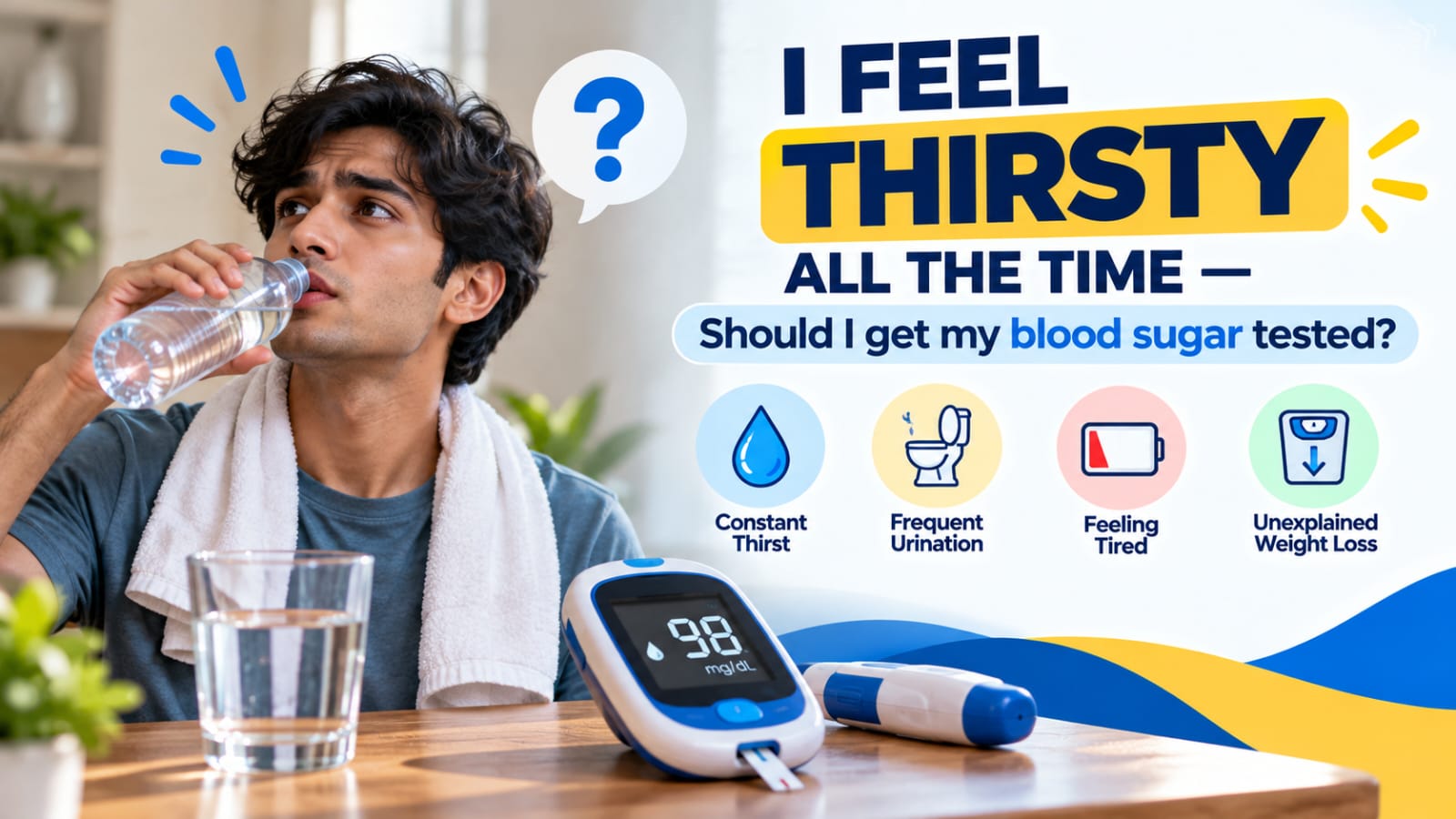
Feeling thirsty after a workout, on a hot day, or after eating a salty meal is normal. But what if you feel thirsty throughout the day, even after drinking plenty of water?
Persistent thirst can sometimes be a sign that something else is happening in your body. One possible cause is high blood sugar, which may be associated with diabetes. However, dehydration, certain medicines, and other health conditions can also make you feel unusually thirsty.
So, how do you know when it is time to get your blood sugar checked? Let’s understand the possible causes, the tests that may help, and when you should seek medical advice.
Why Am I Feeling Thirsty All the Time?
Thirst is your body’s natural way of telling you that it needs fluids. In some situations, the reason is straightforward. In others, persistent thirst may need further investigation.
Common causes include:
- Dehydration: Not drinking enough water, sweating heavily, fever, vomiting, or diarrhoea can cause fluid loss.
- Hot weather: High temperatures and increased sweating can make you feel thirsty more frequently.
- Salty or spicy foods: Eating these foods may temporarily increase your need for water.
- Caffeine and alcohol: These can contribute to fluid loss or make it harder to maintain normal hydration.
- Dry mouth: Certain medicines and mouth-related problems can create a dry sensation that feels like thirst.
- High blood sugar: When blood glucose levels become too high, the body may try to remove excess glucose through urine, increasing urination and fluid loss.
If your thirst continues despite drinking enough water, it is worth speaking with a healthcare professional to identify the cause.
Can Constant Thirst Be a Sign of Diabetes?
Yes. Increased thirst, also called polydipsia, is a recognised symptom of diabetes. It often occurs alongside frequent urination because the body tries to eliminate excess glucose through urine.
Other symptoms that may occur with diabetes include:
- Urinating more frequently than usual, including at night
- Feeling unusually tired or weak
- Blurred vision
- Feeling hungrier than usual
- Losing weight without trying
- Cuts or wounds that take longer to heal
Not everyone with diabetes experiences all these symptoms. Some people may have only mild symptoms, while others may notice changes more suddenly.
Constant thirst does not automatically mean you have diabetes. However, if it occurs with frequent urination, unexplained weight loss, or unusual fatigue, arrange a medical assessment promptly.
Should I Get My Blood Sugar Tested?
If you are constantly thirsty without an obvious explanation, getting your blood sugar evaluated may be appropriate. A doctor can consider your symptoms, medical history, medicines, and other risk factors before recommending the right test.
The following blood tests may be used to investigate high blood sugar and diabetes.
1. Fasting Blood Glucose Test
This test measures your blood glucose level after you have not eaten for at least eight hours. It is commonly used to screen for and help diagnose diabetes and prediabetes.
Your healthcare professional or laboratory will explain the preparation required before the test.
2. HbA1c Test
The HbA1c test measures the percentage of haemoglobin in red blood cells that has glucose attached to it. It provides an estimate of your average blood sugar over approximately the previous two to three months.
Unlike a fasting blood glucose test, an HbA1c test generally does not require fasting. However, certain conditions, including some forms of anaemia and blood disorders, can affect its accuracy.
3. Random Blood Glucose Test
This test measures blood glucose at a particular time, regardless of when you last ate.
A doctor may use it when someone has symptoms suggestive of diabetes and a fasting test is not practical. In a person with classic symptoms, a sufficiently high laboratory blood glucose result may help establish the diagnosis.
Important: A home glucose meter can help monitor blood sugar, but a reading from the device alone should not be used to diagnose diabetes. Your doctor may recommend laboratory testing or repeat testing to confirm a result.
What Do Blood Sugar Test Results Mean?
For non-pregnant adults, commonly used diagnostic thresholds include the following:
| Test | Normal Range | Prediabetes Range | Diabetes Range |
|---|---|---|---|
| Fasting blood glucose | 99 mg/dL or below | 100–125 mg/dL | 126 mg/dL or above |
| HbA1c | Below 5.7% | 5.7–6.4% | 6.5% or above |
These are general diagnostic thresholds, not a diagnosis based on symptoms alone. Results must be interpreted in context, and diabetes is usually confirmed with repeat testing unless the clinical situation clearly establishes the diagnosis. Different considerations apply during pregnancy.
If your results fall outside the normal range, your healthcare professional can explain what they mean and whether additional testing is needed.
What If My Blood Sugar Results Are Normal but I Am Still Thirsty?
A normal blood sugar result does not explain every possible cause of persistent thirst.
Depending on your symptoms and medical history, a healthcare professional may investigate other possibilities, such as:
- Dehydration: Particularly after sweating, fever, vomiting, or diarrhoea.
- Medication effects: Some medicines can cause dry mouth or affect fluid balance.
- Kidney-related conditions: Certain conditions can affect how the kidneys regulate water and urine.
- Dry mouth: Oral health problems or other conditions may cause a persistent dry sensation.
- Other medical conditions: Less common hormonal or metabolic problems can also affect thirst and urination.
Your doctor may recommend additional tests, such as kidney function or electrolyte tests, depending on the findings. You may not need all these tests; the appropriate investigations depend on the suspected cause.
When Should I See a Doctor for Constant Thirst?
Consider arranging a medical appointment if:
- You remain thirsty despite drinking enough fluids for several days.
- You are urinating more frequently than usual.
- You feel unusually tired or have blurred vision.
- You are losing weight without trying.
- Your thirst is persistent, unexplained, or interfering with daily activities.
Seek urgent medical attention if excessive thirst occurs with vomiting, abdominal pain, deep or rapid breathing, fruity-smelling breath, confusion, or severe weakness. These can be warning signs of a serious blood sugar-related emergency, particularly when diabetes is undiagnosed.
Do not wait for a routine test appointment if severe symptoms develop.
How Can I Prepare for a Blood Sugar Test?
Preparation depends on the test your doctor recommends.
- Fasting blood glucose: Usually requires at least eight hours without food or caloric drinks. Plain water is generally permitted.
- HbA1c: Usually does not require fasting.
- Random blood glucose: Does not require fasting.
Follow the instructions provided by your healthcare professional or laboratory, particularly if other tests are being performed at the same time. Do not stop prescribed medication unless your doctor tells you to.
Frequently Asked Questions
1. Does Constant Thirst Always Mean Diabetes?
No. Persistent thirst can be caused by dehydration, heat, certain foods, medicines, dry mouth, and other medical conditions. Diabetes is one possible cause, particularly when thirst occurs alongside frequent urination.
2. Can I Have Diabetes Without Feeling Thirsty?
Yes. Some people with diabetes experience few or no noticeable symptoms. Testing may be recommended based on risk factors, medical history, or other symptoms.
3. Should I Get an HbA1c Test or a Fasting Blood Sugar Test?
Both tests can help assess blood sugar, but they measure different things. Fasting blood glucose measures your level at a particular time, while HbA1c estimates your average over the previous two to three months. Your healthcare professional can help determine which test is appropriate.
4. Can Drinking More Water Solve Constant Thirst?
If thirst is caused by mild dehydration, drinking water may help. However, if you remain thirsty despite adequate fluid intake, simply drinking more water may not address the underlying cause. Seek medical advice if the symptom persists.
5. Can a Normal Blood Sugar Reading Rule Out Diabetes?
Not necessarily. A single reading may not provide the complete picture. Depending on your symptoms and risk factors, your doctor may recommend a different test or repeat testing.
The Bottom Line
Feeling thirsty occasionally is normal. Feeling thirsty all the time, especially alongside frequent urination, unexplained weight loss, or fatigue, deserves attention.
Blood glucose and HbA1c tests can help healthcare professionals investigate whether high blood sugar may be contributing to your symptoms. If your results are normal but the thirst continues, further evaluation may be necessary to identify another cause.
At CPL Diagnostics, you can explore diagnostic testing options, including HbA1c testing. Discuss your symptoms with a qualified healthcare professional to understand which tests are appropriate for you.
Your symptoms are worth investigating. Getting the right test at the right time can help you take an informed next step.
Medical Disclaimer: This article is intended for general informational purposes only and should not replace professional medical advice, diagnosis or treatment. Consult a qualified healthcare professional for guidance on persistent thirst and appropriate testing.