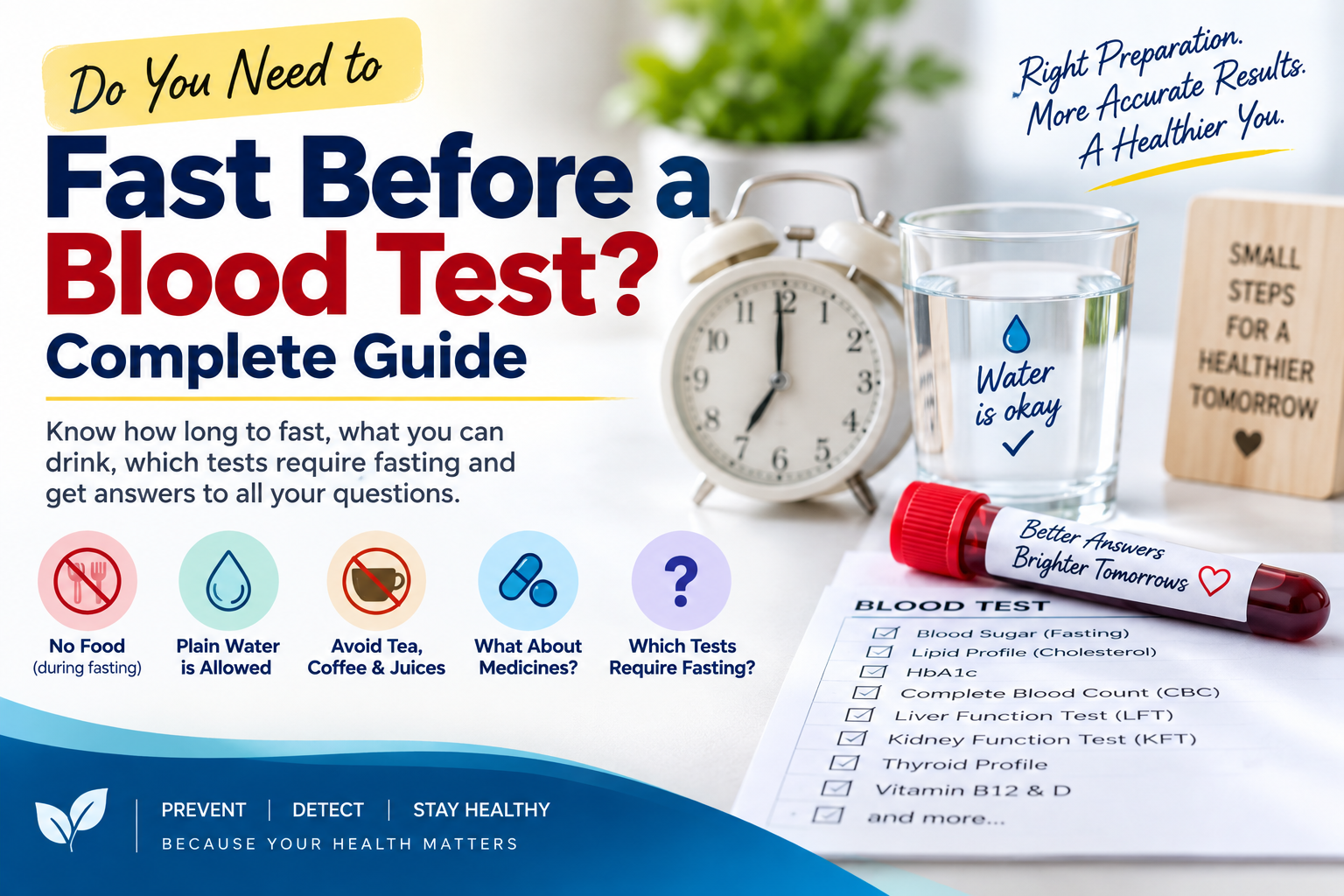
Do You Need to Fast Before a Blood Test? Complete Guide
Have you been asked to get a blood test and don’t know whether you should eat beforehand? You’re not alone.
One of the most common questions people have before laboratory testing is: “Do I need to fast before my blood test?”
The answer is: it depends on the test.
Some blood tests require fasting to obtain an accurate measurement, while many others do not require any special preparation. Fasting unnecessarily can also be unhelpful, so you should always follow the specific instructions provided by your doctor or laboratory.
In this guide, we’ll explain how long you may need to fast, what you can drink, whether you can take your medicines, which common blood tests may require fasting, and what to do if you accidentally eat before your test.
What Does Fasting Before a Blood Test Mean?
When a healthcare professional tells you to fast before a blood test, it generally means not eating or drinking anything except plain water for a specified period before your blood sample is collected.
During a fast, you should generally also avoid:
- Food
- Tea
- Coffee
- Juice
- Soft drinks
- Alcohol
- Chewing gum
- Smoking
Strenuous exercise may also be discouraged because it can affect some test results.
Your healthcare provider or laboratory should tell you exactly how long you need to fast.
How Long Should You Fast Before a Blood Test?
For tests that require fasting, the fasting period is commonly around 8–12 hours, although the exact requirement depends on the test.
For example, if your test requires a 10–12-hour fast and your appointment is at 8:00 AM, you may be instructed to finish dinner the previous evening and then avoid food overnight.
This is one reason many people schedule fasting blood tests in the morning—the majority of the fasting period can happen while they are asleep.
Important
Don’t assume that every blood test requires 8–12 hours of fasting.
Some tests require no fasting at all.
Can You Drink Water Before a Fasting Blood Test?
Yes, plain water is generally allowed during a fasting blood test.
In fact, staying hydrated can make it easier for the healthcare professional to collect your blood sample because adequate hydration can help make veins easier to access.
However, stick to plain water.
Avoid:
- Flavoured water
- Lemon water
- Juice
- Soft drinks
- Energy drinks
- Sweetened beverages
If you’re unsure about a particular drink, ask the laboratory before your test.
Can You Drink Tea or Coffee Before a Blood Test?
If you have been instructed to fast, it is safest to avoid tea and coffee unless your healthcare professional specifically tells you otherwise.
Even black coffee contains compounds such as caffeine that may affect certain measurements, and coffee isn’t considered equivalent to plain water for a fasting blood test.
So, if you’re scheduled for a fasting blood test:
Water = generally okay
Tea = avoid
Coffee = avoid
Juice = avoid
Soft drinks = avoid
You can enjoy your tea or coffee after your blood sample has been collected.
Can You Take Medicines Before a Fasting Blood Test?
This is an important question because you should not automatically stop your medicines just because you’re fasting.
Some medicines can affect laboratory results, and in certain situations your doctor may give you specific instructions about when to take them.
Tell your healthcare professional about:
- Prescription medicines
- Over-the-counter medicines
- Vitamins
- Herbal products
- Dietary supplements
Do not stop or change prescribed medicines unless your doctor or healthcare professional tells you to.
If you take medication in the morning, ask your doctor or the laboratory beforehand whether you should take it before or after the blood sample.
Which Blood Tests Require Fasting?
Not all blood tests require fasting.
Some common tests that may require fasting depending on the specific test and clinical situation include:
1. Fasting Blood Glucose
A fasting blood glucose test measures your blood sugar after you have not eaten for a specified period.
If your doctor specifically orders a fasting blood glucose test, you will generally need to fast for at least 8 hours.
2. Lipid Profile / Cholesterol Test
A lipid profile may measure:
- Total cholesterol
- LDL cholesterol
- HDL cholesterol
- Triglycerides
Whether fasting is required can depend on the test and clinical circumstances. Some cholesterol testing may be performed without fasting, while fasting may be requested in other situations. The CDC notes that some people may be asked to fast for 8–12 hours before a cholesterol test.
If your laboratory has specifically instructed you to fast for a lipid profile, follow those instructions.
3. Triglyceride Testing
Triglycerides are a type of fat measured as part of many lipid profiles.
Food can affect triglyceride levels, which is one reason fasting may sometimes be requested before testing.
4. Basic or Comprehensive Metabolic Panels
Some metabolic panels measure several substances, such as glucose, electrolytes and kidney-related markers.
Depending on the specific panel and the laboratory’s instructions, fasting may be required.
5. Some Liver Function Tests
Certain liver-related tests may require fasting depending on which tests have been ordered and whether they are part of a larger panel.
For this reason, don’t assume that every LFT requires fasting. Check the instructions provided for your particular test.
6. Some Kidney Function Tests
Some renal or kidney-function panels may involve fasting or other preparation depending on the tests included.
If you have been given a KFT/RFT panel, ask your doctor or laboratory whether fasting is necessary.
Does HbA1c Require Fasting?
No. HbA1c testing generally does not require fasting.
The HbA1c test measures glycated haemoglobin and provides information about average blood glucose levels over approximately the previous three months.
However, you may be asked to fast if your doctor is ordering other blood tests at the same appointment, such as certain glucose or lipid tests.
Example
If your doctor orders:
HbA1c + Lipid Profile + Fasting Blood Glucose
You may need to fast because of the other tests—even though HbA1c itself does not require fasting.
Does a CBC Test Require Fasting?
Usually, no.
A Complete Blood Count (CBC) generally does not require special preparation. However, if your doctor orders additional blood tests using the same sample, fasting may be required for those tests.
This is why it’s important to check the complete test list, rather than assuming that one test determines your preparation requirements.
Why Do Some Blood Tests Require Fasting?
When you eat or drink, nutrients and other substances from what you consume enter your bloodstream.
For certain blood tests, these changes can temporarily affect the substances being measured and potentially influence the test result.
Fasting provides a more standardized condition for tests where recent food or drink could interfere with the measurement.
The purpose isn’t to make the test “stronger” or to clean your blood.
It is simply a way of controlling certain factors that could affect the measurement.
What Happens If You Eat Before a Fasting Blood Test?
Don’t panic.
If you accidentally eat something or drink something other than plain water before a test that requires fasting, tell the healthcare professional or laboratory staff before your sample is collected.
Depending on the test and what you consumed, they may:
- Proceed with the test and record that you were not fasting
- Interpret the results accordingly
- Recommend rescheduling the test
In some cases, repeating the test after the correct fasting period may be necessary for a reliable result.
Don’t hide the fact that you ate or drank. Accurate information helps the healthcare professional interpret your results correctly.
Can You Smoke Before a Fasting Blood Test?
If you have been instructed to fast, it is generally recommended to avoid smoking during the fasting period.
MedlinePlus specifically advises avoiding smoking while fasting for a blood test.
If you’re unsure about preparation for a particular test, ask your healthcare provider or laboratory.
Can You Exercise Before a Blood Test?
It is generally best to avoid strenuous exercise during a fasting period unless your healthcare professional has given you different instructions.
Exercise can influence some blood measurements, so keeping your activity routine relatively normal before testing may help avoid unnecessary variation.
If you regularly exercise in the morning and have a fasting blood test scheduled, ask your laboratory whether you should exercise before or after the sample collection.
What Should You Eat the Night Before a Blood Test?
If your test requires fasting, the most important thing is to follow the fasting instructions you were given.
Unless your doctor or laboratory gives you specific dietary instructions, you generally don’t need to follow a special “detox” diet before a routine blood test.
Avoid deliberately overeating or making major dietary changes immediately before testing.
For some tests, additional preparation may be necessary, so always follow the specific instructions provided by your healthcare professional.
What Should You Do on the Morning of a Fasting Blood Test?
Here’s a simple checklist:
The night before
- Finish your last meal according to your instructed fasting time.
- Avoid alcohol if your healthcare professional has advised you to.
- Follow any test-specific preparation instructions.
- Take medicines only according to your healthcare professional’s instructions.
The morning of the test
- Don’t eat.
- Drink plain water if permitted.
- Avoid tea and coffee.
- Don’t smoke.
- Avoid strenuous exercise.
- Bring your test prescription or laboratory request if required.
- Tell the laboratory about any medicines or supplements you take.
After the blood sample is collected, you can generally resume eating and drinking unless you’ve been given different instructions.
Can You Brush Your Teeth Before a Fasting Blood Test?
If you have been given strict fasting instructions, it’s best to ask your laboratory or healthcare provider whether brushing your teeth is permitted for your specific test.
Different tests can have different preparation requirements, so don’t assume that the same instructions apply to every blood test.
What If You Feel Dizzy While Fasting?
Some people may feel hungry, weak or light-headed when fasting.
If you feel unwell, tell the healthcare professional before the blood sample is taken.
Once the blood has been collected, you can generally eat and drink again. Bringing a small snack for afterward can be useful, particularly if you tend to feel light-headed after fasting.
People with diabetes, people who are pregnant, children, and anyone taking medicines that can cause low blood sugar should follow individualized medical instructions rather than assuming that a standard fasting schedule is safe.
Fasting Blood Test: Quick Guide
| Question | General Answer |
|---|---|
| Do all blood tests require fasting? | No |
| How long is fasting usually required? | About 8–12 hours when required |
| Can I drink plain water? | Generally yes |
| Can I drink tea? | Avoid during a fasting period unless instructed otherwise |
| Can I drink coffee? | Generally avoid it |
| Can I drink juice? | No |
| Can I drink soft drinks? | No |
| Can I smoke? | Generally avoid it |
| Can I exercise? | Avoid strenuous exercise during fasting |
| Can I take my medicines? | Ask your healthcare provider; don’t stop them on your own |
| Does HbA1c require fasting? | No |
| Does CBC require fasting? | Usually no |
| What if I accidentally eat? | Tell the laboratory before testing |
Frequently Asked Questions About Fasting Before Blood Tests
Can I drink water before a blood test?
Yes. Plain water is generally allowed during fasting, and staying hydrated can make blood collection easier.
Can I drink black coffee before a fasting blood test?
It is generally recommended to avoid coffee during a fasting blood test and stick to plain water.
How many hours should I fast before a blood test?
When fasting is required, it is commonly 8–12 hours, but the exact duration depends on the test. Follow the instructions given by your healthcare professional or laboratory.
Is fasting required for an HbA1c test?
No. HbA1c does not require fasting, although other tests performed at the same time may.
Is fasting required for a CBC?
Usually not. A CBC generally requires no special preparation unless other tests being performed at the same time require fasting.
What happens if I eat before a fasting blood test?
Tell the laboratory staff or healthcare provider. Depending on the test and what you consumed, you may need to reschedule the test.
Can I take my regular medicines before a blood test?
Don’t stop prescribed medicines on your own. Ask your doctor or healthcare professional whether you should take your usual medicines before the specific test.
Final Takeaway
Not every blood test requires fasting.
Tests such as HbA1c and CBC generally don’t require fasting, while certain glucose, lipid and metabolic tests may require fasting depending on the specific test and your doctor’s instructions.
When fasting is required, it is commonly for 8–12 hours, and plain water is generally allowed. Avoid food, tea, coffee, juice, smoking and strenuous exercise during the fasting period unless your healthcare professional gives you different instructions.
Most importantly, don’t guess.
If you’re unsure whether you need to fast, contact your doctor or diagnostic laboratory before your appointment. Following the correct preparation instructions helps ensure your test results are as reliable and useful as possible.