Do you often feel tired, weak, or low on energy even after getting enough sleep? Have you noticed that your skin looks paler than usual, or that you become breathless more easily during everyday activities?
These symptoms can have several causes, but one possibility is iron deficiency.
Iron is an essential mineral that your body needs to produce haemoglobin, a protein in red blood cells that carries oxygen throughout the body. When your iron levels become too low, your body may struggle to produce enough healthy red blood cells. This can eventually lead to iron-deficiency anaemia.
But how can you tell whether your symptoms are caused by low iron? And which blood tests can help identify the problem?
Let’s explore the common warning signs, possible causes, and tests that may help your doctor understand what’s happening.
What Is Iron Deficiency?
Iron deficiency occurs when your body does not have enough iron to meet its needs. Iron is necessary for making haemoglobin, which helps red blood cells transport oxygen from your lungs to your tissues.
When iron deficiency becomes severe enough to reduce haemoglobin, it can cause iron-deficiency anaemia.
However, iron deficiency and anaemia are not the same thing. You can have low iron stores before your haemoglobin level falls below the normal range.
This is why checking only haemoglobin may not always be enough to identify an early iron deficiency.
What Are the Common Symptoms of Iron Deficiency?
Iron deficiency can develop gradually, so you may not notice the symptoms immediately. Some people experience only mild symptoms, while others may feel significantly unwell.
Common signs include:
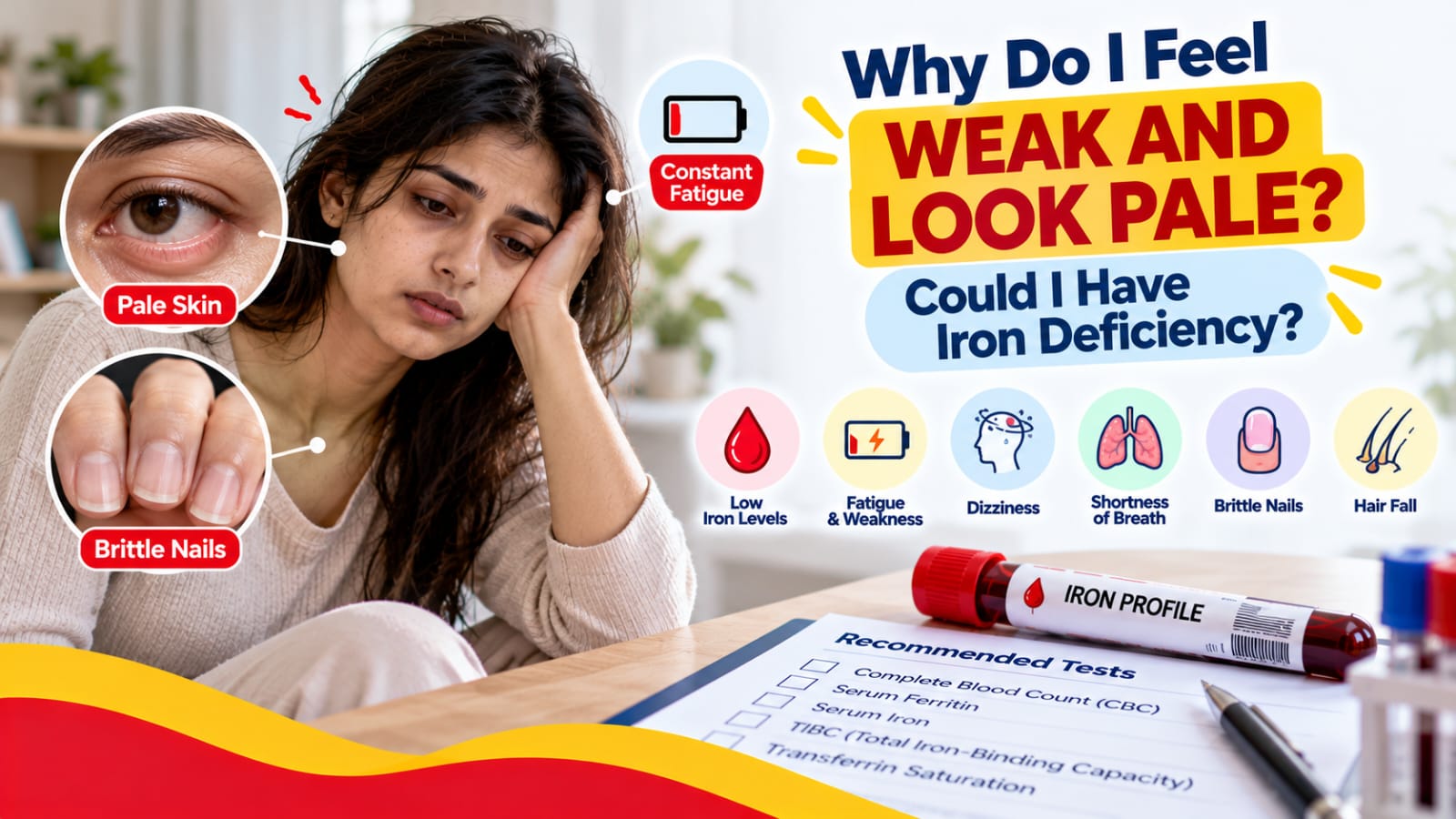
1. Persistent Weakness and Fatigue
Do you feel exhausted after routine activities, struggle to concentrate at work, or feel tired even after a full night’s sleep?
Low iron can contribute to fatigue because your body needs iron to produce haemoglobin and support normal energy metabolism. Fatigue is common in iron deficiency, although it can also result from poor sleep, thyroid problems, infections, and other conditions.
2. Pale Skin
Paler-than-usual skin can sometimes be associated with anaemia. You may also notice paleness inside your lower eyelids, on your gums, or on your nail beds.
However, skin colour alone cannot confirm iron deficiency. Changes can be subtle and difficult to assess, particularly in people with naturally darker skin tones.
3. Shortness of Breath
If you become breathless while climbing stairs, walking quickly, or performing activities that previously felt easy, anaemia may be one possible explanation.
When haemoglobin is low, less oxygen can be carried to the body’s tissues. This may cause breathlessness, particularly during physical activity.
Important: Sudden or severe breathlessness, especially with chest pain or fainting, requires urgent medical attention rather than waiting for a routine blood test.
4. Dizziness or Headaches
Some people with iron-deficiency anaemia experience headaches, light-headedness, or dizziness.
These symptoms are not specific to iron deficiency, however. Dehydration, low blood pressure, medication effects, and other conditions may cause similar problems.
If dizziness keeps returning, consult a healthcare professional to identify the cause.
5. Brittle Nails and Hair Changes
Low iron levels may be associated with brittle nails and, in some people, increased hair shedding.
However, hair loss has many potential causes, including thyroid disorders, nutritional deficiencies, hormonal changes, and stress. These symptoms alone do not establish that your iron levels are low.
6. Craving Non-Food Items
Some people with iron deficiency develop a condition called pica, which involves cravings for substances that are not food, such as ice, clay, or paper.
A strong or persistent craving for ice can sometimes be associated with iron deficiency and is worth discussing with your doctor.
7. Cold Hands and Feet
If your hands and feet frequently feel cold, anaemia could be one possible contributing factor. However, this symptom may also be associated with thyroid problems, circulation issues, or normal differences in temperature sensitivity.
The combination of symptoms, rather than any single sign, helps guide further investigation.
What Causes Iron Deficiency?
Understanding the cause is just as important as confirming whether your iron levels are low.
1. Not Getting Enough Iron From Your Diet
Your body needs iron from food to maintain healthy iron stores. People whose diets contain limited iron-rich foods may be at increased risk.
Dietary sources include:
- Meat, poultry, and seafood.
- Lentils, chickpeas, beans, and other pulses.
- Iron-fortified cereals and grains.
- Green leafy vegetables.
- Nuts and seeds.
Plant-based iron is generally less readily absorbed than the iron found in animal foods. Eating vitamin C-rich foods alongside plant-based iron sources can help improve iron absorption.
2. Blood Loss
Blood loss is a common cause of iron deficiency.
Heavy menstrual bleeding can contribute to low iron levels. Blood loss from the digestive tract may also be responsible, including bleeding associated with certain stomach or intestinal conditions.
Unexplained iron deficiency, particularly in men and postmenopausal women, requires medical evaluation to investigate possible sources of blood loss.
3. Increased Iron Requirements
Iron requirements increase during pregnancy because the body needs to support the developing baby and changes in maternal blood volume.
Children and adolescents may also have higher iron requirements during periods of rapid growth.
A healthcare professional can help determine whether dietary changes, testing, or supplementation is appropriate.
4. Problems Absorbing Iron
Some digestive conditions can interfere with iron absorption. Examples include coeliac disease and certain conditions affecting the stomach or intestines.
Even when your diet contains enough iron, poor absorption can contribute to deficiency.
If iron deficiency keeps returning or does not improve as expected, your doctor may investigate whether an underlying condition is affecting absorption.
Which Blood Tests Can Detect Iron Deficiency?
If you frequently feel weak, look unusually pale, or experience unexplained fatigue, your doctor may recommend blood tests based on your symptoms and medical history.
The following tests can help assess your red blood cells and iron status.
1. Complete Blood Count (CBC) Test
A complete blood count (CBC) measures several components of your blood, including haemoglobin, red blood cell count, and other red blood cell indices.
A CBC can help identify anaemia and provide clues about its possible cause.
In iron-deficiency anaemia, haemoglobin may be low, and red blood cells may be smaller than usual. However, early iron deficiency can occur even when haemoglobin and other CBC measurements remain within their reference ranges.
What it helps identify: Anaemia and changes in red blood cells that may warrant further investigation.
2. Serum Ferritin Test
Ferritin is a protein that stores iron. A serum ferritin test is commonly used to assess the body’s iron stores.
A low ferritin level strongly supports iron deficiency. However, ferritin can rise during inflammation, infection, or certain other conditions, potentially making iron deficiency harder to identify from ferritin alone.
Your doctor may interpret ferritin alongside your symptoms and other blood results.
What it helps identify: Whether your body’s stored iron may be low.
3. Serum Iron Test
A serum iron test measures the amount of iron circulating in your blood at the time of testing.
Serum iron levels can vary with meals, the time of day, and other factors. Therefore, this test is generally not interpreted on its own to diagnose iron deficiency.
What it helps identify: Circulating iron levels as part of a broader assessment.
4. Total Iron-Binding Capacity (TIBC) and Transferrin Saturation
Total iron-binding capacity (TIBC) estimates the blood’s capacity to bind iron, while transferrin saturation indicates the percentage of iron-binding sites occupied by iron.
These measurements can help distinguish iron deficiency from other conditions that affect iron metabolism.
Your doctor may recommend these tests when ferritin results are unclear or when additional information about iron status is needed.
What they help identify: Patterns of iron availability that may support the diagnosis of iron deficiency.
5. Additional Tests When Needed
Depending on your results, symptoms, and medical history, your doctor may recommend other investigations, such as:
- Vitamin B12 test.
- Folate test.
- Thyroid function test.
- Kidney function test.
- Tests for possible sources of blood loss.
Not everyone needs all these tests. The appropriate selection depends on the clinical situation.
Can You Have Iron Deficiency Even If Your Haemoglobin Is Normal?
Yes. Iron stores can become depleted before haemoglobin levels fall enough to meet the definition of anaemia.
This means a normal haemoglobin result does not always rule out iron deficiency, particularly if you have ongoing symptoms or risk factors.
Your doctor may recommend a ferritin test or other iron studies when iron deficiency is suspected despite a normal CBC.
At the same time, fatigue and weakness have many possible explanations. It is important not to assume that low iron is responsible without appropriate assessment.
What Should You Do If Your Iron Levels Are Low?
If testing confirms iron deficiency, the next step is to understand why it has developed.
Depending on the cause, your doctor may recommend:
- Improving your intake of iron-rich foods.
- Taking an iron supplement when appropriate.
- Investigating heavy menstrual bleeding or possible digestive blood loss.
- Evaluating conditions that interfere with iron absorption.
- Repeating blood tests to assess your response to treatment.
Avoid taking high-dose iron supplements without medical advice. Excess iron can be harmful, and supplementation may be inappropriate when iron deficiency has not been established.
If you are prescribed iron, follow the recommended dose and instructions. Your doctor can advise when follow-up testing is needed.
When Should You See a Doctor?
Arrange a medical consultation if you experience persistent fatigue, unexplained weakness, unusual paleness, recurring dizziness, or breathlessness during routine activities.
Seek prompt medical attention for symptoms such as black, tarry stools, visible blood in your stool, or unusually heavy bleeding. Severe breathlessness, chest pain, fainting, or significant ongoing bleeding may require emergency care.
Do not rely on symptoms alone to diagnose iron deficiency. A medical assessment and appropriate blood tests can help identify the cause and guide treatment.
Frequently Asked Questions
1. Which blood test is best for iron deficiency?
A CBC helps identify anaemia, while a serum ferritin test is commonly used to assess iron stores. Depending on your results, your doctor may also recommend serum iron, TIBC, and transferrin saturation.
2. Can iron deficiency cause weakness without anaemia?
Yes. Iron stores may be low before haemoglobin levels fall below the normal range. Some people experience symptoms during this stage, although weakness can have many other causes.
3. Does a CBC test detect iron deficiency?
A CBC can identify anaemia and red blood cell changes that may suggest iron deficiency. However, a CBC alone cannot reliably exclude early iron deficiency. Ferritin and other iron studies may be needed.
4. How long does it take to recover from iron deficiency?
Recovery depends on the severity of the deficiency, its underlying cause, and the treatment used. Haemoglobin may begin to improve within weeks of appropriate treatment, while restoring iron stores can take longer. Follow-up testing helps assess progress.
5. Should I take iron tablets if I feel weak?
Not without understanding the cause of your weakness. Iron tablets are useful when iron deficiency is present, but they may be unnecessary or harmful when it is not. Consult a healthcare professional before starting supplementation.
Get the Right Tests for Your Symptoms
Feeling weak, looking pale, or struggling with persistent fatigue can be frustrating, especially when you do not know the reason.
Iron deficiency is one possible cause, but other conditions can produce similar symptoms. A CBC, ferritin test, and additional iron studies, when appropriate, can help your healthcare professional assess your iron status and determine the next steps.
At CPL Diagnostics, laboratory testing can support the investigation of suspected iron deficiency when recommended by your healthcare professional. If you have persistent symptoms, consult a doctor about which tests are suitable for you.
The key is to identify the underlying cause rather than treating symptoms with supplements alone.
Medical disclaimer: This article is for general educational purposes only and is not a substitute for professional medical advice, diagnosis, or treatment.