Do you wake up tired even after sleeping? Do you feel like you have no energy during the day, struggle to concentrate, or feel unusually weak?
If this has been happening repeatedly, you may be asking:
“Why am I tired all the time?”
and more importantly:
“What blood tests should I take to find out what’s wrong?”
The answer isn’t one single blood test.
Fatigue can have many causes, including poor sleep, stress, certain medicines, nutritional deficiencies, anaemia, thyroid problems, diabetes and other medical conditions. Blood tests can help investigate some of these possibilities, but the right tests depend on your symptoms, medical history and physical examination.
Is Feeling Tired All the Time Normal?
Everyone feels tired sometimes. A few late nights, a busy week, intense exercise or emotional stress can leave you exhausted.
The concern is when the tiredness:
- keeps coming back,
- lasts for weeks,
- doesn’t improve with adequate rest, or
- starts interfering with work, studies or normal daily activities.
Persistent fatigue isn’t a disease by itself. It is a symptom that can have many different causes.
That’s why simply taking a “fatigue blood test” isn’t enough. The goal is to find out what might be causing the fatigue.
What Blood Tests May Be Considered for Constant Fatigue?
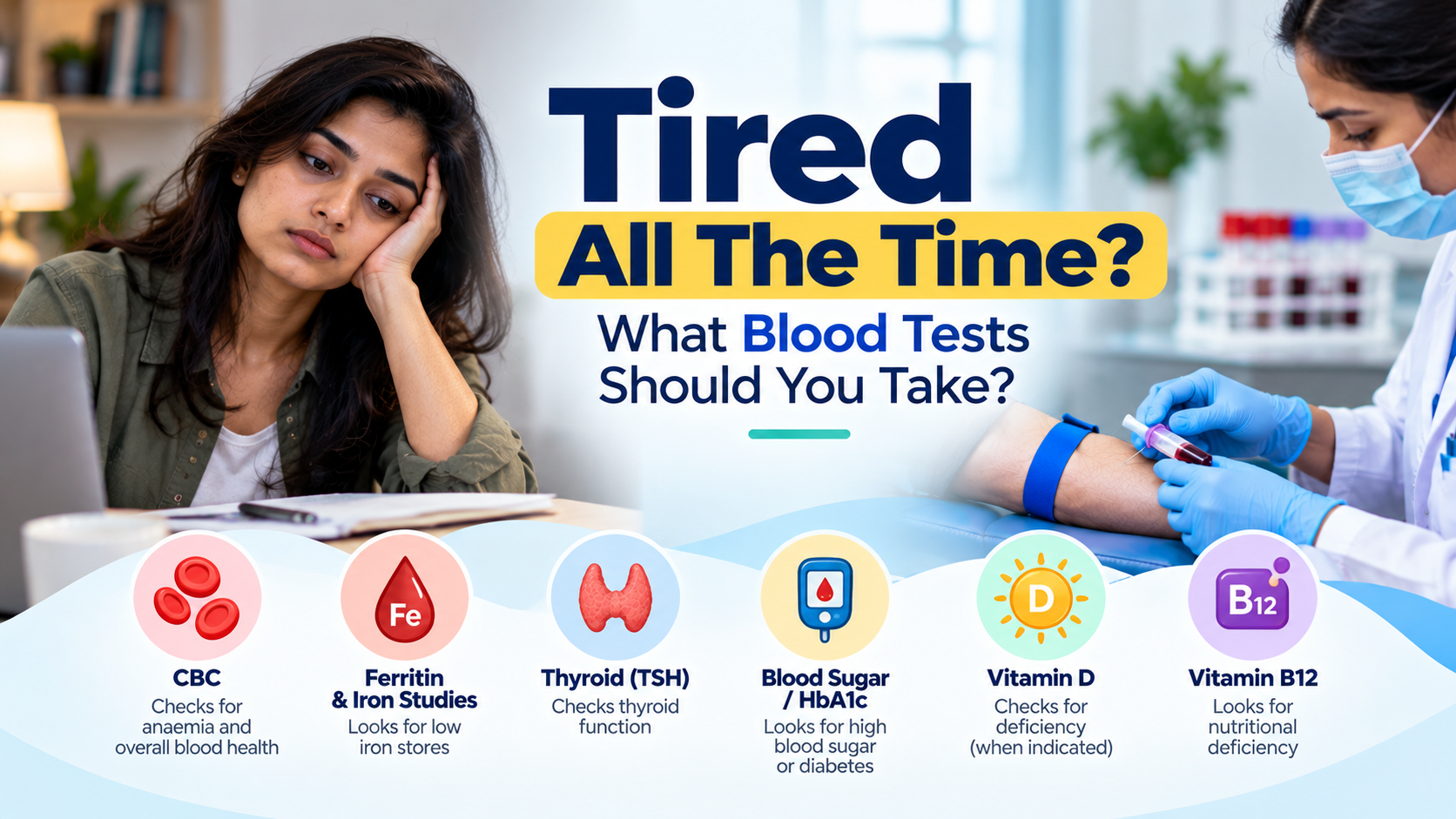
Depending on your symptoms and medical history, a doctor may consider tests such as:
CBC (Complete Blood Count)
To look for anaemia and other blood abnormalities.
Ferritin and iron studies
To assess iron stores and investigate possible iron deficiency.
Thyroid function tests, especially TSH
To check for thyroid dysfunction.
Blood glucose or HbA1c
To investigate abnormal blood sugar or diabetes when appropriate.
Vitamin B12
When B12 deficiency is suspected based on symptoms or risk factors.
Kidney, liver and electrolyte tests
When the history or examination suggests a metabolic, kidney or liver-related cause.
Vitamin D
In selected situations where deficiency is considered clinically relevant.
Not everyone with fatigue needs all of these tests. Current clinical guidance recommends that laboratory testing should be guided by the person’s history, examination and likely causes rather than ordering a large panel without a specific reason.
Let’s break these down.
1. CBC: Could Anaemia Be Making You Tired?
A Complete Blood Count (CBC) is one of the common tests doctors may consider when someone has persistent fatigue.
A CBC measures several components of your blood, including haemoglobin, red blood cells, white blood cells and platelets.
One reason for ordering a CBC is to investigate anaemia.
Anaemia can be associated with:
- Tiredness
- Weakness
- Shortness of breath
- Pale skin
- Reduced exercise tolerance
- Dizziness or light-headedness
However, fatigue doesn’t automatically mean you have anaemia.
And if a CBC does show anaemia, the next question is usually why you have it. Further tests may be needed to investigate causes such as iron deficiency, vitamin deficiency, blood loss or other medical conditions.
Read more: CPL’s guide to CBC blood tests and what the different parameters mean.
2. Ferritin: Could Low Iron Stores Be the Problem?
Iron deficiency is another possible contributor to fatigue.
Ferritin is a blood test that gives information about your body’s stored iron. Doctors may consider ferritin alongside a CBC and other iron studies when iron deficiency is suspected.
Low iron may be particularly worth investigating if you also have symptoms or circumstances such as:
- A history of anaemia
- Heavy menstrual bleeding
- A diet low in iron
- Recent blood loss
- Unexplained weakness or reduced stamina
It’s important not to interpret ferritin in isolation. Ferritin levels can also be influenced by inflammation and other conditions, so your healthcare professional should interpret the result in context.
3. TSH: Could Your Thyroid Be Affecting Your Energy?
Thyroid problems can sometimes cause significant changes in energy levels.
Both an underactive thyroid and an overactive thyroid can cause symptoms that may include fatigue or weakness, although the overall symptom pattern differs.
A TSH (thyroid-stimulating hormone) test is commonly used as part of thyroid evaluation. Depending on the result and the clinical situation, additional thyroid hormone tests may be needed.
You may be more likely to need thyroid testing when fatigue occurs along with symptoms such as:
- Unexplained weight changes
- Feeling unusually cold or hot
- Changes in heart rate
- Muscle weakness
- Changes in bowel habits
- Changes in mood
- Changes in menstrual cycles
Fatigue by itself does not prove that you have a thyroid disorder. A doctor will decide whether thyroid testing is appropriate.
4. Blood Sugar Tests: Could Glucose Be Involved?
Blood sugar problems can sometimes cause tiredness.
Fatigue can occur in people with diabetes, and diabetes may also cause symptoms such as increased thirst, frequent urination and unexplained weight loss.
Depending on your situation, your doctor may consider:
- Fasting blood glucose
- Random blood glucose
- HbA1c
HbA1c gives an estimate of average blood glucose over roughly the previous 2–3 months and is used in diabetes and prediabetes assessment.
The appropriate test depends on the reason for testing. Not every person with fatigue needs every type of glucose test.
Read more: CPL’s HbA1c guide for information about HbA1c results and blood sugar testing.
5. Vitamin B12: When Should You Check It?
Vitamin B12 deficiency can cause fatigue and lack of energy.
Other possible symptoms include light-headedness, pale skin, shortness of breath and, in some cases, neurological symptoms such as tingling or numbness.
B12 testing may be more relevant when someone has risk factors for deficiency, such as certain dietary patterns, problems affecting absorption, or relevant gastrointestinal conditions.
A B12 test isn’t automatically necessary for everybody who feels tired.
In some situations where B12 deficiency is suspected but the result isn’t straightforward, additional testing such as methylmalonic acid (MMA) may be considered.
6. Vitamin D: Is Low Vitamin D Causing My Fatigue?
Vitamin D is often mentioned online whenever someone searches for tiredness.
But that doesn’t mean vitamin D deficiency is automatically responsible for your fatigue.
Whether vitamin D testing is appropriate depends on your individual situation. There are many possible explanations for persistent tiredness, so testing should be based on clinical assessment rather than assuming that everyone with fatigue has a vitamin D deficiency.
The same principle applies to supplements: don’t assume you need high-dose vitamin D simply because you’re tired.
7. Kidney, Liver and Electrolyte Tests
Fatigue can sometimes be associated with medical problems affecting metabolism, the kidneys, liver or electrolyte balance.
Depending on your symptoms and medical history, a doctor may consider blood tests such as:
- Creatinine and kidney function measurements
- Sodium and potassium
- Liver enzymes and other liver-related measurements
- Other components of a metabolic panel
These tests aren’t necessarily required for everyone with fatigue.
They become more useful when there are specific symptoms, medical conditions, medication effects or examination findings that make a metabolic cause more likely.
Do I Need a Full Body Blood Test for Tiredness?
Not necessarily.
This is where online health advice can get misleading.
You may find lists containing 15 or 20 blood tests for fatigue. Ordering more tests doesn’t automatically mean you’ll get a better answer.
Clinical guidance recommends choosing investigations based on the person’s history, physical examination and common possible causes. Broad laboratory testing without a specific indication has relatively low diagnostic yield.
For example:
Person A:
Feels exhausted, has heavy menstrual bleeding and looks pale.
A doctor may focus on a CBC and iron-related testing.
Person B:
Feels tired, has increased thirst and frequent urination.
Blood glucose testing may be particularly relevant.
Person C:
Feels tired and has unexplained weight changes and temperature sensitivity.
Thyroid testing may be considered.
The symptoms help determine which question the blood test needs to answer.
What If My Blood Tests Are Normal but I’m Still Tired?
A normal blood test doesn’t necessarily mean there’s nothing wrong.
Blood tests only measure the things included in those tests. Fatigue can also be related to sleep problems, stress, lifestyle, medicines, mental health conditions and other medical conditions that may require a different type of evaluation.
For example, sleep apnoea can cause significant daytime tiredness, especially when someone snores loudly or wakes during the night gasping or choking.
So if your blood results are normal but your symptoms continue, don’t simply keep ordering more blood tests yourself.
Speak with a healthcare professional about what should be investigated next.
Read more: CPL’s article on what to do when your blood test is normal but you still feel unwell.
Can Lack of Sleep Be the Real Reason?
Absolutely.
Before assuming that fatigue is caused by a vitamin or medical problem, consider the basics.
Poor sleep is one of the most common causes of tiredness. Other lifestyle factors, stress and certain medicines can also contribute.
Ask yourself:
Am I sleeping enough?
Do I wake up feeling refreshed?
Do I snore heavily or wake up gasping?
Have I recently been under significant stress?
Have I started taking a new medicine?
Has my diet or weight changed recently?
These questions can be just as important as the blood test itself.
When Should You See a Doctor About Constant Tiredness?
Consider speaking to a healthcare professional if you’ve been feeling tired for several weeks, don’t know why, or the fatigue is interfering with your daily life.
You should also seek medical evaluation if fatigue is accompanied by other concerning symptoms such as:
- Unexplained weight loss
- Persistent fever
- Shortness of breath
- Significant weakness
- Frequent urination and excessive thirst
- Palpitations
- Persistent changes in mood
- Sleep problems that leave you exhausted despite getting enough time in bed
The exact urgency depends on your symptoms.
If severe fatigue occurs together with symptoms such as chest pain, severe difficulty breathing, fainting or other emergency symptoms, seek urgent medical care rather than relying on routine blood testing.
Do You Need to Fast Before Fatigue Blood Tests?
It depends on which tests have been ordered.
Some blood tests require fasting, while others don’t.
For example, HbA1c generally doesn’t require fasting, whereas a fasting blood glucose test does.
Don’t assume that every test in a blood-test package requires the same preparation.
Follow the instructions provided by your doctor or diagnostic laboratory. If you’re unsure whether you should eat, drink, exercise or take your usual medicines before testing, ask before the sample is collected.
So, What Blood Tests Should I Take for Constant Fatigue?
There isn’t a single “best blood test for tiredness.”
Depending on your symptoms and medical history, your doctor may consider:
| Blood test | What it may help investigate |
|---|---|
| CBC | Anaemia and other blood abnormalities |
| Ferritin / iron studies | Low iron stores or iron deficiency |
| TSH / thyroid function tests | Thyroid dysfunction |
| Blood glucose / HbA1c | Blood sugar problems and diabetes |
| Vitamin B12 | B12 deficiency when clinically suspected |
| Kidney function & electrolytes | Metabolic, kidney or electrolyte-related problems |
| Liver-related tests | Possible liver or metabolic causes |
| Vitamin D | Vitamin D status when testing is clinically appropriate |
| Other tests | Selected according to symptoms and medical history |
The key point is simple:
Don’t choose your tests based only on an internet checklist. Choose them based on the reason you’re tired.
Final Takeaway
Feeling tired after a late night is normal.
Feeling tired all the time for weeks without knowing why is something worth discussing with a healthcare professional.
Blood tests can help investigate causes such as anaemia, iron deficiency, thyroid problems, abnormal blood sugar and certain vitamin deficiencies. But you may not need every test listed online. The most useful testing strategy is usually targeted to your symptoms and medical history.
If your fatigue is persistent or is affecting your everyday life, speak with a healthcare professional about whether laboratory testing is appropriate for you.
Need a blood test? CPL Diagnostics provides pathology and diagnostic testing services, including home sample collection. Follow your healthcare professional’s instructions for the tests you have been advised to take.
Frequently Asked Questions
What is the best blood test for tiredness?
There isn’t one blood test that is best for everyone. Depending on the suspected cause, a healthcare professional may consider CBC, iron studies, thyroid testing, glucose testing, vitamin B12 or other targeted investigations.
What blood test checks for fatigue?
There is no specific “fatigue blood test.” Blood tests are used to investigate possible causes of fatigue, such as anaemia, thyroid disorders, diabetes or nutritional deficiencies.
Can low haemoglobin make you tired?
Yes. Anaemia and low haemoglobin can be associated with tiredness, weakness, shortness of breath and reduced exercise tolerance.
Should I check my thyroid if I’m always tired?
Thyroid testing may be appropriate when fatigue occurs with symptoms or medical history suggesting thyroid dysfunction. TSH is commonly used as part of the initial thyroid evaluation.
Can vitamin B12 deficiency cause tiredness?
Yes. Fatigue and lack of energy are possible symptoms of vitamin B12 deficiency.
Can diabetes make you feel tired?
Yes. Diabetes can be associated with fatigue, particularly when other symptoms such as increased thirst, frequent urination or unexplained weight loss are also present.
What if all my blood tests are normal but I’m still tired?
Persistent fatigue can have causes that aren’t identified by routine blood tests, including sleep problems, stress, medicines and other medical conditions. Your healthcare professional may need to consider your symptoms more broadly.
Should I take vitamins if I’m tired?
Don’t assume that fatigue means you have a vitamin deficiency. Testing and treatment should be based on your individual circumstances and medical advice rather than taking high-dose supplements without knowing whether you need them.