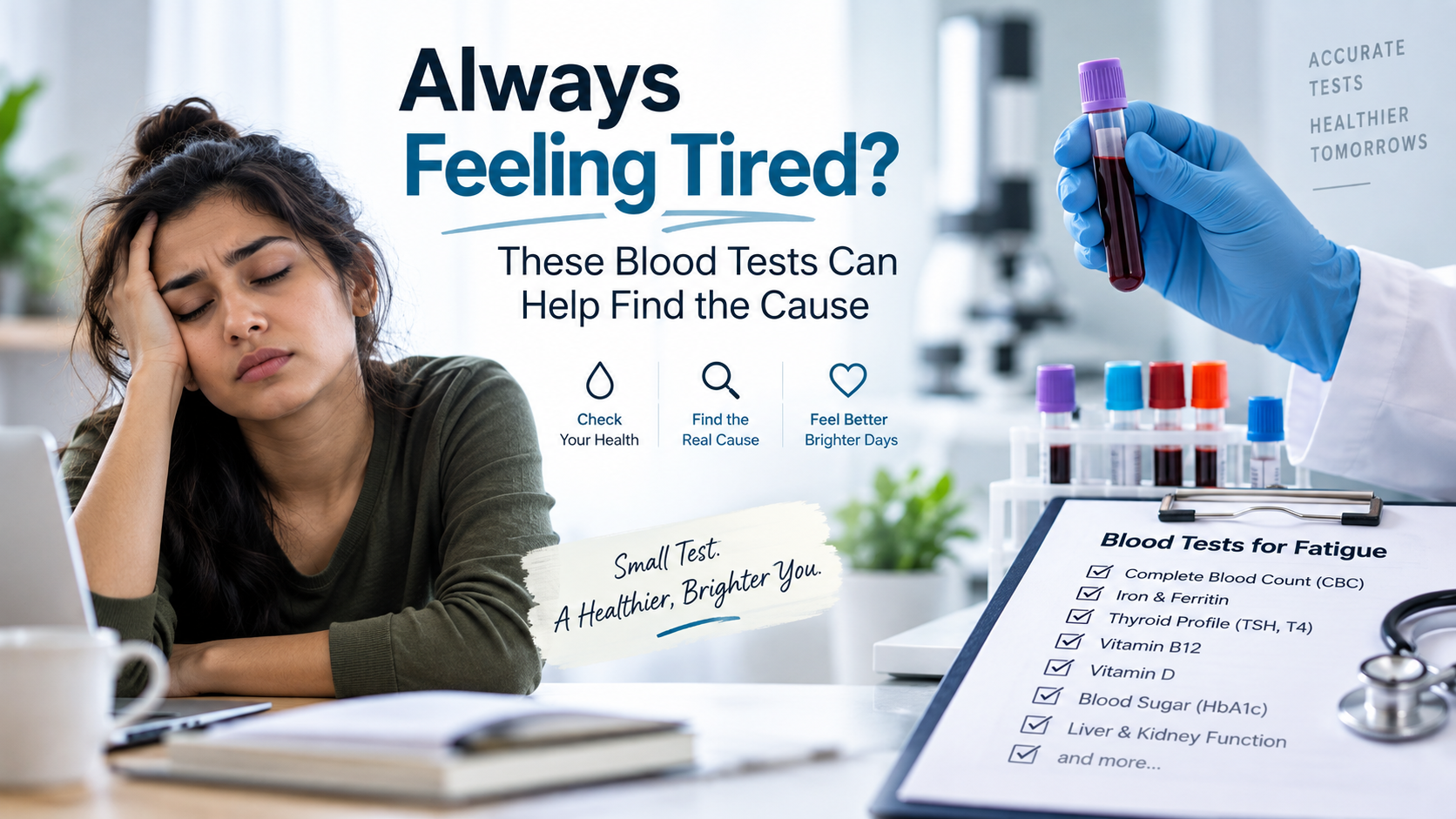
Feeling tired after a long day is normal. But what if you wake up tired, struggle to concentrate, feel low on energy throughout the day, or need several cups of tea or coffee just to get through your routine?Persistent tiredness can have many causes. Poor sleep, stress, an unhealthy routine and lack of physical activity can all contribute. However, certain medical conditions and nutritional deficiencies can also cause fatigue—and some of these can be investigated with simple blood tests.The right tests depend on your symptoms, medical history, age, diet and other risk factors. A blood test cannot identify every possible cause of fatigue, but it can help investigate several common medical conditions.What Causes Constant Tiredness?Fatigue is a symptom, not a diagnosis.Some common causes or contributing factors include:Iron deficiency or anaemiaThyroid disordersVitamin B12 deficiencyVitamin D deficiencyBlood sugar abnormalitiesCertain infections or inflammatory conditionsLiver or kidney problemsPoor-quality sleepStressCertain medicationsAn unhealthy or physically inactive lifestyleThis is why simply taking a vitamin supplement because you feel tired may not solve the underlying problem.Which Blood Tests Can Help Investigate Fatigue?There isn’t one single “fatigue blood test.” Depending on your symptoms and medical history, a healthcare professional may recommend different tests.1. Complete Blood Count (CBC)A CBC test is commonly used when investigating unexplained fatigue.A Complete Blood Count measures different types of blood cells, including red blood cells, white blood cells and platelets. It can help identify abnormalities such as anaemia and provide useful information about your overall blood health.Why might a CBC be relevant to tiredness?Red blood cells contain haemoglobin, which helps carry oxygen throughout the body. When haemoglobin is low, you may experience symptoms such as tiredness, weakness, dizziness or shortness of breath.A CBC may be particularly useful when fatigue is accompanied by:Pale skinWeaknessDizzinessShortness of breathHeadachesReduced staminaUnusual tiredness during physical activityHowever, a CBC result should always be interpreted alongside your symptoms and other clinical findings.2. Ferritin and Iron TestsIron deficiency can contribute to tiredness and may occur even before significant anaemia develops.Ferritin is a blood test that helps assess the body’s stored iron. Depending on the situation, a healthcare professional may also recommend additional iron studies.Iron-related testing may be particularly relevant if tiredness occurs alongside:Heavy menstrual bleedingPale skinHair lossReduced exercise toleranceDizzinessWeaknessA diet that is low in ironIt’s important not to start taking iron supplements simply because you feel tired. Testing can help determine whether iron deficiency is actually present.3. Thyroid Tests — TSH and T4Your thyroid gland plays an important role in regulating your body’s metabolism.An underactive thyroid, also known as hypothyroidism, can cause fatigue. It may also be associated with symptoms such as unexplained weight gain, feeling unusually cold, constipation, dry skin or changes in hair.A TSH test is commonly used as an initial test to assess thyroid function. Depending on the result and your symptoms, additional testing such as free T4 may be recommended.If you’re experiencing persistent tiredness together with unexplained weight changes or other thyroid-related symptoms, discuss thyroid testing with a healthcare professional.4. Vitamin B12 TestVitamin B12 is important for healthy blood cells and normal nerve function.Low vitamin B12 levels can be associated with fatigue and weakness. Some people may also experience neurological symptoms such as tingling or numbness.A B12 test may be worth discussing with a healthcare professional if you:Follow a vegetarian or vegan dietHave certain digestive or absorption problemsTake certain long-term medicationsExperience tingling or numbnessHave unexplained fatigueHave previously been diagnosed with low B12A B12 result should be interpreted according to the laboratory’s reference range and your overall health.5. Vitamin D TestVitamin D is another nutrient that may be tested when deficiency is suspected.People with limited sun exposure, certain dietary patterns or other risk factors may be more likely to have low vitamin D levels.However, not every case of tiredness is caused by vitamin D deficiency.If fatigue continues despite a normal vitamin D result, other possible causes should also be considered.6. Blood Sugar Tests and HbA1cBlood sugar abnormalities can sometimes be associated with tiredness.Depending on your symptoms and risk factors, a healthcare professional may recommend tests such as:Fasting blood glucoseHbA1cOther glucose-related tests when appropriateHbA1c provides information about your average blood glucose levels over the previous few months and generally does not require fasting.Blood sugar testing may be particularly relevant if tiredness occurs alongside:Increased thirstFrequent urinationUnexplained weight changesA family history of diabetesPrevious abnormal blood sugar resultsOther symptoms associated with high or low blood sugarOther Blood Tests Your Doctor May ConsiderThe best approach isn’t necessarily to order every available blood test.Depending on your symptoms and medical history, a healthcare professional may consider additional tests such as:Liver Function Tests (LFT) — to assess liver healthKidney Function Tests (KFT) — to assess kidney functionElectrolytes — when clinically indicatedCRP or ESR — when inflammation is suspectedFolate — in selected casesOther tests based on your symptoms and medical historyThe exact combination of tests should be decided based on your individual situation.Do You Need to Fast Before a Blood Test?It depends on which tests you are having.Not every blood test requires fasting.For example, thyroid testing generally does not require fasting unless your healthcare professional gives you specific instructions.If your testing includes a fasting blood glucose test, you may be instructed not to eat or drink certain things for a specific period before the test.Always follow the preparation instructions provided by your doctor or diagnostic laboratory.If you’re unsure whether you need to fast, ask the laboratory before your appointment.What If My Blood Tests Are Normal But I’m Still Tired?This is an important question.Normal blood test results don’t mean that your fatigue isn’t real.Blood tests can investigate several medical causes of tiredness, but they cannot identify every possible cause.If your initial results are normal, a healthcare professional may consider other factors such as:Sleep qualitySleep apnoeaStressMental healthLifestyleMedication side effectsRecent infectionsPhysical activity levelsOther underlying medical conditionsFor example, persistent tiredness accompanied by loud snoring, choking or gasping during sleep may indicate that your sleep quality needs further evaluation.So, if your blood reports are normal but you’re still experiencing significant fatigue, don’t simply keep repeating the same tests. Discuss your symptoms with a healthcare professional.When Should You See a Doctor About Constant Tiredness?Consider speaking with a healthcare professional if your tiredness:Continues for several weeksIs affecting your work or daily activitiesKeeps returning without an obvious explanationOccurs despite getting enough sleepIs accompanied by unexplained weight changesOccurs with dizziness, weakness or breathlessnessIs accompanied by other persistent symptomsSeek urgent medical attention if fatigue occurs with severe or sudden symptoms such as chest pain, severe difficulty breathing, fainting, significant bleeding or sudden neurological symptoms.Frequently Asked QuestionsWhat blood test should I get if I am always tired?There isn’t one universal blood test for tiredness. Depending on your symptoms, a healthcare professional may consider tests such as CBC, ferritin and iron studies, TSH, vitamin B12, vitamin D, blood glucose or HbA1c.Can a blood test show why I am tired?Blood tests can help investigate several possible causes of fatigue, including anaemia, iron deficiency, thyroid disorders, certain vitamin deficiencies and blood sugar abnormalities. However, blood tests cannot identify every possible cause of tiredness.Is CBC enough to find the cause of fatigue?Not always. A CBC can provide useful information about your blood cells and may help identify anaemia, but fatigue can have many different causes. Additional testing may be appropriate depending on your symptoms.Should I get a Vitamin B12 test if I feel tired?It may be appropriate in certain situations, particularly if fatigue occurs alongside symptoms or risk factors associated with B12 deficiency. Speak with a healthcare professional to determine whether testing is appropriate for you.Can thyroid problems cause tiredness?Yes. An underactive thyroid can cause fatigue and may also be associated with symptoms such as weight gain, feeling cold, constipation and changes in skin or hair. Thyroid blood tests can help investigate thyroid function.Do I need to fast for a thyroid test?Usually, thyroid blood tests do not require fasting. However, always follow the preparation instructions provided by your healthcare professional or diagnostic laboratory.Can low iron cause tiredness?Yes. Iron deficiency can be associated with fatigue, particularly when it results in anaemia. Ferritin and other iron-related tests can help assess iron status.What if my blood tests are normal but I’m still tired?Normal results can make certain medical conditions less likely, but they don’t explain every case of fatigue. Sleep, lifestyle, stress, medications and other medical conditions may also need to be considered.How do I know which blood tests I need?The right tests depend on your symptoms, age, medical history, diet, medications and other risk factors. Rather than ordering every available test, discuss your symptoms with a healthcare professional who can recommend appropriate investigations.The Bottom LineFeeling tired occasionally is normal. Feeling exhausted day after day shouldn’t simply be dismissed as “weakness” or automatically blamed on a vitamin deficiency.Blood tests can help investigate several possible contributors to fatigue, including anaemia, iron deficiency, thyroid problems, vitamin deficiencies and blood sugar abnormalities.The right approach is targeted testing based on your symptoms—not simply ordering the largest possible health package.If you’re experiencing persistent, unexplained fatigue, speak with a qualified healthcare professional about which tests may be appropriate for you.Remember: A blood report is an important diagnostic tool, but it is not a diagnosis by itself.