Have you ever felt pins and needles in your fingers after sitting in one position for too long? Or noticed a tingling sensation in your feet that keeps coming back, even when you change your position?
Occasional tingling can happen when pressure temporarily affects a nerve. However, if your hands and feet keep tingling, feel numb, or develop a burning sensation, it may be worth investigating the underlying cause.
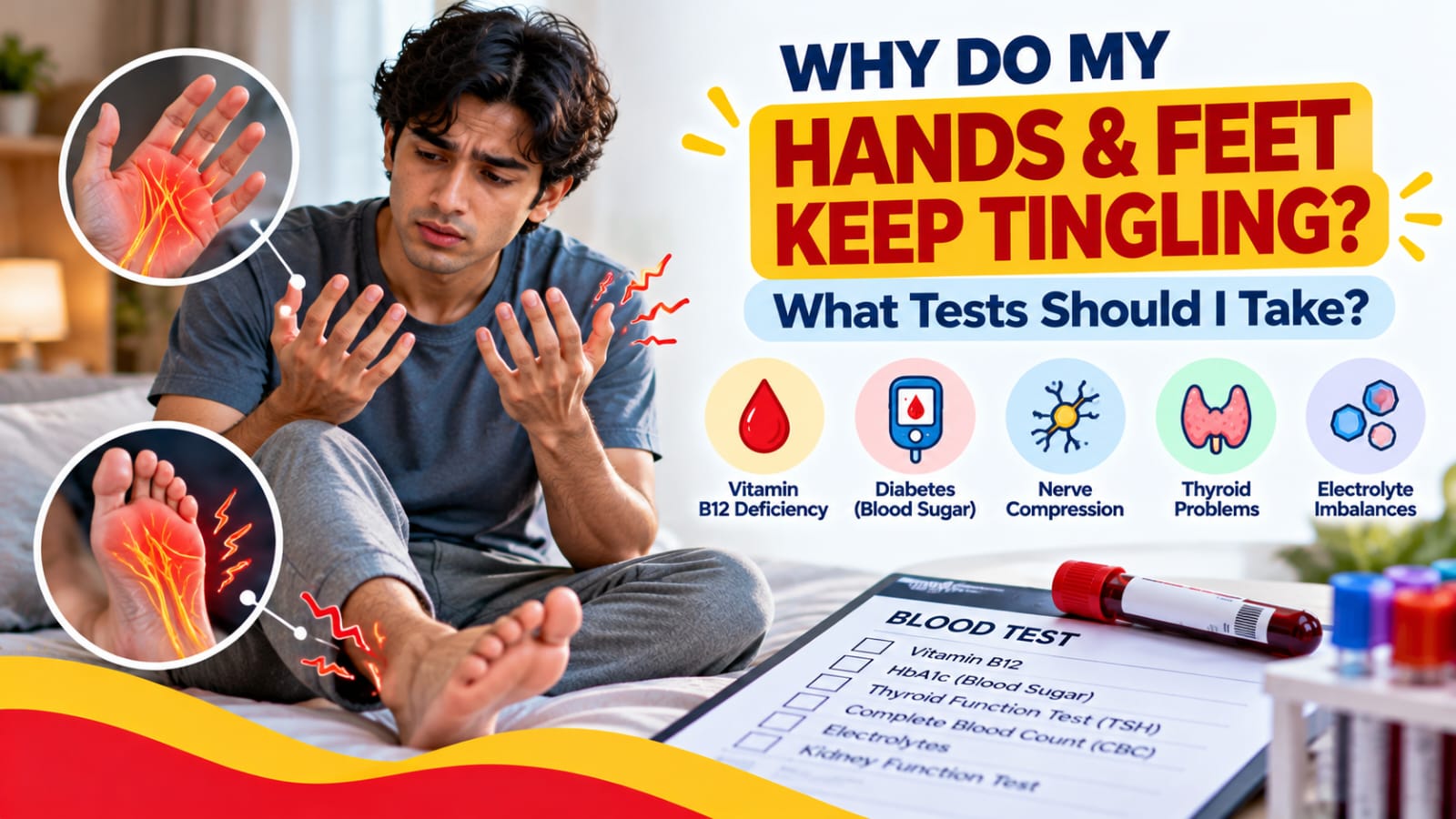
Persistent tingling can be associated with several conditions, including vitamin B12 deficiency, diabetes, nerve compression, and certain electrolyte or thyroid problems.
But which blood tests should you take for tingling hands and feet? The answer depends on your symptoms, medical history, and clinical examination.
In this article, we explain the common causes of tingling, the tests a doctor may recommend, and when you should seek medical attention.
Why Do My Hands and Feet Keep Tingling?
Tingling, often described as pins and needles, can occur when nerves are temporarily compressed or when they are affected by an underlying health condition.
The sensation may feel like:
- Small pins pricking your fingers or toes.
- Numbness or reduced sensation.
- Burning or an electric-shock-like feeling.
- Tingling that spreads from one area to another.
- Weakness or difficulty gripping objects, in some cases.
The cause can range from something temporary to a condition that requires medical evaluation.
1. Vitamin B12 Deficiency
Vitamin B12 helps maintain healthy nerve cells and supports red blood cell production. When your body does not have enough vitamin B12, nerve damage can develop.
Possible symptoms include:
- Tingling or numbness in the hands and feet.
- Unusual tiredness or weakness.
- Balance problems or difficulty walking.
- Memory or concentration difficulties.
- A sore or unusually smooth tongue.
Vitamin B12 deficiency can occur for several reasons, including inadequate dietary intake, problems absorbing the vitamin, and certain medicines or medical conditions.
If your symptoms suggest a possible deficiency, a doctor may recommend a vitamin B12 blood test. Identifying and treating a deficiency early is important because some nerve-related effects can become lasting if treatment is delayed.
2. Diabetes and High Blood Sugar
Diabetes can damage nerves over time, leading to a condition called diabetic peripheral neuropathy.
This often affects the feet first, although the hands may also be affected. Symptoms can include tingling, burning, numbness, pain, or reduced sensitivity to heat and injury.
A doctor may recommend blood glucose testing or an HbA1c test to assess your blood sugar.
- Fasting blood glucose: Measures blood sugar after a period without food.
- HbA1c: Estimates average blood sugar over approximately the previous two to three months.
These tests can help investigate diabetes, but tingling alone does not mean you have the condition. Other causes must also be considered.
3. Nerve Compression
Sometimes, tingling is caused by pressure on a particular nerve rather than a vitamin deficiency or blood sugar problem.
For example:
- Carpal tunnel syndrome can cause tingling or numbness in the thumb, index finger, middle finger, and part of the ring finger.
- A compressed nerve in the neck may cause symptoms that travel into the shoulder, arm, or hand.
- A compressed nerve in the lower back may cause tingling, numbness, or pain that travels down the leg and into the foot.
Symptoms that affect a specific part of the hand or one side of the body may provide useful clues.
Blood tests usually cannot confirm nerve compression. A doctor may assess your strength, reflexes, sensation, and movement. Depending on the findings, nerve conduction studies or imaging may be considered.
4. Thyroid Problems
The thyroid gland produces hormones that influence metabolism and many other body functions.
An underactive thyroid, known as hypothyroidism, can sometimes contribute to nerve-related symptoms, including tingling. Other possible symptoms include tiredness, sensitivity to cold, constipation, dry skin, and unexplained weight changes.
If a thyroid disorder is suspected, your doctor may recommend a thyroid-stimulating hormone (TSH) test and, when appropriate, a free T4 test.
Thyroid testing is not necessary for every person with tingling. It is generally guided by the overall symptoms and medical history.
5. Electrolyte Imbalances
Electrolytes are minerals, including calcium, potassium, and magnesium, that help your nerves and muscles function properly.
Abnormal levels can sometimes cause symptoms such as tingling, muscle cramps, weakness, or spasms.
Electrolyte disturbances may occur due to fluid loss, certain medicines, kidney problems, or other medical conditions.
If an electrolyte problem is suspected, a healthcare professional may recommend blood tests to measure relevant minerals and assess kidney function.
Do not start electrolyte supplements without medical advice, as taking too much of certain minerals can also be harmful.
6. Other Possible Causes
Tingling can also be associated with:
- Alcohol-related nerve damage.
- Certain medicines.
- Other vitamin deficiencies or nutritional problems.
- Autoimmune or inflammatory conditions.
- Peripheral nerve disorders.
- Prolonged pressure on a nerve.
Sometimes, several factors contribute to the symptoms. That is why a proper assessment is more useful than choosing blood tests based on symptoms alone.
What Tests Should I Take for Tingling Hands and Feet?
There is no single blood test that identifies every cause of tingling. Your doctor may recommend one or more tests depending on your symptoms and examination.
The following tests may be considered when clinically appropriate.
1. Vitamin B12 Test
A vitamin B12 blood test measures the amount of vitamin B12 in your blood.
It may be useful if you experience persistent tingling, numbness, balance problems, or other symptoms that suggest a deficiency.
If the result is borderline or does not clearly explain your symptoms, your doctor may consider additional testing, such as methylmalonic acid, depending on availability and clinical circumstances.
2. Blood Glucose or HbA1c Test
These tests help investigate whether diabetes or abnormal blood sugar may be contributing to your symptoms.
A doctor may recommend fasting blood glucose, HbA1c, or another appropriate glucose test based on your medical history and the situation.
An abnormal result needs to be interpreted in context and may require confirmation.
3. Complete Blood Count (CBC)
A complete blood count measures different components of your blood, including haemoglobin and red blood cells.
It can help identify anaemia and may provide clues to certain underlying health problems. However, a CBC alone cannot diagnose vitamin B12 deficiency or explain every cause of tingling.
4. Thyroid Function Test
A thyroid function test, often starting with TSH, may be recommended when symptoms or medical history suggest a thyroid problem.
Additional testing, such as free T4, may be needed depending on the initial result.
5. Kidney Function and Electrolyte Tests
Kidney function tests can help assess how well your kidneys filter waste from your blood. Electrolyte tests measure minerals that are important for normal nerve and muscle function.
These investigations may be useful when your symptoms, medical history, or examination suggest a kidney-related problem or an electrolyte disturbance.
6. Other Tests, If Needed
Depending on your symptoms, your doctor may consider additional investigations for causes such as inflammation, nutritional deficiencies, or specific nerve disorders.
Not everyone needs all these tests. A targeted approach helps avoid unnecessary testing and focuses on the most likely explanations.
Quick Guide: Which Tests May Be Considered?
| Symptoms or suspected cause | Tests a doctor may consider |
|---|---|
| Tingling with suspected vitamin B12 deficiency | Vitamin B12 test |
| Tingling with diabetes risk factors | Fasting blood glucose or HbA1c |
| Tingling with fatigue or suspected anaemia | CBC, with additional tests if needed |
| Tingling with symptoms suggesting thyroid disease | TSH, sometimes free T4 |
| Tingling with cramps or suspected electrolyte disturbance | Relevant electrolyte tests |
| Tingling with suspected kidney problems | Creatinine, eGFR and other appropriate tests |
| Tingling following a specific nerve distribution | Clinical nerve assessment; sometimes nerve conduction studies or imaging |
This table is a general guide, not a personal testing prescription. Your doctor can help determine which investigations are appropriate for you.
What If My Blood Tests Are Normal but My Hands and Feet Still Tingle?
Normal blood test results do not rule out every possible cause of tingling.
For example, nerve compression, certain peripheral nerve disorders, and some neurological conditions may not be detected through routine blood tests.
If your symptoms continue, your doctor may consider:
- Examining your muscle strength, reflexes, sensation, and balance.
- Reviewing your medicines and medical history.
- Checking whether the symptoms follow a particular nerve pathway.
- Recommending nerve conduction studies or electromyography (EMG) when appropriate.
- Considering imaging if a spinal or other structural problem is suspected.
Do not assume persistent symptoms are harmless simply because your blood tests are normal. Further assessment may be needed to understand what is happening.
When Should I See a Doctor for Tingling?
Arrange a medical appointment if:
- Tingling keeps returning or does not go away.
- Numbness is gradually spreading.
- You experience burning pain or reduced sensation in your feet.
- You have difficulty gripping objects or performing everyday tasks.
- You notice balance problems or unexplained muscle weakness.
- You have diabetes or another condition that may affect your nerves.
Seek emergency medical attention if tingling or numbness begins suddenly, particularly on one side of your body, or occurs with facial drooping, difficulty speaking, sudden vision changes, or severe loss of coordination. These can be warning signs of a stroke.
New or rapidly worsening weakness, difficulty walking, or numbness around the groin or saddle area—especially with new bladder or bowel problems—also requires urgent assessment.
Do not delay emergency care to arrange a routine blood test.
Can I Prevent Tingling in My Hands and Feet?
Prevention depends on the cause, but some habits may support nerve health and reduce certain risks.
- Eat a balanced diet that provides essential vitamins and minerals.
- If you follow a vegetarian or vegan diet, discuss vitamin B12 sources and supplementation with a healthcare professional, particularly if your intake may be inadequate.
- If you have diabetes, follow your treatment plan and monitor your blood sugar as advised.
- Avoid prolonged pressure on your wrists, elbows, or legs, and take breaks from repetitive activities.
- Limit alcohol consumption, as excessive alcohol can damage nerves.
- Take prescribed medicines as directed and discuss possible side effects with your doctor.
Avoid taking high-dose vitamin supplements simply because you experience tingling. The right treatment depends on the underlying cause, and excessive intake of certain vitamins, including vitamin B6, can itself cause nerve damage.
Frequently Asked Questions
1. Which vitamin deficiency causes tingling in the hands and feet?
Vitamin B12 deficiency is an important possible cause because it can affect nerve function. Other nutritional problems may contribute in some circumstances, but symptoms alone cannot identify which vitamin, if any, is deficient.
2. Can diabetes cause tingling in the hands and feet?
Yes. Diabetes can damage peripheral nerves, often starting in the feet. Blood glucose and HbA1c tests can help investigate diabetes, but a medical assessment is needed to determine whether diabetes explains your symptoms.
3. Should I get a vitamin B12 test if my feet keep tingling?
A vitamin B12 test may be appropriate, particularly if you have other symptoms or risk factors for deficiency. However, tingling has many possible causes, so a healthcare professional should help decide which tests are needed.
4. Can stress cause tingling in the hands and feet?
Stress and anxiety can sometimes contribute to tingling, particularly during episodes of rapid breathing. However, persistent or recurrent symptoms should not automatically be attributed to stress without considering other possible causes.
5. Is tingling in both feet always a sign of nerve damage?
No. Tingling in both feet can have several causes, including temporary pressure, nutritional deficiencies, diabetes, or other conditions. A clinical assessment can help determine whether a nerve disorder is present.
6. Can a blood test confirm nerve damage?
Usually, no single blood test can confirm nerve damage itself. Blood tests may identify an underlying cause, while a neurological examination and, in some cases, nerve conduction studies or EMG may help assess nerve function.
The Bottom Line
Repeated tingling in your hands and feet can be caused by vitamin B12 deficiency, diabetes, nerve compression, thyroid problems, electrolyte disturbances, and other conditions.
The right test depends on the suspected cause. A doctor may recommend vitamin B12 testing, blood glucose or HbA1c testing, a CBC, thyroid function tests, or other investigations based on your symptoms and medical history.
At CPL Diagnostics, you can explore available diagnostic testing options, including blood tests used to investigate nutritional deficiencies and blood sugar problems. Speak with a qualified healthcare professional to determine which tests are appropriate for you.
Don’t ignore persistent tingling or assume that it is always caused by a vitamin deficiency. Identifying the underlying cause is an important step towards getting appropriate care.
Medical disclaimer: This article is intended for general educational purposes only and is not a substitute for professional medical advice, diagnosis, or treatment. Consult a qualified healthcare professional for advice about your symptoms and appropriate investigations.