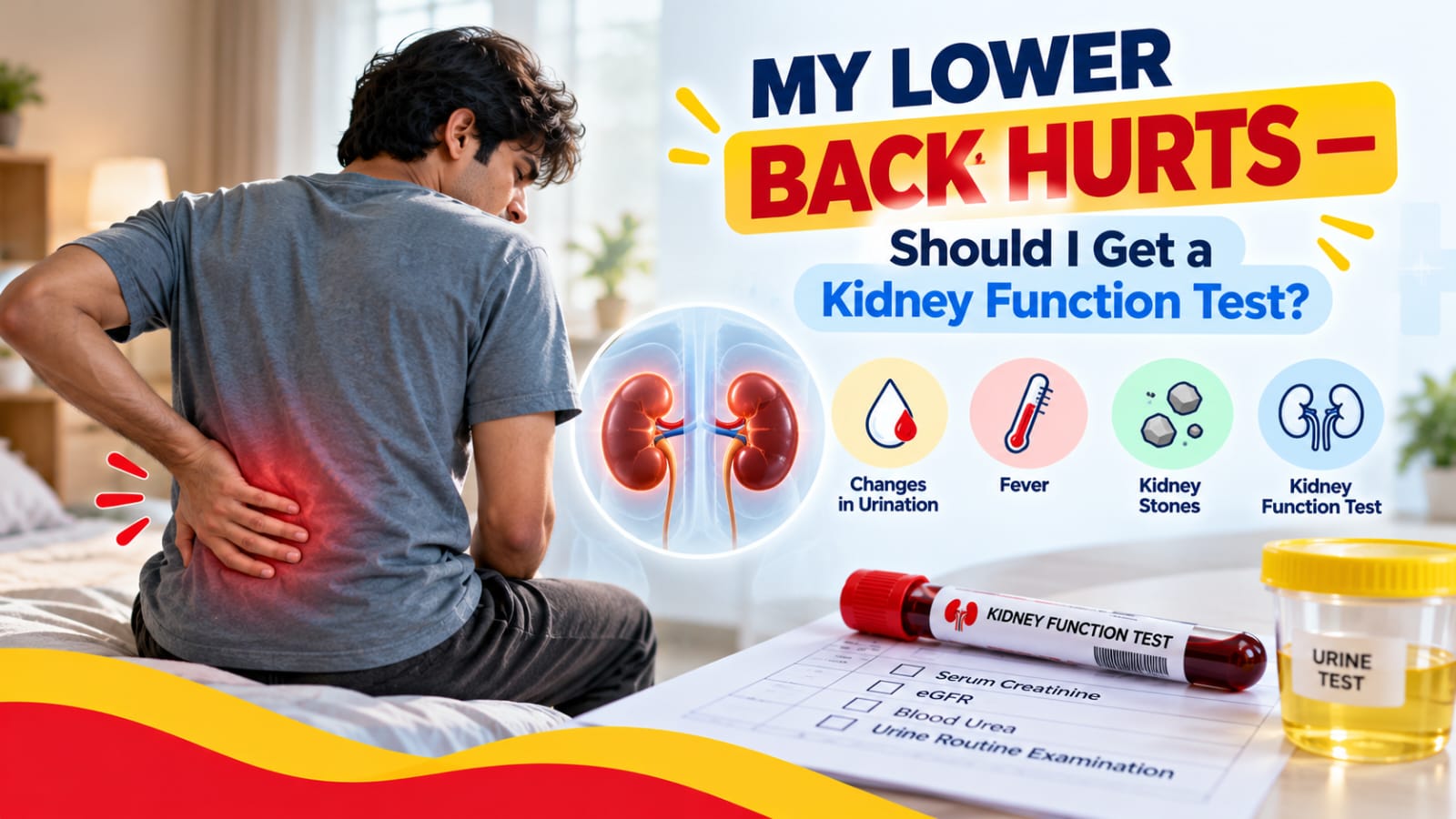
Lower back pain is a common problem. It can start after sitting for too long, lifting something heavy, sleeping in an uncomfortable position, or spending hours at a desk.
But when the pain appears near your lower back or sides, you might wonder: Could it be a kidney problem? Should I get a kidney function test?
The answer depends on your symptoms. Most lower back pain is related to muscles, joints, or the spine rather than the kidneys. However, certain kidney conditions can cause pain in the back or side, especially when accompanied by fever, changes in urination, or blood in the urine.
In this article, we explain how to recognise possible warning signs, which tests may help assess kidney health, and when you should consult a healthcare professional.
Can Kidney Problems Cause Lower Back Pain?
Yes, some kidney conditions can cause pain in the back, side, or area beneath the ribs. However, the location of the pain alone cannot confirm that your kidneys are responsible.
Your kidneys sit towards the back of your upper abdomen, one on each side of your spine, beneath the lower ribs. Pain associated with the kidneys is often felt higher than typical muscular lower back pain, although the location can vary.
Kidney-related causes of back or side pain may include:
- Kidney stones: These can cause severe pain that comes in waves and may spread towards the lower abdomen or groin. Blood in the urine, nausea, or vomiting may also occur.
- Kidney infection: This may cause pain in the back or side, fever, chills, painful urination, or nausea.
- Other kidney conditions: Some conditions affecting the kidneys can cause discomfort or other symptoms, although chronic kidney disease often develops without noticeable symptoms in its early stages.
It is important to remember that ordinary back pain does not automatically indicate kidney disease. A medical assessment can help distinguish between possible causes.
How Can I Tell If My Back Pain Is Kidney-Related?
There is no reliable way to identify kidney disease based on pain location alone. However, certain accompanying symptoms can provide useful clues.
| Symptom | What it may suggest |
|---|---|
| Pain that worsens with bending, lifting, or certain movements | A muscle, joint, or spine-related cause may be more likely |
| Severe pain in the side that comes in waves | A kidney stone or another cause may need investigation |
| Back or side pain with fever and chills | A kidney infection is possible |
| Burning or pain while urinating | A urinary tract infection may be present |
| Blood in the urine | A urinary tract or kidney problem needs assessment |
| Swelling around the eyes, ankles, or feet | A kidney-related or other medical condition may need investigation |
These are general clues, not a way to diagnose yourself. Kidney stones, infections, muscular pain, and other conditions can have overlapping symptoms.
If your back pain is persistent, severe, or accompanied by urinary symptoms, seek medical advice rather than relying on symptoms alone.
Should I Get a Kidney Function Test for Lower Back Pain?
A kidney function test may be appropriate if your healthcare professional suspects a kidney problem. However, lower back pain on its own does not mean you need a kidney function test.
Your doctor may first ask about the location and duration of the pain, your medical history, your medications, and whether you have noticed changes in urination. They may also examine you and check your blood pressure.
Depending on the findings, one or more of the following tests may be recommended.
1. Serum Creatinine Test
Creatinine is a waste product produced by normal muscle activity. Healthy kidneys remove it from the blood.
A serum creatinine test measures the amount of creatinine in your blood. Higher-than-expected levels can indicate reduced kidney filtration, although results can also be influenced by factors such as muscle mass, certain medicines, and other medical conditions.
Doctors generally interpret creatinine alongside other information rather than using it alone to diagnose kidney disease.
2. Estimated Glomerular Filtration Rate (eGFR)
The estimated glomerular filtration rate, or eGFR, indicates how effectively your kidneys filter waste from your blood. It is usually calculated using your blood creatinine result and other information, such as your age and sex.
An eGFR below the expected range may indicate reduced kidney function. However, one abnormal result does not necessarily mean you have chronic kidney disease.
The result must be interpreted in context, and repeat testing may be needed to determine whether the change is persistent.
3. Blood Urea Test
Urea is a waste product formed when your body breaks down protein. Your kidneys help remove it from your blood.
A blood urea test may be included in a kidney function assessment. However, urea levels can also change because of dehydration, dietary protein intake, certain medicines, and other conditions.
For this reason, urea is usually interpreted alongside creatinine, eGFR, and your clinical findings.
4. Urine Routine Examination
A urine routine examination can help identify findings such as blood, protein, white blood cells, or other abnormalities in a urine sample.
Depending on the findings, it may help investigate a suspected urinary tract infection, kidney stone, or another urinary problem.
If an infection is suspected, your doctor may also recommend a urine culture to identify bacteria and help guide treatment.
5. Urine Albumin-to-Creatinine Ratio (UACR)
Albumin is a protein that normally remains in the blood. When the kidneys’ filtering structures are damaged, albumin can pass into the urine.
The urine albumin-to-creatinine ratio, or UACR, measures albumin in relation to creatinine in a urine sample. It can help detect kidney damage, particularly in people with diabetes, high blood pressure, or other risk factors for kidney disease.
UACR is not a test for the cause of ordinary back pain. It is used when assessing possible kidney damage or monitoring people at risk.
Which Tests Are Needed for Kidney Health?
There is no single test that detects every kidney problem. The appropriate tests depend on what your doctor suspects.
- To assess kidney filtration: Serum creatinine and eGFR.
- To check for protein in the urine: UACR or another appropriate urine protein test.
- To investigate a possible urinary infection: Urine examination and, when indicated, urine culture.
- To investigate suspected kidney stones or other structural problems: Imaging, such as an ultrasound or CT scan, may be needed.
Blood tests help assess kidney function, but they may not identify the exact cause of pain. For example, a person with a kidney stone may need imaging even if some kidney function results are within the expected range.
Your doctor can determine which combination of tests is appropriate.
Can You Have Kidney Disease Without Back Pain?
Yes. In fact, early chronic kidney disease often causes no noticeable symptoms.
Some people only discover a kidney problem through routine testing, particularly if they have risk factors such as:
- Diabetes
- High blood pressure
- Cardiovascular disease
- A family history of kidney failure
- A previously identified kidney condition
For people at increased risk, a doctor may recommend blood testing for creatinine and eGFR, along with urine testing for albumin.
This is one reason kidney health should not be judged solely by whether you experience back pain or other symptoms.
When Should I See a Doctor for Lower Back Pain?
Arrange a medical appointment if your back pain is persistent, repeatedly returns, affects daily activities, or occurs alongside changes in urination.
Seek prompt medical assessment if you experience:
- Back or side pain with fever or chills
- Pain or burning while urinating
- Visible blood in your urine
- Severe pain that comes in waves
- Persistent nausea or vomiting alongside back or side pain
- A significant reduction in the amount of urine you pass
Seek emergency care if back pain occurs with new difficulty controlling your bladder or bowel, difficulty passing urine, numbness around your genitals or anus, or new weakness or numbness in both legs. These may indicate a serious spinal or neurological problem.
Do not delay urgent medical care while waiting to arrange a kidney function test.
What Can I Do to Support My Kidney Health?
You cannot prevent every kidney condition, but some habits can help protect your overall health.
- Keep your blood pressure under control.
- If you have diabetes, follow your treatment plan and monitor your blood glucose as advised.
- Drink enough fluids for your needs, unless your healthcare professional has advised you to restrict fluids.
- Avoid taking painkillers or other medicines more frequently than recommended. Some medicines, including non-steroidal anti-inflammatory drugs (NSAIDs), can harm kidney function in certain circumstances.
- Avoid taking antibiotics or other prescription medicines without appropriate medical advice.
- If you have risk factors for kidney disease, ask your doctor whether regular kidney function and urine testing is appropriate.
If your back pain appears related to muscle strain, gentle movement and avoiding prolonged bed rest may help. However, persistent or worsening pain should be assessed rather than treated indefinitely at home.
Frequently Asked Questions
1. Can a kidney function test detect kidney stones?
A kidney function test can assess how well your kidneys are filtering blood, but it cannot reliably confirm or rule out a kidney stone. Urine testing and imaging, such as an ultrasound or CT scan, may be needed.
2. Is creatinine enough to check kidney health?
Creatinine is important, but it is not the whole picture. Doctors commonly use creatinine to calculate eGFR and may also recommend urine albumin testing to check for signs of kidney damage.
3. Can normal kidney function results rule out every kidney problem?
No. Some kidney conditions, including certain kidney stones and early kidney damage, may not cause an obvious change in kidney filtration results. Further urine testing or imaging may be needed depending on the symptoms.
4. Does drinking more water help kidney-related back pain?
Drinking enough water helps maintain normal hydration, but it does not treat every cause of kidney-related pain. People with some kidney or heart conditions may need to limit fluids. Follow your healthcare professional’s advice, especially if you have severe pain, fever, vomiting, or difficulty passing urine.
5. Should I get a kidney function test if I have diabetes or high blood pressure?
Your doctor may recommend regular kidney screening because diabetes and high blood pressure increase the risk of chronic kidney disease. Screening commonly includes eGFR and urine albumin testing. The recommended frequency depends on your health and previous results.
The Bottom Line
Lower back pain is common and is often related to muscles, joints, or the spine. However, pain in the back or side accompanied by fever, urinary changes, blood in the urine, or severe waves of pain may require investigation for a kidney or urinary tract problem.
A kidney function assessment may include serum creatinine, eGFR, and urine testing. Imaging may also be necessary when a kidney stone or structural problem is suspected.
At CPL Diagnostics, you can explore available diagnostic testing options, including kidney function and urine tests. Speak with a qualified healthcare professional to determine which investigations are appropriate for your symptoms.
Don’t assume every backache is a kidney problem—but don’t ignore persistent pain or warning signs either. The right assessment can help identify the cause and guide the next step.
Medical disclaimer: This article is intended for general educational purposes only and is not a substitute for professional medical advice, diagnosis, or treatment. Consult a qualified healthcare professional for advice about your symptoms and appropriate investigations.