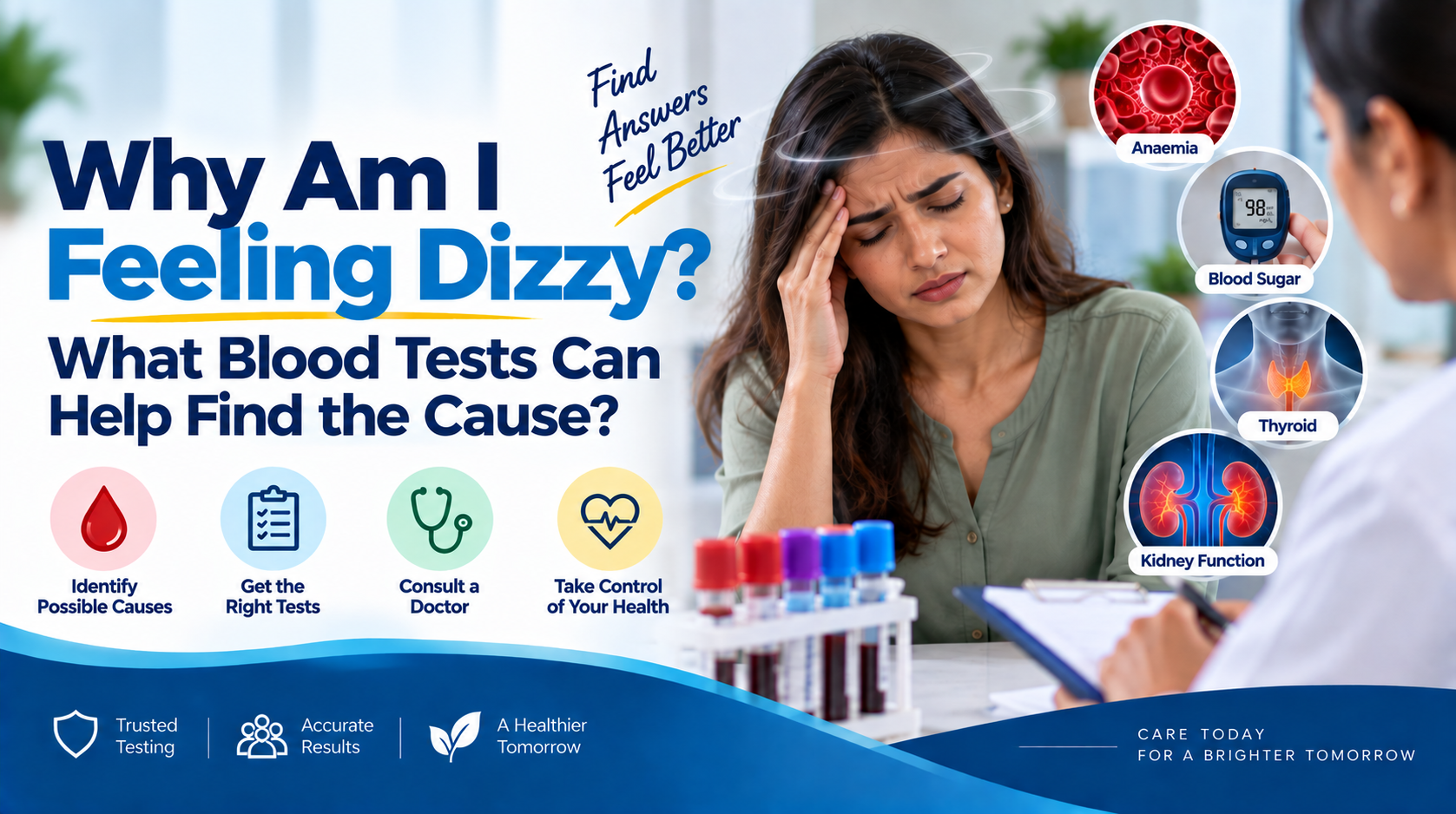
Have you ever stood up, walked around, or turned your head and suddenly felt dizzy?
Maybe you feel lightheaded, as if you might faint. Or perhaps the room seems to spin around you. Sometimes dizziness comes with weakness, tiredness, nausea, or difficulty maintaining your balance.
If you are experiencing these symptoms, you may be wondering:
- Why am I feeling dizzy?
- Which blood test is done for dizziness?
- Can low haemoglobin cause dizziness?
- Can low blood sugar make me feel dizzy?
- Should I get a blood test for dizziness and weakness?
- When should I see a doctor?
Dizziness is a common symptom, but it can have many different causes. Some are temporary and easily treated, while others require medical evaluation.
Blood tests can help investigate certain causes of dizziness, but the right test depends on your symptoms, medical history, and doctor’s assessment.
In this guide, we explain common causes of dizziness, which blood tests may be useful, what your results can mean, and when you should seek medical attention.
What Does Dizziness Feel Like?
People use the word “dizziness” to describe different sensations.
1. Lightheadedness
You may feel:
- As if you are about to faint.
- Weak or woozy.
- Unsteady when standing.
- As if your head feels empty or heavy.
Lightheadedness can occur with dehydration, blood pressure changes, low blood sugar, and other conditions.
2. Vertigo
Vertigo is the feeling that you or the surroundings are spinning or moving when they are not.
It may happen when you:
- Turn your head.
- Roll over in bed.
- Look up or down.
- Move suddenly.
Vertigo is often related to the balance system in the inner ear, although other causes are possible.
3. Loss of Balance
Some people feel unsteady or have difficulty walking without feeling that the room is spinning.
This may require an examination of balance, walking, vision, hearing, and other neurological functions.
Why does the difference matter?
The way you experience dizziness can help your doctor decide what to investigate.
For example, dizziness that occurs when standing up may lead to a blood pressure assessment, while spinning triggered by head movement may suggest a different evaluation.
What Causes Dizziness?
Dizziness can happen for many reasons. Common possibilities include:
- Dehydration.
- Low blood pressure.
- Low blood sugar.
- Anaemia.
- Inner-ear problems.
- Medication side effects.
- Migraine.
- Stress or anxiety.
- Heart rhythm problems.
- Other medical conditions.
Not all causes can be detected through a blood test.
Your doctor may need to ask questions, check your blood pressure, perform a physical examination, or recommend other investigations.
7 Blood Tests That May Help Investigate Dizziness
There is no single blood test that can diagnose every cause of dizziness.
The following tests may be considered depending on your symptoms and clinical assessment.
1. Complete Blood Count (CBC)
A Complete Blood Count, commonly called CBC, measures different types of blood cells.
It may include:
- Haemoglobin.
- Red blood cell count.
- White blood cell count.
- Platelet count.
- Other red blood cell measurements.
Why might a doctor recommend CBC for dizziness?
One reason is to investigate anaemia.
Anaemia occurs when the blood does not have enough healthy red blood cells or haemoglobin to carry oxygen effectively.
Depending on its severity and cause, anaemia may be associated with:
- Tiredness.
- Weakness.
- Shortness of breath.
- Lightheadedness.
- Pale skin.
However, dizziness does not automatically mean you have anaemia.
A CBC can help identify whether your haemoglobin or other blood count measurements are abnormal. If anaemia is found, your doctor may recommend additional tests to investigate its cause.
Related article: How to Read a Blood Test Report: CBC, Sugar, Thyroid, Cholesterol & More
2. Blood Glucose Test
Low blood sugar, also called hypoglycaemia, can cause dizziness or lightheadedness.
This is particularly important for people with diabetes who use insulin or certain medicines that lower blood glucose.
A blood glucose test measures the amount of glucose in your blood at the time of testing.
Depending on your symptoms, your doctor may consider:
- Random blood glucose.
- Fasting blood glucose.
- Other glucose testing when appropriate.
What symptoms may occur with low blood sugar?
Possible symptoms include:
- Dizziness.
- Sweating.
- Shaking.
- Hunger.
- Weakness.
- Confusion.
- Fast heartbeat.
If you have diabetes and feel dizzy, check your blood glucose if you can do so safely and follow your prescribed hypoglycaemia plan.
If you have severe symptoms, confusion, or cannot safely manage the situation, seek urgent medical help.
3. HbA1c Test
The HbA1c test measures the percentage of haemoglobin with glucose attached to it.
It provides an estimate of average blood glucose over approximately the previous 2–3 months.
Doctors may recommend HbA1c when they are investigating diabetes, prediabetes, or monitoring existing diabetes.
Can HbA1c help find the cause of dizziness?
It may help identify longer-term blood sugar problems, but it does not diagnose every cause of dizziness.
For example, HbA1c is not a substitute for checking blood glucose during an episode of suspected low blood sugar.
If your dizziness is associated with diabetes, your doctor may decide which glucose tests are appropriate.
Read more: HbA1c Test: Normal Range, Results, Levels and What They Mean
4. Thyroid Function Tests
Thyroid function tests are used to assess how the thyroid gland is working.
Common thyroid tests include:
- TSH.
- Free T4.
- Sometimes other thyroid-related tests.
Thyroid conditions can be associated with symptoms such as tiredness, changes in weight, and changes in heart rate.
Depending on the clinical situation, thyroid-related problems may contribute to symptoms that a patient describes as dizziness or weakness.
However, dizziness alone does not necessarily mean that you have a thyroid condition.
Your doctor will decide whether thyroid testing is appropriate based on your symptoms and examination.
Related article: How to Read a Blood Test Report: CBC, Sugar, Thyroid, Cholesterol & More
5. Electrolyte Blood Tests
Electrolytes are minerals in your blood that help regulate important body functions.
Commonly measured electrolytes include:
- Sodium.
- Potassium.
- Sometimes other minerals and related measurements.
Abnormal electrolyte levels can occur with certain illnesses, dehydration, kidney problems, or medication effects.
Depending on the abnormality, symptoms may include weakness, nausea, confusion, or other problems.
A doctor may recommend electrolyte testing if your symptoms and medical history suggest it is relevant.
When might electrolyte testing be considered?
For example, your doctor may consider it if you have:
- Significant vomiting or diarrhoea.
- Possible dehydration.
- Certain kidney-related problems.
- Medicines that affect electrolyte balance.
- Symptoms suggesting a metabolic problem.
Electrolyte tests are not required for every episode of dizziness.
6. Kidney Function Tests
Kidney function tests help assess how well the kidneys are working.
They may include:
- Creatinine.
- Estimated glomerular filtration rate (eGFR).
- Other tests when appropriate.
Kidney problems can sometimes be associated with changes in fluid balance, electrolytes, or other factors that may contribute to feeling unwell.
Your doctor may consider kidney function testing if you have relevant symptoms, medical conditions, or risk factors.
However, kidney function tests alone cannot identify every cause of dizziness.
7. Other Tests Depending on Your Symptoms
Sometimes your doctor may consider additional investigations.
These may include tests for:
- Iron deficiency.
- Vitamin B12 deficiency.
- Folate deficiency.
- Other suspected nutritional deficiencies.
- Infection or inflammation, when clinically indicated.
The right test depends on the reason for your symptoms.
For example, a person with persistent tiredness and a suspected nutritional deficiency may need a different evaluation from someone who feels spinning when turning their head.
More blood tests are not always better. Targeted testing based on the clinical assessment can be more useful than ordering every available test.
What Other Checks May Be Needed Besides Blood Tests?
Blood tests are only one part of investigating dizziness.
Your doctor may also consider:
Blood Pressure Measurement
Dizziness that occurs when standing up can sometimes be related to a drop in blood pressure.
Your doctor may check blood pressure while sitting or lying down and again after standing, depending on your symptoms.
This is sometimes called an orthostatic or postural blood pressure assessment.
Medication Review
Some medicines can cause dizziness or lightheadedness.
These may include certain:
- Blood pressure medicines.
- Antidepressants.
- Sedatives.
- Other medicines that affect blood pressure or balance.
If your dizziness began after starting a new medicine or changing a dose, tell your doctor.
Do not stop prescribed medication without medical advice.
Ear and Balance Examination
If you feel that the room is spinning, your doctor may assess whether the symptoms suggest an inner-ear balance problem.
Conditions such as benign paroxysmal positional vertigo (BPPV) can cause spinning sensations, especially with certain head movements.
Blood tests generally do not diagnose BPPV.
ECG or Heart Assessment
If dizziness is associated with palpitations, fainting, or other symptoms suggesting a heart rhythm problem, your doctor may consider an ECG or other heart-related evaluation.
Imaging or Specialist Evaluation
Some people may need imaging or referral to a specialist, depending on the symptoms and examination.
For example, sudden dizziness with neurological symptoms requires urgent assessment rather than simply arranging routine blood tests.
Which Blood Test Is Best for Dizziness and Weakness?
There is no single “best blood test” for everyone with dizziness and weakness.
The appropriate test depends on what your doctor suspects.
Examples
| Symptoms or concern | Tests or checks that may be considered |
|---|---|
| Dizziness with tiredness or weakness | CBC and other tests based on assessment |
| Dizziness with suspected low blood sugar | Blood glucose testing |
| Dizziness with diabetes | Glucose testing and HbA1c when appropriate |
| Dizziness with symptoms suggesting thyroid disease | Thyroid function tests |
| Dizziness with vomiting or possible dehydration | Electrolytes and kidney function when indicated |
| Dizziness after starting medication | Medication review and targeted tests if needed |
| Spinning sensation with head movement | Ear and balance assessment |
This table is for general information only. It is not a prescription or a recommendation to order all these tests.
When Should You Get a Blood Test for Dizziness?
You may need medical evaluation if your dizziness:
- Keeps coming back.
- Lasts a long time.
- Has no clear cause.
- Is affecting your daily activities.
- Occurs with weakness or other symptoms.
- Started after a new medicine.
- Is associated with a known medical condition.
Your doctor may recommend a blood test if the history and examination suggest a possible cause that can be investigated through laboratory testing.
Should you get a blood test immediately?
Not every episode of dizziness requires a blood test.
For example, dizziness caused by a brief episode of standing up too quickly may be assessed differently from persistent dizziness with weakness or other symptoms.
The important thing is to understand the cause rather than simply ordering a test.
What Should You Do When You Feel Dizzy?
If you suddenly feel dizzy:
1. Sit or Lie Down
Move to a safe place and sit or lie down until the feeling passes.
2. Move Slowly
Avoid standing up suddenly.
When getting out of bed, sit for a moment before standing.
3. Drink Water if Appropriate
Dehydration can contribute to dizziness. Drink water if you can safely do so and have not been given fluid restrictions by your doctor.
4. Avoid Driving
Do not drive, climb ladders, or operate machinery while dizzy.
5. Check Your Blood Sugar if You Have Diabetes
If you have diabetes and experience dizziness, check your blood glucose if possible and follow your prescribed treatment plan.
If you suspect low blood sugar, follow your doctor’s instructions for treating it.
6. Arrange Medical Advice if Symptoms Continue
If dizziness is persistent, recurrent, or unexplained, contact a healthcare professional.
When Is Dizziness an Emergency?
Most dizziness is not caused by a life-threatening condition, but certain symptoms require urgent attention.
Seek emergency medical care immediately if dizziness occurs with:
- Sudden weakness or numbness, especially on one side of the body.
- Trouble speaking or understanding speech.
- Sudden vision changes or double vision.
- New difficulty walking or severe loss of balance.
- Chest pain.
- Severe difficulty breathing.
- Fainting or seizures.
- A sudden severe headache.
- New confusion.
- Severe or ongoing vomiting.
- Dizziness after a head injury.
These symptoms can indicate a serious medical problem, including stroke or another emergency.
Do not wait for a routine blood test if you have emergency warning signs.
Frequently Asked Questions About Blood Tests for Dizziness
1. Which blood test is done for dizziness?
There is no single blood test for dizziness. Depending on the symptoms, a doctor may consider CBC, blood glucose, HbA1c, thyroid function, electrolytes, kidney function, or other targeted tests.
2. Can low haemoglobin cause dizziness?
Yes, anaemia can be associated with dizziness, weakness, and tiredness. A CBC can help identify low haemoglobin and other blood count abnormalities.
3. Can low blood sugar cause dizziness?
Yes. Low blood sugar can cause dizziness, sweating, shaking, weakness, and other symptoms. It is especially important for people with diabetes who use medicines that can lower glucose.
4. Can dehydration cause dizziness?
Yes. Dehydration can contribute to lightheadedness, particularly if it is associated with a drop in blood pressure or loss of body fluids.
5. Should I get a CBC test if I feel dizzy?
A CBC may be useful if your doctor suspects anaemia or another blood count problem. It is not necessary for every person with dizziness.
6. Can thyroid problems cause dizziness?
Thyroid conditions may be associated with symptoms such as tiredness, weakness, or changes in heart rate. Your doctor can decide whether thyroid testing is appropriate.
7. Can a normal blood test rule out all causes of dizziness?
No. Blood tests assess specific markers and cannot rule out every possible cause of dizziness. Inner-ear problems, blood pressure changes, medication effects, and other conditions may require different assessments.
8. Is dizziness always a sign of a serious disease?
No. Dizziness has many possible causes, and many are not serious. However, sudden or severe dizziness with neurological, heart, or breathing symptoms requires urgent medical evaluation.
9. What should I tell my doctor about dizziness?
Tell your doctor:
- When the dizziness started.
- How long each episode lasts.
- Whether you feel faint or the room is spinning.
- Whether standing or head movement triggers it.
- Any other symptoms.
- Any medicines you take.
- Whether you have diabetes or other medical conditions.
This information helps guide the assessment.
Conclusion
Feeling dizzy can be uncomfortable and confusing, especially when you do not know the cause.
Blood tests can help investigate some causes of dizziness, but the right test depends on your symptoms and medical assessment.
Tests such as CBC, blood glucose, HbA1c, thyroid function, electrolytes, and kidney function may be considered in selected situations.
However, dizziness can also be caused by blood pressure changes, dehydration, inner-ear problems, medication effects, and other conditions that may require different examinations or investigations.
If your dizziness keeps coming back, lasts a long time, or affects your daily life, consult a qualified healthcare professional.
At CPL Diagnostics, we aim to help patients understand common laboratory tests and prepare for diagnostic investigations.
Your symptoms matter. Get the right medical advice and follow the recommended testing plan.
Disclaimer: This article is for general educational purposes only and does not replace medical advice, diagnosis, or treatment. Do not order or interpret blood tests as a substitute for a medical evaluation. Seek emergency care for sudden severe dizziness or dizziness with warning signs such as weakness, speech difficulty, chest pain, or severe breathing problems.