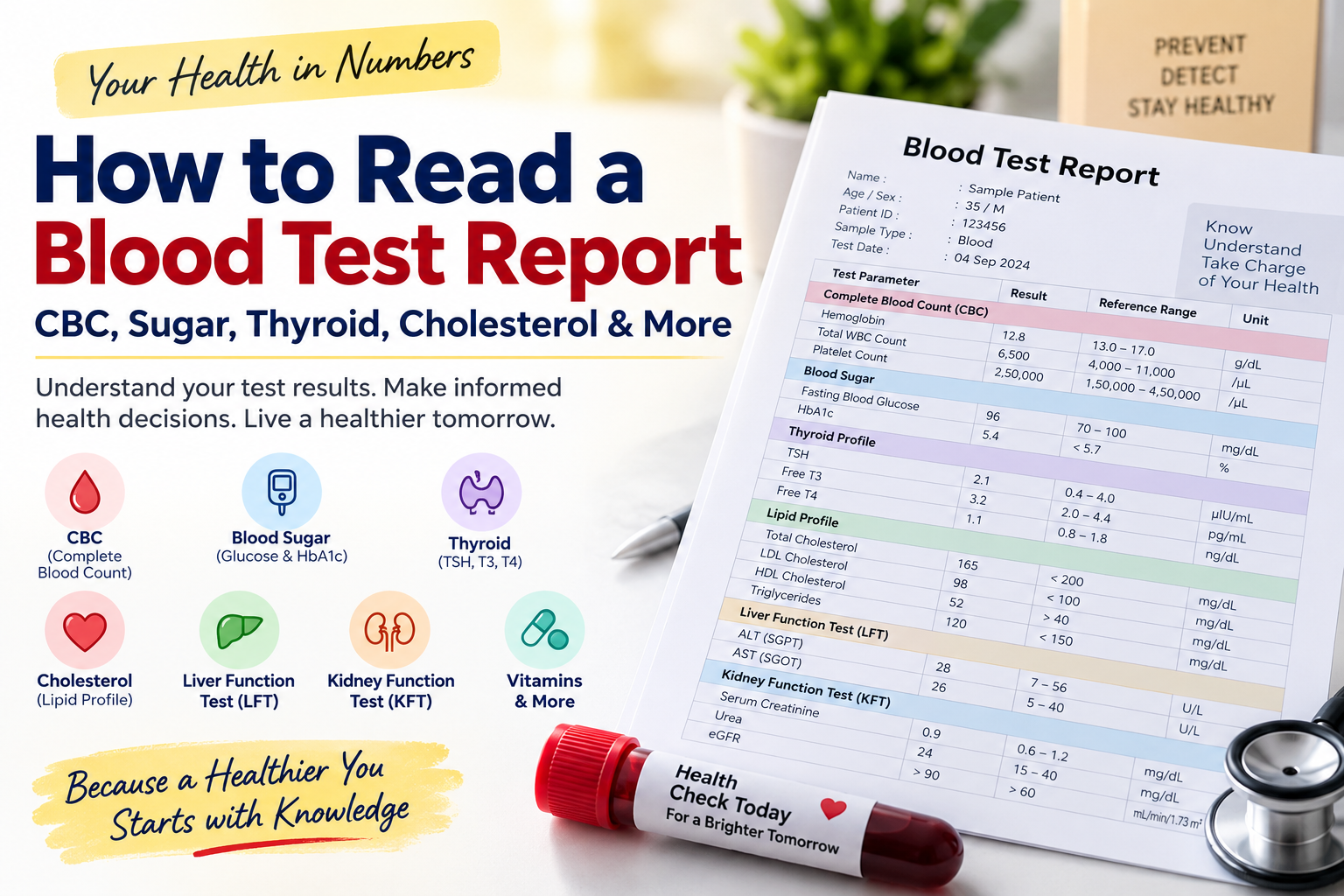
Have you ever received a blood test report filled with abbreviations, numbers, and “H” or “L” marks and wondered, “Is everything normal?”
You’re not alone.
Blood test reports can contain dozens of parameters, including CBC, haemoglobin, blood glucose, HbA1c, cholesterol, TSH, liver enzymes, creatinine and more. Understanding what these tests generally measure can make your report easier to discuss with your doctor.
However, an important point is that an abnormal laboratory result does not automatically mean you have a disease. Results need to be interpreted alongside your symptoms, medical history, medications and the reference range used by the laboratory.
In this guide, we’ll explain some of the most common blood tests in simple language and answer questions people frequently have about their reports.
What Is a Blood Test Report?
A blood test report is a laboratory document showing the measurements obtained from your blood sample.
Depending on which tests your doctor has ordered, the report may contain information about:
- Red and white blood cells
- Haemoglobin
- Blood sugar
- Cholesterol
- Thyroid hormones
- Liver enzymes
- Kidney function
- Vitamins and minerals
- Inflammation markers
- Other hormones, proteins or substances
Different tests provide different information, so there is no single “normal blood test result” that applies to everyone.
1. What Does a CBC Blood Test Show?
CBC stands for Complete Blood Count.
It is one of the most commonly performed blood tests and measures different types of blood cells, including red blood cells, white blood cells and platelets. It can also include measurements such as haemoglobin, haematocrit and MCV.
What does CBC test for?
A CBC may help doctors investigate or monitor conditions such as:
- Anaemia
- Infections
- Certain blood disorders
- Immune system problems
- Changes in blood cell counts
What do H and L mean on a CBC report?
You may see letters such as:
H = High
L = Low
These generally indicate that a result falls above or below the laboratory’s stated reference range.
But a value outside the reference range does not automatically mean something is wrong. Your doctor considers the result together with your symptoms and other parameters.
2. What Does HbA1c Mean in a Blood Test?
HbA1c, also called glycated haemoglobin, is a blood test used to assess average blood glucose levels over approximately the previous 2–3 months.
Unlike a blood glucose measurement taken at one particular time, HbA1c provides a longer-term picture of blood sugar levels.
For diabetes screening, commonly used categories are:
| HbA1c | Interpretation |
|---|---|
| Below 5.7% | Normal |
| 5.7%–6.4% | Prediabetes |
| 6.5% or above | Diabetes range |
These values are used for diagnosis, but a healthcare professional may recommend repeat or additional testing depending on the circumstances.
Does HbA1c require fasting?
Generally, no.
You normally don’t need to fast specifically for an HbA1c test. However, if your doctor orders other tests at the same time, such as certain glucose or lipid tests, fasting may be required.
3. What Does a Thyroid Blood Test Check?
Thyroid testing helps evaluate how well the thyroid gland is functioning.
Common thyroid tests include:
- TSH
- T4
- T3
- Thyroid antibody tests in selected situations
TSH is often the initial test used when evaluating thyroid function, while T3 and T4 may provide additional information depending on the clinical situation.
What does TSH mean?
TSH stands for thyroid-stimulating hormone.
It is produced by the pituitary gland and signals the thyroid to produce thyroid hormones.
A TSH result should not usually be interpreted on its own. Your doctor may consider T4, symptoms, medications and other factors when evaluating thyroid function.
4. What Does a Lipid Profile Test Show?
A lipid profile, sometimes called a cholesterol test, measures different types of fats in your blood.
It may include:
- Total cholesterol
- LDL cholesterol
- HDL cholesterol
- Triglycerides
Cholesterol is necessary for normal body functions, but excessive levels of certain blood lipids can increase cardiovascular risk.
Do you need to fast for a cholesterol test?
It depends on the specific test and your doctor’s instructions.
Some cholesterol tests may be performed without fasting, while fasting may be recommended in certain circumstances. Follow the instructions provided by your healthcare professional or laboratory.
5. What Does a Liver Function Test Check?
A Liver Function Test (LFT) is a group of blood tests used to assess different aspects of liver health.
Depending on the panel, your report may include measurements such as:
- ALT/SGPT
- AST/SGOT
- Bilirubin
- Alkaline phosphatase
- Albumin
- Total protein
An abnormal liver-related result does not automatically identify a particular liver disease. Doctors interpret these results together with symptoms, medical history, medications and other investigations.
6. What Does a Kidney Function Test Check?
A Kidney Function Test (KFT) or renal function assessment may include blood measurements such as creatinine and calculations such as eGFR.
Kidney health can also be assessed using urine testing, particularly urine albumin measurements.
The National Institute of Diabetes and Digestive and Kidney Diseases identifies eGFR and urine albumin as key markers used to evaluate kidney disease.
What is creatinine?
Creatinine is a waste product produced by normal muscle metabolism. The kidneys remove creatinine from the blood, and blood creatinine is used to help estimate kidney filtration.
What is eGFR?
eGFR stands for estimated glomerular filtration rate.
It is an estimate of how effectively the kidneys filter blood.
A single eGFR result should be interpreted in context rather than used by itself to diagnose chronic kidney disease.
7. Why Do Doctors Order Vitamin B12 and Vitamin D Tests?
Vitamin tests may be ordered when a doctor suspects a deficiency based on symptoms, diet, medical history or other factors.
Two commonly requested tests are:
- Vitamin B12
- Vitamin D
However, you shouldn’t assume that every person needs every vitamin test.
The right tests depend on your individual health situation.
8. What Does It Mean If a Blood Test Result Is Abnormal?
This is probably one of the most common questions people have after receiving a report:
“My result is high. Should I be worried?”
Not necessarily.
A result outside the laboratory’s reference range can happen for many reasons. For example, results can be influenced by:
- Age
- Sex
- Diet
- Exercise
- Medications
- Hydration
- Recent illness
- Medical conditions
- Timing of the test
- Laboratory reference ranges
That’s why one abnormal number should not be treated as a diagnosis.
Instead, look at the complete report and discuss significant abnormalities with your doctor.
9. Should You Be Worried If Only One Result Is High?
Not always.
For example, someone may have one mildly abnormal result while all other related parameters are normal.
Your doctor may decide that the result needs:
- Monitoring
- Repeat testing
- Additional investigation
- No immediate action
The significance depends on which test is abnormal and why the test was performed.
Never assume that an isolated “H” or “L” automatically means you have a serious illness.
10. How Should You Prepare for a Blood Test?
Preparation depends on the tests being performed.
Some tests require no special preparation, while others may require fasting.
For example, a standalone CBC generally doesn’t require fasting. However, if multiple tests are ordered together, fasting may be necessary for some of them.
Before your test, ask the laboratory or your doctor:
“Do I need to fast, and for how long?”
Also inform your healthcare professional about medicines or supplements you take rather than stopping them on your own.
11. Do You Need a Full Body Checkup?
This is another question frequently asked by people planning routine health testing.
There is no single set of tests that is appropriate for every person.
The tests you need may depend on:
- Age
- Family history
- Existing medical conditions
- Lifestyle
- Symptoms
- Medications
- Previous test results
- Personal risk factors
A doctor can help determine which tests are appropriate rather than simply ordering the largest possible package.
12. How Often Should You Get Blood Tests?
There is no universal testing schedule.
Some people may need regular monitoring because they have an existing medical condition. Others may only require testing when symptoms or risk factors indicate a need.
For example, people with diabetes may have HbA1c testing regularly as part of their management plan. The CDC notes that testing frequency depends on the person’s condition and management plan.
Your healthcare professional can recommend an appropriate schedule.
13. What Should You Do After Receiving Your Blood Test Report?
Instead of focusing on one number, follow these steps:
Step 1: Check the test name
Understand what the test was designed to measure.
Step 2: Look at your result
Write down the actual value.
Step 3: Check the laboratory’s reference range
Reference ranges can differ between laboratories and testing methods.
Step 4: Look at related parameters
One result often makes more sense when considered alongside other results.
Step 5: Consider your symptoms and medical history
Your report is only one part of your health assessment.
Step 6: Discuss concerning results with your doctor
A qualified healthcare professional can determine whether you need repeat testing, additional investigations or treatment.
Common Questions About Blood Test Reports
Can a blood test detect diseases?
Blood tests can provide important clues about many health conditions, but not every disease can be diagnosed through a blood test alone.
Doctors may combine blood tests with physical examination, medical history, imaging and other diagnostic investigations.
Can CBC detect cancer?
A CBC cannot by itself diagnose cancer.
It may identify unusual blood-cell patterns that require further investigation, but additional tests are needed to establish a diagnosis.
Can I eat before a blood test?
It depends on the test.
Some tests do not require fasting, while others may require you to avoid food for a specified period. Always follow the preparation instructions given by your doctor or laboratory.
Why does my report show H and L?
These usually indicate that a result is above or below the laboratory’s stated reference range.
An H or L does not automatically mean you have a disease.
Should I repeat a blood test if the result is abnormal?
Sometimes.
Your doctor may recommend repeating a test to confirm an abnormal result or ordering additional investigations. The decision depends on the specific result and your overall health.
Final Takeaway
A blood test report can look complicated, but understanding the purpose of the test is the first step toward understanding the numbers.
Tests such as CBC, HbA1c, thyroid profile, lipid profile, LFT and KFT provide different pieces of information about your health. However, no single number should be interpreted without considering the laboratory’s reference range and your overall clinical picture.
If you have an abnormal result or are unsure about what your report means, speak with your doctor rather than trying to diagnose yourself from the report.
Accurate testing is only the beginning the right interpretation helps turn test results into better healthcare decisions.