Have you ever felt nervous before a blood test and wondered whether your anxiety could affect the results? Perhaps you’ve had a stressful week at work, slept poorly the night before your appointment, or felt anxious while waiting at the diagnostic laboratory.
Stress doesn’t just affect how you feel emotionally. It can also trigger physical changes in your body, including changes in hormone levels, heart rate, blood pressure, and blood sugar.
But does this mean your blood test results will be inaccurate if you’re stressed?
Yes, stress can influence certain blood test results, but its effect depends on the test, the intensity of the stress, and your overall health. Most routine blood tests are not automatically invalidated by feeling nervous. Understanding which tests may be affected and how to prepare can help you get the most reliable results.
How Does Stress Affect Your Body?
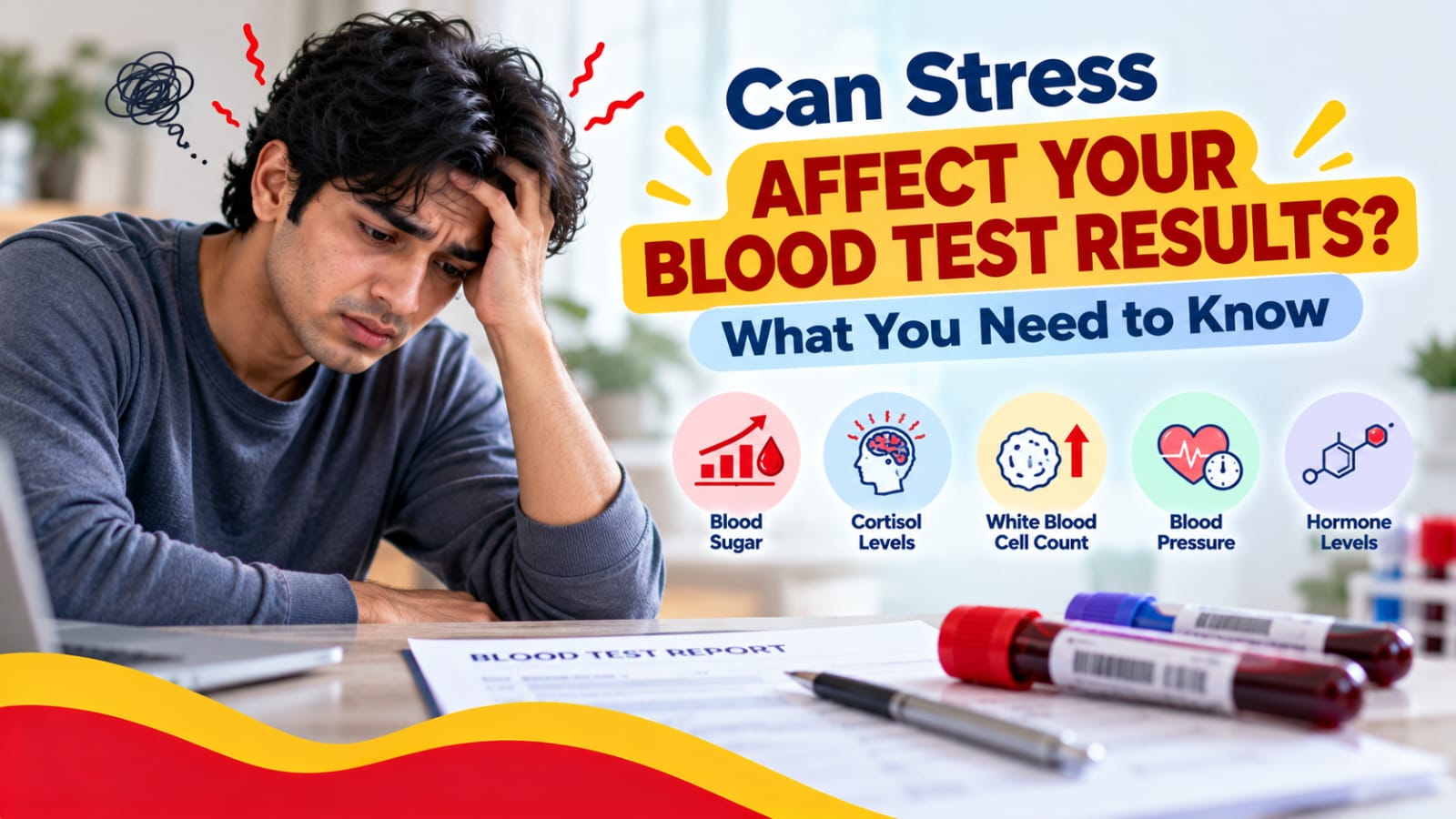
When you experience stress, your body activates its natural stress response. Hormones such as adrenaline and cortisol help prepare you to respond to a perceived challenge.
These hormones can cause several changes, including:
- An increase in heart rate and blood pressure.
- A temporary rise in blood glucose levels.
- Changes in cortisol and other hormone levels.
- Changes in the number or distribution of certain white blood cells.
These responses are normal parts of the body’s stress system. However, they can sometimes influence laboratory measurements, particularly when a test is designed to assess hormones or other markers that respond to stress.
Research has identified cortisol, prolactin, metanephrines, and growth hormone among the measurements that may be affected by acute psychological stress.
Reference: Review published in Clinical Biochemistry — https://pubmed.ncbi.nlm.nih.gov/36642392/
Which Blood Tests Can Be Affected by Stress?
Not every blood test responds to stress in the same way. Here are some examples of tests for which stress may be relevant.
1. Blood Glucose Test
Stress hormones can temporarily increase blood glucose by encouraging the body to release stored energy.
If you are experiencing significant stress, your blood sugar may rise temporarily. This can be particularly relevant for people who already have diabetes or problems regulating blood glucose.
However, a single elevated glucose result should not automatically be attributed to stress. Your doctor may consider whether you were fasting, whether you were unwell, your medical history, and whether repeat testing is appropriate.
What about HbA1c?
An HbA1c test estimates your average blood glucose over approximately the previous two to three months. A brief episode of anxiety immediately before the blood draw is unlikely to meaningfully change the result by itself.
2. Cortisol Test
Cortisol is often called the stress hormone because it plays an important role in the body’s response to physical and psychological stress.
A stressful experience, strenuous exercise, acute illness, or even anxiety about the blood draw can affect cortisol levels.
Cortisol also follows a daily rhythm, generally reaching higher levels in the morning and lower levels later in the day. Therefore, the timing of the test and the instructions provided by your healthcare professional are important.
If you are undergoing a cortisol test, follow the preparation instructions carefully and tell your doctor if you experienced unusual stress before the sample was collected.
3. White Blood Cell Count (CBC Test)
A complete blood count (CBC) measures different components of your blood, including red blood cells, white blood cells, haemoglobin, and platelets.
Acute emotional or physical stress can temporarily affect the number and distribution of white blood cells. This may sometimes contribute to a change in the white blood cell count.
However, an elevated white blood cell count can also be associated with infections, inflammation, certain medicines, and other conditions.
Your doctor will interpret the CBC alongside your symptoms and other results rather than assuming stress is the cause.
4. Prolactin Test
Prolactin is a hormone involved in several bodily functions, including breast milk production.
Stress, physical activity, and the process of having blood drawn can influence prolactin levels. For this reason, healthcare professionals may give specific instructions about resting before the sample is collected.
If your prolactin result is elevated, your doctor may recommend repeating the test under controlled conditions before deciding whether further investigation is necessary.
5. Metanephrine Tests
Metanephrines are substances produced when the body breaks down catecholamines, including adrenaline and noradrenaline.
These tests may be used when investigating certain rare hormone-producing tumours. Stress, vigorous exercise, caffeine, nicotine, and some medicines can affect results, depending on the test and the preparation protocol.
If you have been asked to undergo metanephrine testing, follow the laboratory’s instructions carefully. Do not stop any prescribed medicine unless your healthcare professional tells you to.
Can Anxiety Before a Blood Test Affect the Results?
Yes. Anxiety can trigger physical changes even when you are not facing any actual danger.
For some people, the sight of a needle or the thought of having blood drawn causes a strong stress response. This may increase their heart rate, make them sweat, or cause them to feel light-headed.
In certain circumstances, this response may affect tests that are sensitive to stress. However, feeling nervous does not automatically mean your sample will produce an inaccurate result.
For many routine tests, such as a CBC or lipid profile, ordinary pre-test anxiety is not generally a reason to cancel your appointment.
If you experience severe needle anxiety, tell the healthcare professional collecting your sample. They may be able to help you sit or lie down comfortably and allow you to rest before collection.
Can Chronic Stress Affect Blood Test Results?
Long-term stress can influence the body’s hormonal and metabolic systems. It may also affect sleep, eating habits, physical activity, and other behaviours that influence health.
Depending on the circumstances, prolonged stress may be associated with changes in glucose regulation and some immune-system measurements.
However, chronic stress does not produce one predictable pattern of blood test results. Its effects vary between individuals and depend on factors such as the duration of stress, underlying health conditions, medications, and lifestyle.
It is important not to assume that an abnormal result is caused by stress without appropriate medical assessment.
How Can You Prepare for a Blood Test When You’re Stressed?
You do not need to eliminate every feeling of anxiety before having a blood test. Instead, focus on following the correct preparation instructions and making the experience as comfortable as possible.
1. Follow the Test Preparation Instructions
Some tests require fasting, while others do not. Certain hormone tests may also require specific collection times or a period of rest beforehand.
Follow the instructions given by your doctor or diagnostic laboratory. Do not fast unnecessarily or change your routine without guidance.
2. Arrive a Little Early
Allowing yourself extra time can help you avoid the additional stress of rushing to your appointment.
If your test requires you to rest before collection, arriving early may also make it easier to follow that instruction.
3. Sit Quietly Before the Blood Draw
If you feel anxious, ask whether you can sit quietly for a few minutes before the sample is collected.
Rest may be particularly important for tests that are sensitive to recent activity or stress. Follow any specific instructions provided for your test.
4. Stay Hydrated When Permitted
Drinking water may help you stay hydrated and make blood collection easier. However, preparation requirements vary, so follow the instructions for your specific test.
If you have been told to restrict fluids for a medical reason, follow your healthcare professional’s advice.
5. Avoid Unusually Strenuous Exercise Before Testing
Intense physical activity can affect certain laboratory measurements. If your test has specific preparation requirements, ask whether you should avoid strenuous exercise beforehand.
Do not make unnecessary changes to your usual routine unless instructed.
6. Tell Your Doctor About Medicines and Supplements
Some medicines and supplements can affect particular test results. Your doctor needs to know what you take so they can interpret the findings correctly.
Never stop prescribed medication simply because you are worried it might affect a blood test. Ask your healthcare professional what to do.
Should You Postpone Your Blood Test If You’re Stressed?
Usually, no. Feeling anxious or having a stressful day does not automatically mean you should reschedule your appointment.
For routine testing, it is often reasonable to proceed as planned while following the preparation instructions.
However, if you are having a test that specifically measures stress-sensitive hormones, or if you have experienced unusually severe stress, your doctor may advise you about the best timing for sample collection.
If you are acutely unwell, tell your healthcare professional, as illness itself can affect some results. Do not delay an urgent or medically necessary test without seeking advice.
What If Your Blood Test Results Are Abnormal?
An abnormal result does not necessarily mean you have a serious health condition. Equally, it should not automatically be dismissed as a consequence of stress.
Your doctor may consider:
- The specific test and how far the result falls outside its reference range.
- Whether you followed the required preparation instructions.
- Recent stress, exercise, illness, and sleep patterns.
- Your symptoms, medical history, and current medicines.
- Whether a repeat test or additional investigation is appropriate.
For some tests, repeating the measurement under more controlled conditions can help clarify an unexpected result. For others, further evaluation may be needed without delay.
The right next step depends on the particular result and your clinical situation.
Frequently Asked Questions
1. Can stress cause a false-positive blood test?
Stress may influence certain measurements and can complicate the interpretation of some results. Whether it could contribute to a false-positive result depends on the test and the circumstances. Your doctor can decide whether repeat testing or further investigation is needed.
2. Can stress raise blood sugar before a blood test?
Yes. Stress hormones can temporarily increase blood glucose. However, an elevated result should be interpreted according to the type of test, fasting status, medical history, and relevant clinical guidance.
3. Can anxiety affect a thyroid blood test?
Acute anxiety immediately before a blood draw is not generally assumed to invalidate routine thyroid testing. Thyroid results can be affected by several factors, including illness and certain medicines. Discuss unexpected results with your doctor rather than attributing them to anxiety.
4. Should I tell the laboratory if I’m nervous?
Yes, especially if you experience strong needle anxiety, feel faint during blood draws, or have been instructed to rest before testing. The collection team may be able to make the process more comfortable.
5. Should I repeat a blood test after a stressful day?
Not necessarily. Whether a repeat test is useful depends on which measurement was abnormal, how the sample was collected, and your clinical circumstances. Ask your doctor before repeating the test.
Get Reliable Results With the Right Preparation
Stress is a normal part of life, and feeling nervous before a blood test is common. Although stress can influence certain hormones, blood glucose, and white blood cell measurements, it does not automatically make routine blood test results unreliable.
The best approach is to follow your test preparation instructions, inform your healthcare professional about relevant symptoms or medicines, and have unexpected results interpreted in context.
At CPL Diagnostics, laboratory testing can help your healthcare professional investigate health concerns and monitor important health markers. If you are unsure how to prepare for a particular blood test, contact your doctor or diagnostic laboratory before your appointment.
Remember: You do not need to be perfectly calm to get a blood test. You need the appropriate test, correct preparation, and proper interpretation of the results.
Medical disclaimer: This article is for general educational purposes only and is not a substitute for professional medical advice, diagnosis, or treatment.