If your doctor or laboratory has asked you to fast before a blood test, you may wonder what you are actually allowed to consume.
Can you drink water? What about tea? Is black coffee allowed? What if you accidentally drink something before your test?
These are common questions, and the answer depends partly on which blood tests you are having.
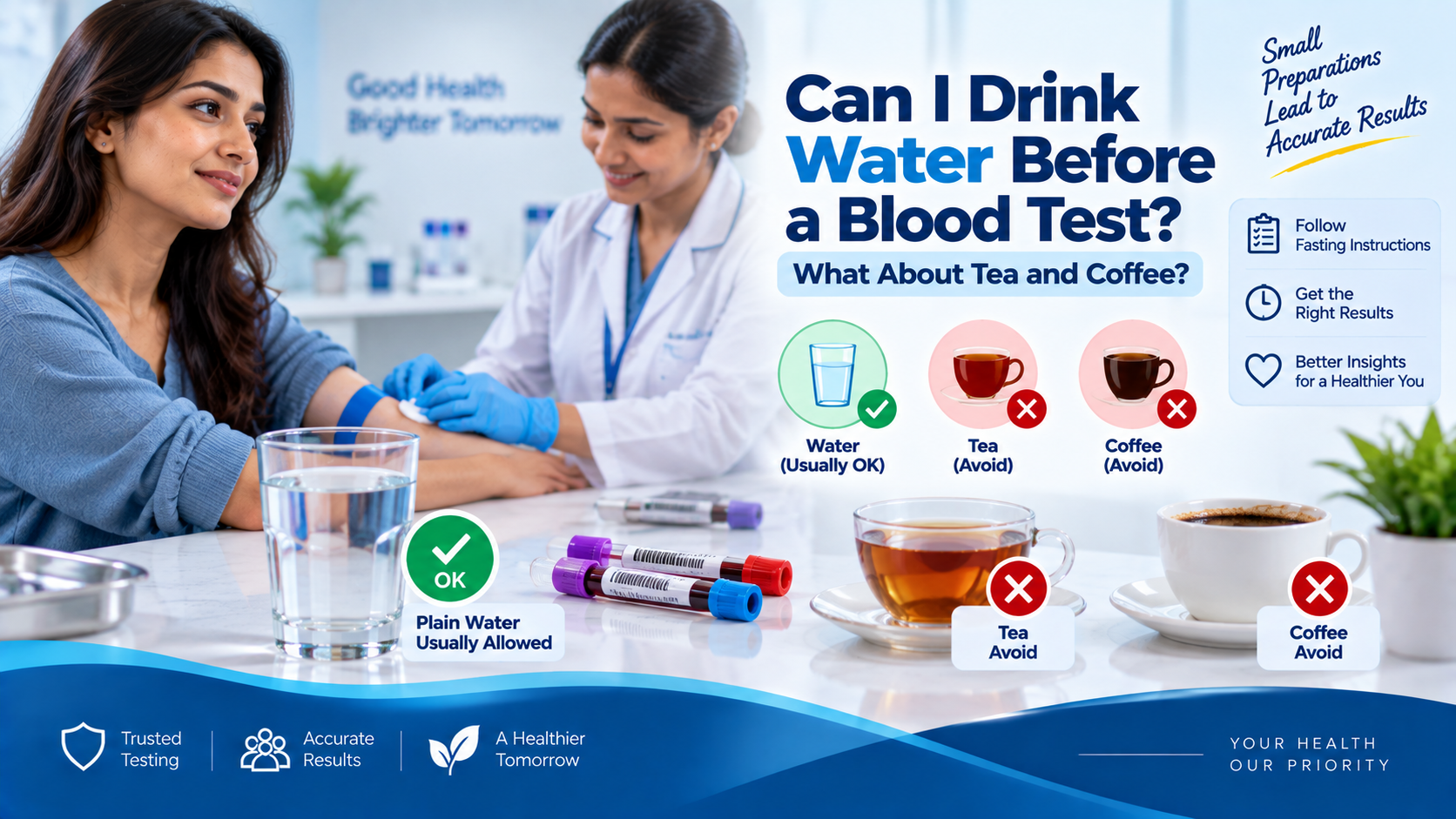
For many fasting blood tests, plain water is generally allowed, while other drinks such as tea, coffee, juice and soft drinks should usually be avoided unless your healthcare professional gives you different instructions.
Let’s look at the rules in detail.
What Does Fasting Before a Blood Test Mean?
Fasting means avoiding food and certain drinks for a specified period before your blood sample is collected.
When fasting is required, it commonly lasts around 8–12 hours, although the exact duration depends on the test and your healthcare provider’s instructions.
Fasting is recommended for some tests because food and beverages can temporarily affect substances measured in your blood.
For example, eating can affect measurements such as:
- Blood glucose
- Triglycerides
- Some other metabolic measurements
Therefore, following the preparation instructions helps your healthcare professional interpret the results correctly.
Important: Not every blood test requires fasting. You should not fast simply because you are having a blood test unless your doctor or laboratory has instructed you to do so.
Can I Drink Water Before a Blood Test?
Yes, plain water is generally allowed during a fasting blood test.
If you have been instructed to fast, plain water is usually the safest drink.
In fact, staying adequately hydrated can make blood collection easier because dehydration can make it more difficult to obtain a blood sample.
However, stick to plain water.
Avoid turning your water into another beverage by adding:
- Sugar
- Honey
- Lemon
- Flavouring
- Syrups
- Electrolyte powders
Some flavoured or enhanced drinks may contain calories, sugars or other ingredients that can interfere with certain tests.
Simple rule:
If you’re fasting for a blood test, plain water is generally the safest choice.
Can I Drink Tea Before a Blood Test?
If you have been told to fast, it is generally best to avoid tea.
Even if you normally drink tea without sugar, tea is not the same as plain water.
Depending on the type of test, certain components of beverages can affect laboratory measurements. MedlinePlus advises that during a fasting blood test, beverages other than plain water—including tea and coffee—should generally be avoided.
This means you should generally avoid:
- Milk tea
- Black tea
- Green tea
- Herbal tea
- Sweetened tea
- Tea with honey
Unless your doctor or laboratory specifically tells you otherwise.
You can have your usual tea after the blood sample has been collected.
Can I Drink Coffee Before a Blood Test?
If you need to fast, it is generally best to avoid coffee.
This includes:
- Coffee with milk
- Coffee with sugar
- Cappuccino
- Latte
- Cold coffee
- Flavoured coffee
Even black coffee is not considered equivalent to plain water for a fasting blood test. The safest approach is to follow the fasting instructions and drink only plain water unless your healthcare professional tells you otherwise.
Some specialised tests can have additional restrictions involving caffeine and other foods or beverages, so always follow the specific instructions provided for your test.
Can I Drink Juice Before a Blood Test?
No, juice should generally be avoided during a fasting period.
Fruit juice contains naturally occurring sugars and can affect blood glucose measurements.
This includes:
- Orange juice
- Apple juice
- Mango juice
- Mixed fruit juice
- Freshly squeezed juice
Even if the juice is labelled “100% natural,” it is still not plain water.
If you’re fasting, choose plain water instead.
Can I Drink Soft Drinks Before a Blood Test?
Soft drinks should generally be avoided before a fasting blood test.
This includes:
- Cola
- Lemon-lime soft drinks
- Energy drinks
- Sweetened beverages
- Flavoured drinks
Even drinks marketed as low-calorie or sugar-free may not be appropriate for every fasting test.
Unless your healthcare professional specifically says otherwise, plain water is the safest option.
What About Lemon Water?
If you’re fasting, it’s better to drink plain water rather than lemon water.
Adding lemon changes plain water into a flavoured beverage and may introduce substances that are not appropriate for certain fasting tests.
So:
Plain water → generally okay
Water + lemon → avoid unless instructed otherwise
Can I Drink Water Before a Fasting Blood Sugar Test?
For a fasting blood glucose test, plain water is generally permitted.
However, you should follow the exact instructions provided by your doctor or laboratory.
A fasting blood glucose test is one example of a test that may require fasting, although not every glucose test requires fasting.
If your doctor has specifically asked you to have a fasting blood sugar test, don’t eat or drink caloric beverages during the instructed fasting period.
Does an HbA1c Test Require Fasting?
Usually, no.
An HbA1c test generally does not require fasting.
HbA1c provides an estimate of average blood glucose levels over approximately the previous 2–3 months rather than measuring your blood sugar only at the moment of collection.
However, if your doctor orders HbA1c together with other tests, you may still be instructed to fast because of those other tests.
For example, you might have HbA1c and another blood test collected during the same appointment.
So don’t assume that you can eat simply because HbA1c itself doesn’t usually require fasting.
Do All Blood Tests Require Fasting?
No.
This is one of the most important things to understand.
Some tests generally don’t require fasting, while others may require specific preparation.
For example:
| Blood test | Fasting usually required? |
|---|---|
| CBC | Usually no |
| HbA1c | Usually no |
| Fasting blood glucose | Yes |
| Random blood glucose | No |
| Some lipid testing | Depends on the situation |
| Thyroid tests | Often no |
| Other specialised tests | Depends on the test |
The exact preparation can vary according to the test and clinical circumstances.
If you’re unsure, ask:
“Do I need to fast for my blood test, and what can I drink?”
How Long Should I Fast Before a Blood Test?
When fasting is required, it is commonly around 8–12 hours, but your doctor or laboratory should tell you the exact duration.
For example, if you are told to fast for 10 hours and your appointment is at 8:00 AM, your last meal may need to be around 10:00 PM the previous night.
Don’t assume that every test requires the same fasting period.
Can I Take My Medicines Before a Fasting Blood Test?
Do not stop prescribed medication on your own just because you have been asked to fast.
Some medicines can affect laboratory results, while in other situations taking medication without food may cause problems.
Your doctor may give you specific instructions about whether to take your usual medicines before the test.
Tell your healthcare professional about:
- Prescription medicines
- Over-the-counter medicines
- Vitamins
- Supplements
- Herbal products
MedlinePlus specifically advises patients not to stop medicines unless their healthcare provider tells them to do so.
What If I Accidentally Eat or Drink Something?
Don’t panic.
Tell the laboratory staff or your healthcare professional before the blood sample is collected.
Depending on what you consumed and which tests are being performed, they may decide that the test can still be performed or that it should be rescheduled.
For example, drinking coffee before a test that requires fasting is different from drinking plain water.
The important thing is to tell the healthcare professional rather than hiding it.
This allows them to determine how the preparation may affect interpretation of the results.
What Should I Do the Night Before a Fasting Blood Test?
If you’ve been instructed to fast, follow the specific instructions given by your doctor or laboratory.
In general:
The night before
- Eat your normal meal unless you were given different dietary instructions.
- Begin fasting at the instructed time.
- Avoid alcohol if instructed.
- Don’t consume food during the fasting period.
- Avoid unnecessary strenuous exercise if instructed.
During the fasting period
- Drink plain water if permitted.
- Avoid tea and coffee.
- Avoid juice and soft drinks.
- Don’t chew gum.
- Don’t smoke unless your healthcare professional gives different instructions.
MedlinePlus notes that chewing gum, smoking and exercise may also interfere with some fasting-test preparations.
Quick Guide: What Can I Drink Before a Blood Test?
| Drink | During fasting? |
|---|---|
| Plain water | ✅ Generally allowed |
| Lemon water | ❌ Avoid unless instructed |
| Tea | ❌ Generally avoid |
| Coffee | ❌ Generally avoid |
| Milk | ❌ Avoid |
| Fruit juice | ❌ Avoid |
| Soft drinks | ❌ Avoid |
| Energy drinks | ❌ Avoid |
| Sweetened drinks | ❌ Avoid |
Remember: These are general guidelines. Your doctor’s or laboratory’s specific instructions should always take priority.
What If I Feel Weak or Dizzy While Fasting?
Some people may feel uncomfortable when they haven’t eaten for several hours.
You may experience symptoms such as:
- Hunger
- Weakness
- Light-headedness
- Headache
- Feeling tired
If you feel unwell during fasting, tell the healthcare professional.
People with diabetes or those taking medicines that can lower blood glucose may need specific fasting instructions. They should not assume that standard fasting advice applies to them.
If you have been given specific instructions for your medical condition, follow those instructions rather than general information found online.