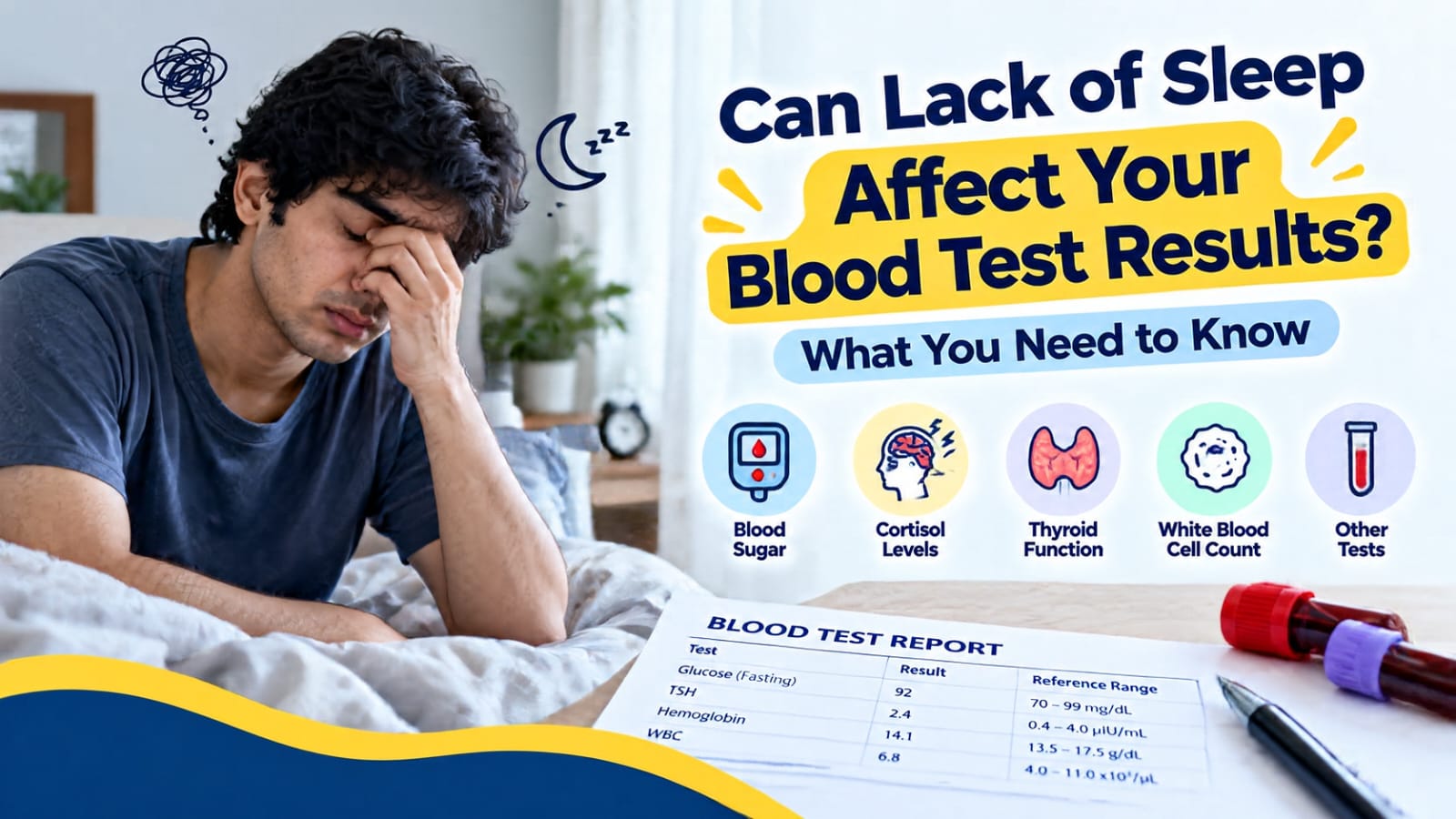
Did you stay awake late last night, struggle to fall asleep, or get only a few hours of rest before your scheduled blood test? You might be wondering whether a poor night’s sleep could affect your results.
Sleep plays an important role in regulating hormones, blood sugar, metabolism, and several other bodily functions. When you don’t get enough sleep, some of these processes may change, potentially influencing certain laboratory measurements.
But does one sleepless night make your blood test inaccurate? Should you postpone your appointment if you haven’t slept well?
Lack of sleep can influence some blood test results, but the effect depends on the test, how much sleep you’ve lost, and your overall health. A poor night’s sleep does not automatically invalidate your results or mean you need to reschedule your test.
Let’s look at which tests may be affected, how sleep deprivation influences your body, and what you should do before your next blood test.
How Does Lack of Sleep Affect Your Body?
Sleep is essential for maintaining the body’s normal biological rhythms. During sleep, your body regulates hormones, supports immune function, and helps control how it uses and stores energy.
When you regularly get insufficient sleep, several processes may be affected, including:
- Blood sugar regulation: Insufficient sleep can reduce insulin sensitivity and affect how your body processes glucose.
- Hormone levels: Sleep and the body’s internal clock influence the release of hormones such as cortisol and growth hormone.
- Stress response: Poor sleep can affect how your body responds to physical and psychological stress.
- Inflammatory processes: Ongoing sleep deprivation may influence certain markers associated with inflammation.
- Metabolism: Repeated sleep loss can affect appetite regulation and other processes involved in energy balance.
These changes do not occur in exactly the same way for everyone. Their effects on laboratory results depend on the duration of sleep loss, the timing of sample collection, and individual health factors.
Which Blood Tests Can Be Affected by Lack of Sleep?
Not every blood test is equally sensitive to sleep deprivation. Here are some examples where sleep patterns may be relevant.
1. Blood Glucose Test
One of the most important ways insufficient sleep can affect your body is through blood sugar regulation.
Sleep restriction can reduce insulin sensitivity, meaning your body’s cells may not respond as effectively to insulin. This can make it harder to regulate blood glucose.
If you have diabetes, prediabetes, or an increased risk of developing diabetes, consistently poor sleep may be particularly relevant to your overall glucose control.
However, one night of poor sleep does not automatically mean your blood sugar test will be abnormal. The effect varies, and many other factors influence glucose levels.
If you are scheduled for a fasting blood glucose test, follow the prescribed fasting instructions even if you slept poorly. Tell your healthcare professional about significant sleep loss if you are concerned about interpreting the result.
2. HbA1c Test
The HbA1c test measures glycated haemoglobin and provides an estimate of your average blood glucose over approximately the previous two to three months.
Unlike a fasting blood glucose test, HbA1c is not designed to measure your blood sugar at a single moment.
Although long-term insufficient sleep may contribute to problems with glucose regulation, a single night of poor sleep is unlikely to meaningfully change your HbA1c result on its own.
Your doctor will interpret the result alongside your medical history and other relevant findings.
3. Cortisol Test
Cortisol is a hormone that helps regulate the body’s response to stress, metabolism, and other important functions.
Its levels naturally change throughout the day, generally rising around the time you wake up and falling towards the evening.
Sleep deprivation, disrupted sleep schedules, and changes in your usual waking time may influence cortisol patterns. Therefore, sleep timing can be particularly relevant when you are having a test that measures cortisol.
If your doctor has prescribed a cortisol test, follow the specific instructions about when the sample should be collected. If you have been awake throughout the night or your sleep schedule has changed significantly, let your healthcare professional know.
4. Thyroid Function Test
Thyroid function tests commonly measure thyroid-stimulating hormone (TSH), and sometimes free T4, to assess how the thyroid gland is functioning.
TSH has a daily rhythm, and its levels can vary depending on the time of day and sleep-wake patterns.
Severe sleep disruption or an unusual collection schedule may influence the interpretation of some hormone measurements. However, a single poor night’s sleep should not automatically be assumed to cause an abnormal thyroid result.
If your thyroid results are unexpected, your doctor can consider your symptoms, medicines, collection timing, and whether repeat testing is appropriate.
5. Complete Blood Count (CBC) Test
A complete blood count measures red blood cells, white blood cells, haemoglobin, platelets, and other blood cell characteristics.
Sleep deprivation has been associated with changes in certain immune and inflammatory processes, particularly when sleep loss is prolonged or repeated. However, the effect on an individual CBC result can vary.
A single night of poor sleep does not necessarily produce a clinically significant change in your CBC. An abnormal result should be assessed in context rather than attributed to sleep loss alone.
6. Inflammatory Markers
Tests such as C-reactive protein (CRP) help assess inflammation in the body.
Research suggests that repeated or prolonged insufficient sleep may be associated with changes in some inflammatory markers. However, the findings vary between studies and individuals.
A single night of poor sleep does not automatically make an inflammatory marker abnormal. Infection, injury, chronic conditions, and many other factors can influence these results.
Is One Night of Poor Sleep Enough to Affect Your Blood Test?
It depends on the test.
One night of insufficient sleep may influence certain physiological processes, particularly those involving glucose regulation, hormones, and the body’s stress response. However, the effect may be small, variable, or not clinically meaningful for a particular test.
There is an important difference between occasionally sleeping poorly and experiencing chronic sleep deprivation.
- One poor night: May influence some measurements, but does not automatically make a blood test unreliable.
- Repeated insufficient sleep: May have more sustained effects on glucose regulation, metabolism, and other bodily processes.
- Shift work or irregular sleep schedules: May alter normal circadian rhythms and be relevant when interpreting certain hormone tests.
The most appropriate approach is to follow the test preparation instructions and tell your healthcare professional about any unusual circumstances that could help explain the results.
Should You Postpone Your Blood Test If You Didn’t Sleep Well?
In most cases, you do not need to postpone a routine blood test simply because you had a poor night’s sleep.
If your appointment is scheduled and you have followed the required preparation instructions, you can generally proceed as planned.
However, discussing the timing with your doctor may be helpful, particularly if:
- You have been awake for most of the night.
- Your test measures cortisol or another hormone affected by sleep timing.
- You work night shifts or follow an irregular sleep schedule.
- You are undergoing a test that requires a specific collection time.
- You are feeling unwell in addition to being sleep-deprived.
If the test is urgent or medically necessary, do not delay it without consulting your healthcare professional.
How to Prepare for a Blood Test After Poor Sleep
You cannot always control how well you sleep, but you can take practical steps to support appropriate sample collection.
1. Follow the Fasting Instructions
Some blood tests require fasting, while others do not.
If your test requires fasting, follow the exact instructions provided by your doctor or laboratory. Do not eat or drink anything prohibited during the fasting period.
Water is generally permitted during fasting for many routine blood tests, but follow any specific instructions you have received.
2. Keep Your Appointment Timing Consistent
Certain tests, especially hormone tests, may need to be collected at a particular time of day.
If your doctor has asked you to have a test in the morning, follow that instruction unless advised otherwise. If you work night shifts or your sleep schedule has changed substantially, tell your healthcare professional.
3. Avoid Excessive Caffeine Before Testing
If you have slept poorly, you might be tempted to drink extra coffee or energy drinks to stay alert.
Caffeine can influence some physiological measurements, and certain tests have specific restrictions on caffeine intake. Check your preparation instructions rather than assuming that coffee is permitted.
4. Stay Hydrated When Appropriate
Dehydration can make blood collection more difficult and may influence certain laboratory measurements.
Drink water as permitted by your test instructions. If you have a medical condition that requires fluid restriction, follow your healthcare professional’s advice.
5. Tell Your Doctor About Significant Sleep Loss
If you have barely slept, have been awake all night, or have experienced several days of disrupted sleep, mention it when discussing your results.
This information can help your doctor interpret measurements that are sensitive to sleep, stress, or circadian timing.
6. Don’t Try to Compensate With Unusual Habits
Avoid making sudden changes to your routine or taking unprescribed medicines and supplements to improve your test results.
Follow the preparation instructions and discuss any concerns with your healthcare professional.
What If Your Blood Test Results Are Abnormal After Poor Sleep?
An abnormal blood test result does not necessarily mean something serious is wrong. However, it should not automatically be blamed on a lack of sleep either.
Your doctor may consider several factors when interpreting the result:
- The specific test and how abnormal the result is.
- How much sleep you had before the test.
- The time of sample collection.
- Whether you followed fasting and other preparation instructions.
- Your symptoms, medical history, and medicines.
- Whether repeat testing or additional investigations are needed.
For some tests, repeating the measurement under appropriate conditions may help clarify an unexpected result. For others, further investigation may be necessary.
Never ignore an abnormal result simply because you slept poorly. Your healthcare professional can determine whether sleep loss is relevant and recommend the appropriate next step.
Frequently Asked Questions
1. Can lack of sleep increase blood sugar?
Insufficient sleep can reduce insulin sensitivity and affect glucose regulation. The effect varies, and a single night of poor sleep does not guarantee an elevated blood sugar result.
2. Can I take a blood test after staying awake all night?
For many routine tests, you can still attend your appointment. However, sleep deprivation may be relevant for certain hormone measurements or tests that depend on normal sleep-wake timing. Follow your doctor’s instructions and mention that you were awake all night.
3. Can lack of sleep affect thyroid test results?
Sleep-wake patterns and the body’s internal clock can influence TSH rhythms. However, a single poor night’s sleep does not automatically make a thyroid test unreliable. Unexpected results should be interpreted by your healthcare professional.
4. Does lack of sleep affect HbA1c?
HbA1c reflects average blood glucose over approximately two to three months. A single night of poor sleep is unlikely to meaningfully change the result by itself, although chronic sleep deprivation may influence glucose regulation over time.
5. How many hours should I sleep before a blood test?
There is no universal number of hours of sleep required for every blood test. Most adults generally benefit from seven to nine hours of sleep per night, but the preparation requirements for a particular test depend on what is being measured.
6. Should I repeat a blood test if I slept badly?
Not automatically. Whether a repeat test is appropriate depends on the result, the type of test, your symptoms, and whether sleep loss could reasonably have affected the measurement. Ask your doctor before repeating the test.
Get the Right Test With the Right Preparation
Lack of sleep can influence certain bodily functions, including glucose regulation, hormone rhythms, and some immune responses. However, the extent to which these changes affect laboratory results varies from one person to another.
A poor night’s sleep does not automatically make your blood test inaccurate, and most routine tests do not need to be postponed for this reason alone.
At CPL Diagnostics, laboratory testing can help your healthcare professional investigate health concerns and monitor important health markers. If you are unsure whether poor sleep could affect a particular test, ask your doctor or diagnostic laboratory about the appropriate preparation.
The key is to follow the correct instructions, share relevant information about your sleep, and interpret your results in the right clinical context.
Medical disclaimer: This article is for general educational purposes only and is not a substitute for professional medical advice, diagnosis, or treatment.