Have you ever had a painful sore inside your mouth that disappears after a few days, only to return a few weeks later?
Mouth ulcers can make everyday activities uncomfortable. Eating spicy food, drinking something acidic, brushing your teeth or even talking may become painful.
Occasional mouth ulcers are common and usually heal without treatment. But if you keep getting them, you may start wondering whether your body is lacking an important vitamin or mineral.
One possibility is a deficiency of vitamin B12, iron or folate (vitamin B9). These nutrients play important roles in healthy blood cell production and the maintenance of body tissues.
However, nutritional deficiency is not the only reason for recurring mouth ulcers. Stress, accidental injuries, certain medicines and underlying digestive or inflammatory conditions may also contribute.
So, how do you know whether your mouth ulcers are related to a vitamin deficiency? And which blood tests might help?
Let’s understand the possible causes and when testing may be useful.
Why Do Mouth Ulcers Keep Coming Back?
Mouth ulcers are small, painful sores that develop inside the mouth. They commonly appear on the inner cheeks, lips, tongue or gums.
The most common type is called a recurrent aphthous ulcer, also known as a canker sore.
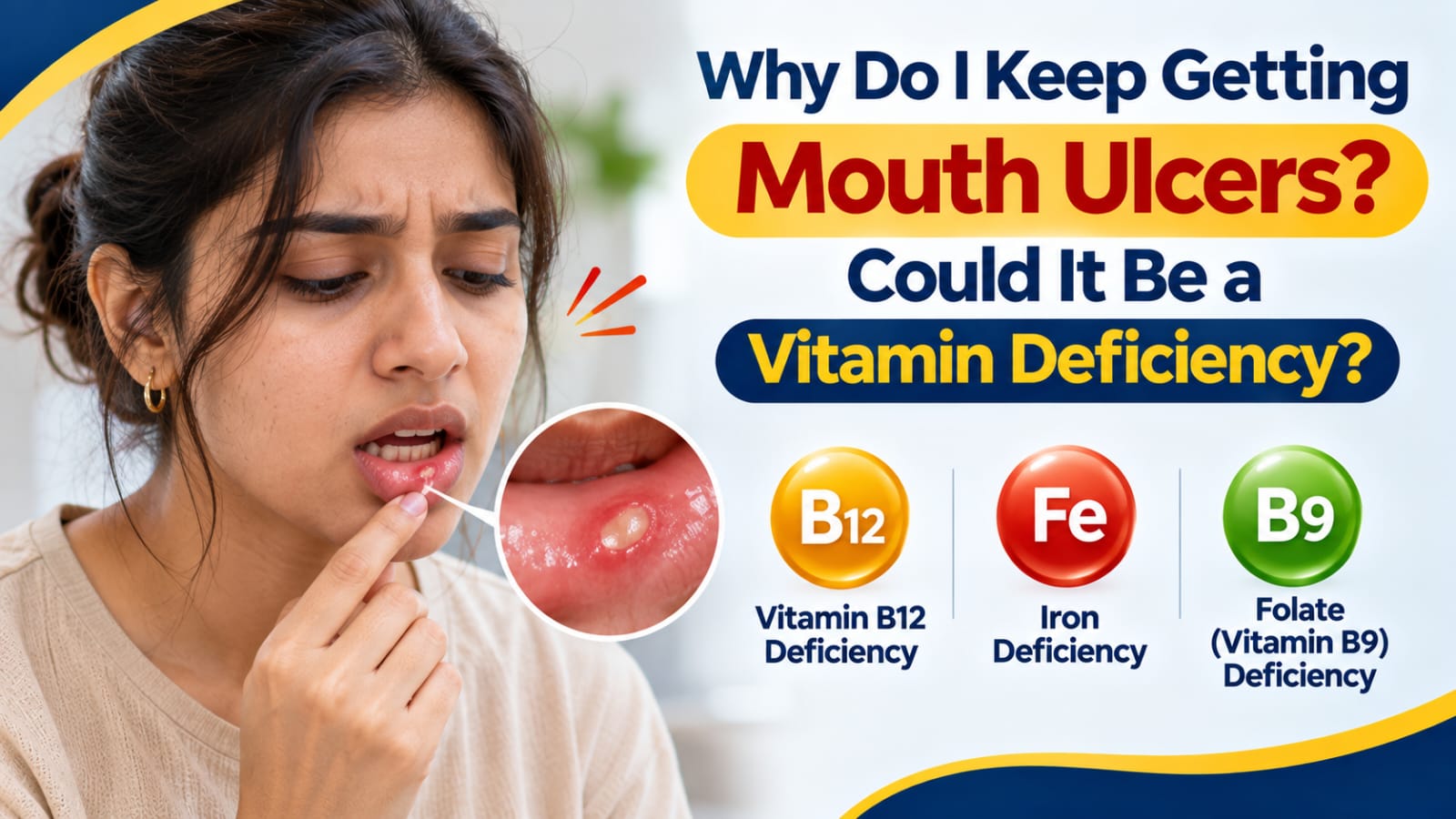
These ulcers often have:
- A white or yellowish centre.
- A red border around the sore.
- A round or oval shape.
- Pain or burning while eating and drinking.
Most minor mouth ulcers heal within 7–14 days. However, some people experience repeated episodes, with new ulcers appearing after previous ones have healed.
Recurring ulcers can have several possible causes, including nutritional deficiencies, irritation, stress and certain medical conditions.
Can Vitamin Deficiency Cause Recurring Mouth Ulcers?
Yes. Low levels of certain vitamins and minerals can contribute to recurrent mouth ulcers.
Three important nutrients doctors may consider are vitamin B12, iron and folate.
1. Vitamin B12 Deficiency
Vitamin B12 is essential for healthy red blood cell production, DNA synthesis and normal nerve function.
When your body does not have enough vitamin B12, it can affect the tissues lining your mouth and tongue.
Possible symptoms of vitamin B12 deficiency include:
- Recurrent mouth ulcers.
- A sore, red or smooth-looking tongue.
- Persistent tiredness or weakness.
- Pale skin.
- Tingling or numbness in the hands and feet.
- Difficulty maintaining balance in some cases.
People following a strict vegetarian or vegan diet may have a higher risk of vitamin B12 deficiency because natural food sources of B12 are mainly animal-based.
However, dietary intake is not the only factor. Digestive conditions and problems with vitamin absorption can also contribute.
A doctor may recommend a Vitamin B12 blood test if your symptoms or medical history suggest a possible deficiency.
2. Iron Deficiency
Iron helps your body produce haemoglobin, the protein in red blood cells responsible for carrying oxygen.
When iron levels become too low, it can lead to iron deficiency and, in some cases, iron deficiency anaemia.
Iron deficiency may be associated with:
- Recurrent mouth ulcers.
- A sore or painful tongue.
- Cracks at the corners of the mouth.
- Tiredness and low energy.
- Pale skin.
- Headaches or dizziness.
Iron deficiency can develop because of inadequate dietary intake, blood loss, increased iron requirements or problems with iron absorption.
A doctor may recommend a CBC and ferritin test to investigate possible iron deficiency. Additional iron studies may be needed depending on the results.
3. Folate (Vitamin B9) Deficiency
Folate, also known as vitamin B9, is required for DNA production and the formation of healthy red blood cells.
A deficiency can affect the cells that divide and renew quickly, including those involved in maintaining the lining of your mouth.
Possible symptoms include:
- Mouth ulcers.
- A sore or red tongue.
- Tiredness.
- Weakness.
- Loss of appetite.
- Anaemia.
Folate deficiency may occur due to inadequate dietary intake, certain medicines, increased nutritional requirements or conditions that affect absorption.
A doctor may recommend a folate blood test if your symptoms and medical history suggest a possible deficiency.
Important: Vitamin B12 and folate deficiencies can produce overlapping symptoms. Folate supplementation should not be started blindly because it can improve some blood-related features while an underlying B12 deficiency remains untreated.
What Other Things Can Cause Mouth Ulcers?
If your vitamin levels are normal, it does not mean there is no explanation for recurring mouth ulcers.
Several other factors can trigger or worsen them.
1. Stress and Lack of Sleep
Some people notice that mouth ulcers appear during stressful periods or when they are not getting enough rest.
Stress may influence immune activity and can be associated with changes in eating, sleeping and oral-care habits.
If your ulcers repeatedly appear during stressful periods, it may be useful to observe the pattern.
2. Accidental Injuries Inside the Mouth
Minor injuries can create painful sores that resemble mouth ulcers.
Common examples include:
- Accidentally biting your cheek or tongue.
- Brushing your teeth too aggressively.
- Sharp or broken teeth.
- Poorly fitting dentures.
- Braces or dental appliances rubbing against the mouth.
If an ulcer repeatedly develops in the same place, a dentist should check for a source of irritation.
3. Certain Foods and Drinks
Some foods can irritate the mouth or trigger symptoms in people who are prone to ulcers.
Possible triggers include:
- Very spicy foods.
- Citrus fruits.
- Tomatoes.
- Very salty foods.
- Hard or crunchy snacks.
- Very hot beverages.
These foods do not necessarily cause ulcers in everyone, but avoiding personal triggers may help reduce discomfort.
4. Toothpaste Ingredients
Some people find that toothpaste containing sodium lauryl sulphate (SLS), a foaming ingredient, irritates their mouth or worsens recurrent ulcers.
If you suspect a connection, ask your dentist whether trying an SLS-free toothpaste is appropriate.
5. Certain Medicines
Some medicines may contribute to mouth ulcers or oral irritation.
Examples include certain anti-inflammatory medicines, beta-blockers and nicorandil.
If you notice recurring ulcers after starting a new medicine, discuss it with your doctor. Do not stop prescribed medication without medical advice.
6. Digestive and Inflammatory Conditions
Recurring mouth ulcers can sometimes occur alongside conditions that affect other parts of the body.
Examples include:
- Coeliac disease.
- Crohn’s disease.
- Inflammatory bowel disease.
- Behçet’s disease.
These conditions may be associated with other symptoms, such as persistent diarrhoea, abdominal pain, weight loss, skin problems, genital ulcers or joint inflammation.
Having mouth ulcers does not automatically mean you have one of these conditions. Further assessment is needed when other symptoms are present.
Which Blood Tests Should You Take for Recurring Mouth Ulcers?
There is no single blood test that identifies every cause of mouth ulcers.
Your doctor may examine the ulcers, ask about your diet and medical history, review your medications and look for other symptoms before recommending investigations.
Depending on the suspected cause, the following tests may be considered.
1. Complete Blood Count (CBC)
A CBC measures different components of your blood, including:
- Haemoglobin.
- Red blood cells.
- White blood cells.
- Platelets.
- Red blood cell indices.
It may help identify anaemia and certain changes in blood cell counts.
However, a CBC alone cannot confirm every vitamin or mineral deficiency.
2. Vitamin B12 Test
A vitamin B12 test measures the level of vitamin B12 in your blood.
It may be recommended if you have recurring mouth ulcers along with symptoms such as a sore tongue, tiredness, tingling or numbness.
If the result is borderline or does not match your symptoms, your doctor may consider additional investigations.
3. Ferritin Test
Ferritin is a protein that stores iron in your body.
A ferritin test helps assess your body’s iron stores and is commonly used when iron deficiency is suspected.
Ferritin can also increase during inflammation or infection, so your doctor may interpret it alongside other results.
4. Iron Studies
An iron profile may include measurements such as:
- Serum iron.
- Total iron-binding capacity (TIBC).
- Transferrin saturation.
These measurements can provide additional information about iron availability and help investigate possible iron deficiency.
5. Folate Test
A folate test measures folate levels and may be recommended when a deficiency is suspected.
It can be particularly relevant when recurring ulcers occur alongside anaemia, a sore tongue or dietary risk factors.
6. Coeliac Disease Screening
If mouth ulcers occur alongside persistent digestive symptoms, unexplained nutritional deficiencies or other suggestive features, your doctor may consider screening for coeliac disease.
A commonly used initial blood test is tissue transglutaminase IgA (tTG-IgA), usually interpreted alongside total IgA.
Do not start a gluten-free diet before testing unless advised by your doctor, because avoiding gluten can affect the accuracy of the results.
When Should You Be Concerned About Mouth Ulcers?
Most ordinary mouth ulcers are harmless and heal within one or two weeks.
However, certain symptoms should not be ignored.
Consult a dentist or doctor if:
- An ulcer lasts longer than three weeks.
- It is unusually large or keeps getting bigger.
- It repeatedly appears in the same location.
- It bleeds or becomes increasingly painful.
- You have difficulty eating, drinking or swallowing.
- You experience unexplained weight loss.
- You have ulcers in other parts of your body.
- You also experience persistent diarrhoea, fever or joint pain.
A mouth ulcer that does not heal needs an examination to rule out other causes, including oral cancer. Do not assume that a persistent ulcer is simply a vitamin deficiency.
How Can You Reduce the Chances of Getting Mouth Ulcers?
You may not be able to prevent every episode, but some everyday habits can help reduce irritation and support oral health.
- Eat a balanced diet: Include suitable sources of vitamin B12, iron and folate.
- Maintain oral hygiene: Brush gently using a soft-bristled toothbrush.
- Avoid personal food triggers: Reduce foods that repeatedly irritate your mouth.
- Stay hydrated: Drink enough water throughout the day.
- Manage stress: Try to maintain regular sleep and relaxation habits.
- Check dental problems: Get sharp teeth, broken fillings or poorly fitting dental appliances examined.
- Avoid self-medication: Do not start high-dose vitamin or iron supplements without confirming whether you need them.
If ulcers are painful, a pharmacist or dentist may recommend suitable gels, mouthwashes or other treatments for symptom relief.
Frequently Asked Questions
1. Which vitamin deficiency causes recurring mouth ulcers?
Vitamin B12 and folate deficiencies may contribute to recurring mouth ulcers, while iron deficiency can also be associated with oral sores. Blood tests may help identify these deficiencies when clinically suspected.
2. Can vitamin B12 deficiency cause mouth ulcers even without anaemia?
Yes. Vitamin B12 deficiency can cause symptoms even before anaemia develops. A doctor may recommend testing based on symptoms and risk factors.
3. Which blood tests should I take for frequent mouth ulcers?
Depending on your symptoms, a doctor may recommend CBC, vitamin B12, ferritin, iron studies and folate testing. Coeliac disease screening may also be considered when digestive symptoms or other risk factors are present.
4. When should I worry about a mouth ulcer?
Most mouth ulcers heal within one or two weeks. If an ulcer lasts longer than three weeks, becomes unusually large, bleeds or keeps getting worse, arrange an examination with a dentist or doctor.
Get the Right Diagnostic Support with CPL Diagnostics
Recurring mouth ulcers may sometimes be linked to nutritional deficiencies, including low vitamin B12, iron or folate levels.
However, the right approach is to identify the possible cause rather than taking supplements without testing or medical advice.
At CPL Diagnostics (Calcutta Path Labs), we provide diagnostic laboratory services to support patients and healthcare professionals.
If your doctor recommends investigations for suspected nutritional deficiencies, you can explore relevant tests at CPL Diagnostics.
Some relevant tests available at CPL Diagnostics:
| Test | Walk-in price |
|---|---|
| Complete Haemogram (CBC) | ₹400 |
| Vitamin B12 | ₹1,200 |
| Ferritin, CLIA | ₹700 |
| Folic Acid | ₹1,000 |
| Iron Studies (Iron, TIBC & Transferrin Saturation) | ₹975 |
| Folate – RBC | ₹2,000 |
Prices are based on CPL’s supplied walk-in price list and may be subject to change. The appropriate test should be selected based on your symptoms and your doctor’s recommendation.
Explore available tests: https://www.cpl.net.in/product-category/tests/vitamin-mineral-tests/
For test-related enquiries and appointments: +91 94330 26662
CPL Diagnostics serves patients across Kolkata, Asansol and Patna. Contact the team to confirm test availability, collection arrangements and reporting timelines for your location.
Medical Disclaimer: This article is intended for general health education and does not replace professional medical advice, diagnosis or treatment. Recurring or persistent mouth ulcers should be assessed by a qualified healthcare professional. Do not start high-dose vitamin, iron or folate supplements solely based on the symptoms discussed here.