Medically Reviewed by: Senior MD Pathologist, CPL Diagnostics (Calcutta Path Labs)
Have you noticed that your feet or ankles look swollen, particularly towards the end of the day? Perhaps your shoes feel tighter than usual, your socks leave deep marks around your ankles, or pressing a finger against your lower leg leaves a temporary dent.
Swollen feet are relatively common and can occur for several reasons. Sometimes, swelling is related to sitting or standing for too long. However, persistent swelling may also be associated with conditions affecting the kidneys, heart, liver or blood circulation.
So, can kidney problems cause swollen feet?
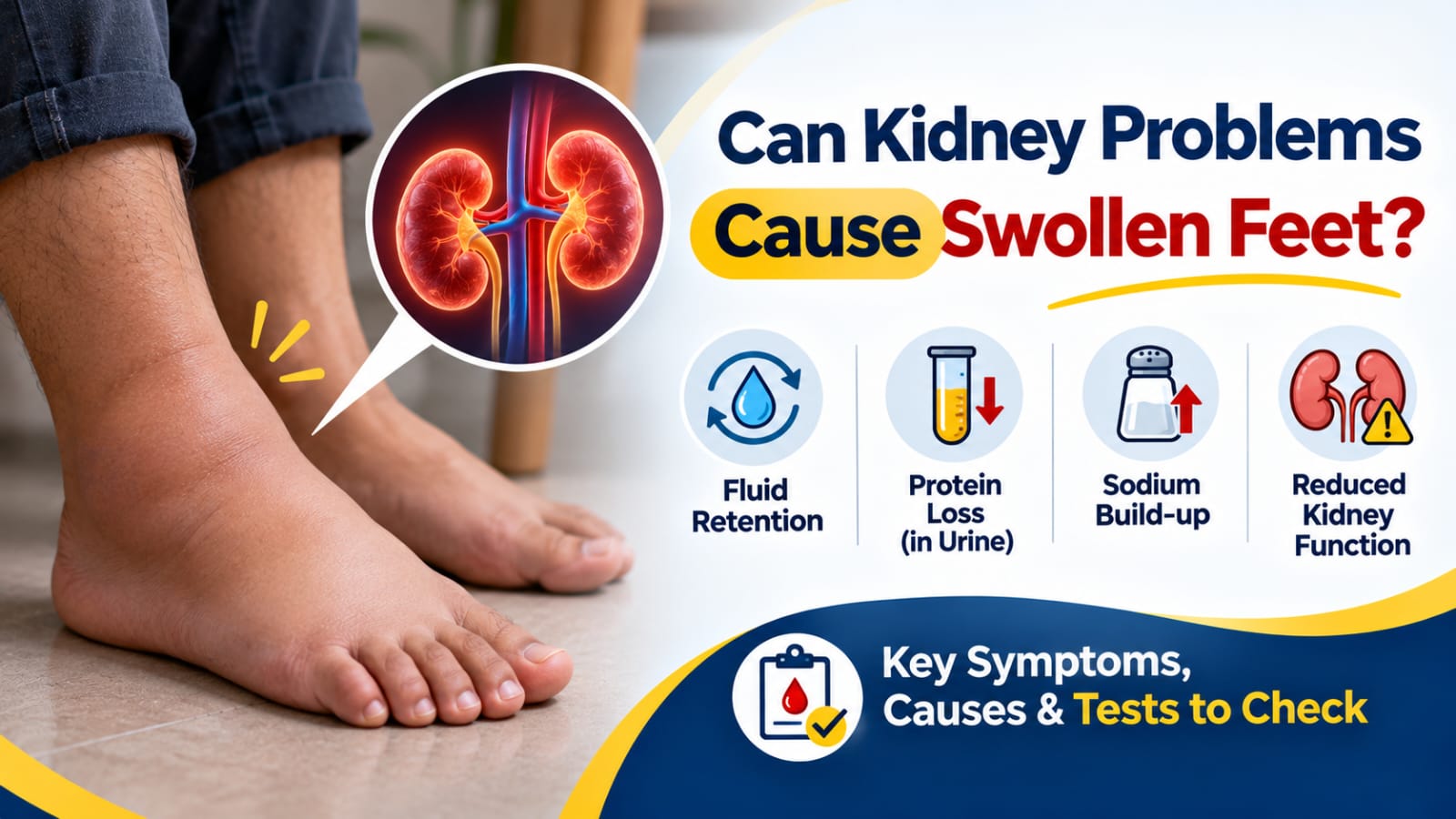
Yes. Kidney problems can cause swelling in the feet and ankles when the body retains excess salt and water or loses too much protein through the urine.
However, swollen feet do not automatically mean you have kidney disease. Understanding the possible causes and recognising other symptoms can help you decide when to seek medical advice.
Let’s explore why kidney problems can cause swelling, which tests may help and when swollen feet should be taken seriously.
Can Kidney Problems Cause Swollen Feet and Ankles?
Yes. Your kidneys play an important role in maintaining your body’s fluid and salt balance.
Healthy kidneys filter waste products and excess fluid from your blood and remove them through urine. They also help regulate important minerals and electrolytes.
When kidney function becomes impaired, the body may struggle to remove excess sodium and water. This can cause fluid to accumulate in different parts of the body, particularly the feet, ankles and legs.
Another possible reason is protein leakage through damaged kidney filters.
A protein called albumin helps keep fluid inside blood vessels. If significant amounts of albumin are lost through urine, the level of albumin in the blood can fall. This may allow fluid to move into surrounding tissues, causing swelling.
This swelling is medically known as oedema (edema).
Kidney-related swelling may also affect:
- The area around your eyes, particularly in the morning.
- Your hands and fingers.
- Your lower legs.
- Other parts of your body in more advanced cases.
It is important to understand that early kidney disease often causes no noticeable symptoms. Swelling is more commonly associated with advanced kidney problems or conditions involving significant protein loss.
What Are the Signs That Swollen Feet May Be Related to Kidney Problems?
Swollen feet alone cannot confirm kidney disease. However, certain additional symptoms may make a kidney evaluation more important.
Look out for the following signs:
1. Swelling in Both Feet and Ankles
Kidney-related fluid retention may cause swelling in both feet and ankles.
You may notice:
- Both ankles looking larger than usual.
- Tightness around your shoes.
- Socks leaving visible marks.
- Skin appearing stretched or shiny.
- Swelling that gradually becomes more noticeable.
However, swelling in both legs can also occur due to heart, liver or circulation-related conditions.
2. Puffiness Around the Eyes
Some people with kidney-related conditions experience puffiness around their eyes, especially after waking up.
This can sometimes occur when damaged kidney filters allow excessive protein to pass into the urine.
Persistent puffiness should be evaluated, particularly when accompanied by leg swelling or changes in urine.
3. Foamy or Frothy Urine
If your kidneys’ filtering units are damaged, protein may leak into your urine. This condition is known as proteinuria.
One possible sign is urine that appears unusually foamy or frothy repeatedly.
Occasional bubbles are normal and do not necessarily indicate kidney damage. However, persistent foamy urine, particularly alongside swelling, deserves medical assessment.
4. Changes in Urination
Kidney-related conditions may sometimes affect how frequently you urinate.
You may notice:
- Urinating more frequently at night.
- Passing less urine than usual.
- Changes in urine appearance.
- Blood in your urine.
- Persistent foamy urine.
These symptoms are not specific to kidney disease, but they should be discussed with a doctor if they continue.
5. Unusual Tiredness and Weakness
As kidney function declines, waste products may accumulate in the body. Kidney disease can also contribute to anaemia.
You may experience:
- Persistent tiredness.
- Reduced energy.
- Difficulty concentrating.
- Poor appetite.
- Nausea.
- Muscle cramps.
If these symptoms occur alongside persistent swelling, a medical evaluation is important.
What Other Conditions Can Cause Swollen Feet?
Kidney problems are only one possible cause of swelling. Several other conditions can produce similar symptoms.
1. Heart-Related Problems
The heart pumps blood throughout your body. When its pumping function becomes impaired, fluid may accumulate in the legs and other tissues.
Possible symptoms include:
- Swollen feet and ankles.
- Breathlessness, especially during physical activity.
- Difficulty breathing when lying flat.
- Unusual tiredness.
- Rapid weight gain due to fluid retention.
Persistent swelling with breathlessness needs prompt medical assessment.
2. Liver Disease
Your liver produces albumin, an important protein that helps maintain fluid balance in the bloodstream.
Certain liver conditions can reduce albumin production and contribute to fluid accumulation.
Other symptoms may include:
- Swelling in the legs.
- Abdominal swelling.
- Yellowing of the skin or eyes.
- Poor appetite.
- Unusual tiredness.
A doctor may recommend liver function testing and additional investigations when a liver-related problem is suspected.
3. Poor Blood Circulation or Varicose Veins
Problems with the veins in your legs can make it difficult for blood to return efficiently towards the heart.
This can cause fluid to accumulate around your ankles and lower legs.
You may also notice:
- Visible enlarged veins.
- Leg heaviness.
- Aching or discomfort.
- Swelling that becomes worse after standing for long periods.
4. Sitting or Standing for Too Long
Spending several hours sitting at a desk, travelling or standing continuously can cause fluid to collect in the lower legs.
This type of swelling is often temporary and may improve with gentle movement and leg elevation.
5. Certain Medicines
Some medicines can contribute to fluid retention and swelling.
Examples include:
- Certain blood pressure medicines, particularly calcium channel blockers.
- Some anti-inflammatory painkillers.
- Steroids.
- Certain hormonal medicines.
If swelling begins after starting a new medicine, speak with your doctor. Do not stop prescribed medication without medical advice.
6. Pregnancy and Hormonal Changes
Fluid retention can occur during pregnancy because of changes in circulation and pressure on blood vessels.
However, sudden swelling during pregnancy, especially with headache, visual disturbances or high blood pressure, needs urgent medical assessment because it may indicate pre-eclampsia.
Which Tests Can Help Check Whether Your Kidneys Are Causing Swollen Feet?
If your doctor suspects a kidney-related problem, they may recommend blood and urine investigations.
These tests help assess kidney filtration, detect protein leakage and identify possible changes in fluid and electrolyte balance.
1. Kidney Function Test (KFT)
A Kidney Function Test measures substances in your blood that provide information about how well your kidneys are working.
Depending on the panel, it may include:
- Blood urea.
- Serum creatinine.
- Uric acid.
- Electrolytes.
- Other kidney-related parameters.
Creatinine is particularly important because it is used to calculate the estimated glomerular filtration rate (eGFR).
2. Serum Creatinine and eGFR
Creatinine is a waste product produced by normal muscle activity. Healthy kidneys remove it from the bloodstream.
When kidney filtration decreases, creatinine levels may rise.
The eGFR is calculated using blood creatinine and other factors to estimate how efficiently your kidneys filter blood.
A lower eGFR may indicate reduced kidney function, but a single abnormal result does not automatically confirm chronic kidney disease. Your doctor may need to repeat testing and assess the duration and other findings.
3. Urine Albumin-to-Creatinine Ratio (UACR)
This is an important urine test for detecting albumin leakage.
Healthy kidneys generally prevent significant amounts of albumin from passing into urine.
When kidney filters become damaged, albumin may leak into the urine. The UACR compares albumin with creatinine in a urine sample.
It can help identify kidney damage, sometimes even before significant changes appear in blood creatinine.
4. Urine Routine Examination
A urine routine examination helps assess different characteristics of your urine.
It may include checks for:
- Protein.
- Blood.
- Glucose.
- Pus cells.
- Red blood cells.
- Other abnormalities.
It can provide useful information when investigating possible urinary or kidney-related conditions.
5. Electrolytes Test
Your kidneys help regulate minerals such as sodium and potassium in the bloodstream.
When kidney function is impaired, these levels may become abnormal.
An electrolyte test may measure:
- Sodium.
- Potassium.
- Chloride.
- Bicarbonate, depending on the panel.
These results help doctors assess fluid balance and identify certain complications of kidney dysfunction.
6. Serum Albumin
Albumin is a protein produced by the liver that helps maintain fluid balance within blood vessels.
Low blood albumin can contribute to swelling.
A serum albumin test may be recommended when your doctor suspects significant protein loss, liver disease, nutritional problems or other conditions affecting albumin levels.
Important: No single test can explain every case of swollen feet. Doctors interpret blood and urine results together with your symptoms, medical history, blood pressure and physical examination.
When Should You Worry About Swollen Feet?
Occasional mild swelling after prolonged sitting or standing may improve with movement and rest.
However, certain symptoms require medical attention.
Consult a Doctor If:
- Swelling continues for several days.
- Both feet or ankles repeatedly become swollen.
- Swelling gradually becomes worse.
- You notice persistent foamy urine.
- You experience changes in urination.
- Your face or hands also become swollen.
- You have diabetes or high blood pressure and develop unexplained swelling.
Seek Urgent Medical Attention If:
- One leg suddenly becomes swollen, painful, red or warm.
- Swelling develops suddenly and becomes severe.
- You experience fever with a red, hot or painful swollen area.
- You develop new or worsening breathlessness.
Seek emergency medical care immediately if swelling occurs with chest pain, severe difficulty breathing, coughing up blood or fainting. These symptoms may indicate a serious heart or lung problem, including a blood clot.
What Can You Do to Reduce Swelling in Your Feet?
If the swelling is mild and your doctor has ruled out serious causes, certain lifestyle changes may help.
- Elevate your legs: Raise your feet on a pillow or footrest when resting.
- Avoid sitting for too long: Take short movement breaks if you work at a desk.
- Walk regularly: Gentle movement can help improve circulation.
- Reduce excess salt: Avoid frequently consuming highly salted and processed foods.
- Wear comfortable footwear: Avoid shoes and socks that feel excessively tight.
- Monitor your symptoms: Record when swelling occurs and whether it affects one or both legs.
If you have kidney or heart disease, ask your doctor how much fluid and salt you should consume. Do not independently restrict water or take diuretics (water tablets) to treat swelling.
Frequently Asked Questions
1. Can swollen feet be the first sign of kidney disease?
Sometimes, but early kidney disease often causes no noticeable symptoms. Swelling is more commonly associated with advanced kidney problems or significant protein leakage through the urine.
2. How can I tell if my swollen feet are caused by kidney problems?
You cannot reliably identify the cause from swelling alone. Your doctor may recommend a kidney function test, serum creatinine, eGFR and urine albumin-to-creatinine ratio to investigate possible kidney involvement.
3. Does kidney-related swelling affect both feet?
It often affects both feet and ankles because fluid retention can occur throughout the body. However, swelling in both legs can also be caused by heart, liver or circulation-related conditions.
4. Can kidney function return to normal after swollen feet?
It depends on the underlying condition. Some causes of kidney dysfunction are reversible, while chronic kidney disease may require long-term management. Early diagnosis and appropriate treatment can help protect kidney function.
Get the Right Kidney Health Tests with CPL Diagnostics
Swollen feet and ankles can have several possible causes. While kidney problems may contribute to fluid retention, the right diagnosis requires proper medical evaluation.
At CPL Diagnostics (Calcutta Path Labs), we provide diagnostic laboratory services to support patients and healthcare professionals.
If your doctor recommends kidney-related investigations, you can explore relevant tests available through CPL Diagnostics.
Some relevant tests available at CPL Diagnostics:
| Test | Walk-in Price |
|---|---|
| KFT – Kidney Function Test (5 Parameters) | ₹1,000 |
| KFT Screen (6 Parameters) with eGFR | ₹1,200 |
| Serum Creatinine | ₹300 |
| Urine Routine Examination | ₹350 |
| Electrolytes Test (3 Parameters) | ₹600 |
Prices are based on CPL’s supplied walk-in price list and may be subject to change. The tests included in a KFT panel can vary, so check the exact parameters before booking.
Explore kidney and metabolic tests: https://www.cpl.net.in/product-category/kidney-metabolic-tests/
For test-related enquiries and appointments: +91 94330 26662
CPL Diagnostics serves patients across Kolkata, Asansol and Patna. Contact the team to confirm test availability, sample collection arrangements and reporting timelines for your location.
Medical Disclaimer: This article is intended for general health education and does not replace professional medical advice, diagnosis or treatment. Swollen feet can be associated with several medical conditions. Consult a qualified healthcare professional for an appropriate assessment. Do not self-diagnose kidney disease or take medicines to reduce swelling without medical advice.