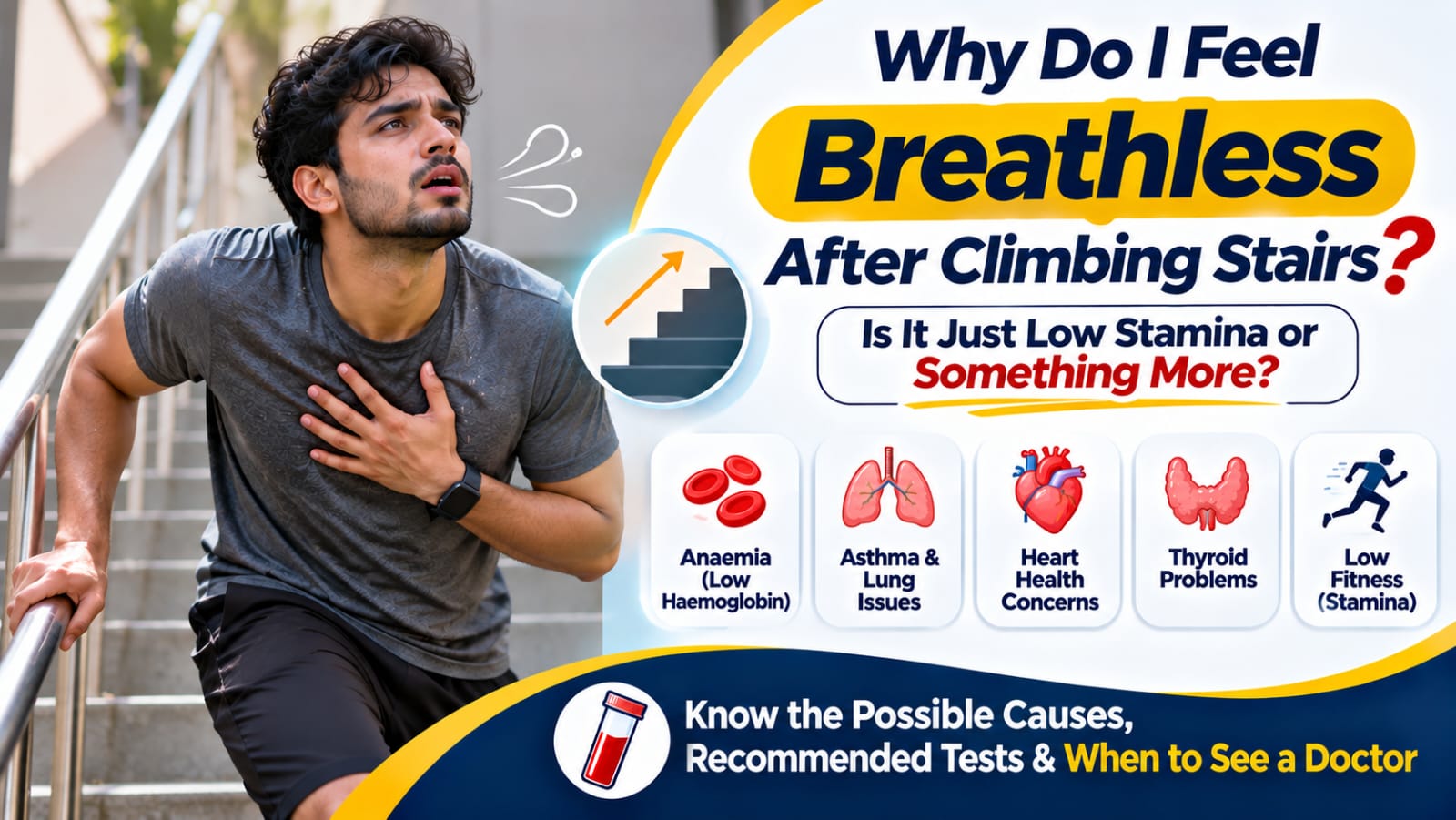
Do you find yourself breathing heavily after climbing just one or two flights of stairs?
Perhaps you need to stop halfway, catch your breath or wait a few minutes before continuing. Meanwhile, other people around you seem to climb the same stairs without any difficulty.
You might assume that you have low stamina or simply need to exercise more.
Sometimes, that may be true. However, unusual breathlessness during everyday activities can also be associated with anaemia, asthma, respiratory conditions, heart problems and other health issues.
So, how do you know whether it is simply a fitness issue or something that needs medical attention?
Let’s understand the possible causes, warning signs and investigations a doctor may recommend.
Is It Normal to Feel Breathless After Climbing Stairs?
Yes, experiencing some breathlessness after physical activity can be normal.
When you climb stairs, your muscles need more oxygen. Your heart pumps faster, and your breathing rate increases to meet the body’s increased demands.
The amount of breathlessness you experience can depend on:
- Your physical fitness.
- Your age.
- The speed at which you climb.
- How many stairs you climb.
- Your body weight.
- Your recent activity levels.
However, there is a difference between normal breathlessness after strenuous activity and becoming unusually breathless after minimal effort.
For example, if you previously climbed stairs comfortably but now struggle after a single flight, it is worth discussing this change with a healthcare professional.
The important question is whether your breathlessness is new, worsening or disproportionate to the activity you are doing.
Why Do I Feel Breathless After Climbing Stairs?
Several conditions can make you feel short of breath during everyday activities. Sometimes, more than one factor may contribute.
Here are some possible explanations.
1. Low Physical Fitness
One possible reason for breathlessness during physical activity is reduced cardiovascular fitness.
If you spend most of your day sitting, rarely exercise or have recently become less active, your body may not be accustomed to physical exertion.
When you suddenly climb stairs, your heart rate and breathing rate may increase more noticeably.
You may experience:
- Heavy breathing after climbing stairs.
- Faster heartbeat during physical activity.
- Tiredness after walking long distances.
- Reduced exercise endurance.
With gradual and consistent physical activity, exercise tolerance may improve.
However, do not automatically assume that poor fitness is responsible, especially if the breathlessness is new, severe or getting worse.
2. Anaemia or Low Haemoglobin
Anaemia is an important possible cause of breathlessness during physical activity.
Haemoglobin is a protein in red blood cells that carries oxygen throughout your body.
When haemoglobin levels are low, the blood’s oxygen-carrying capacity is reduced. This can make physical activities more demanding and may cause breathlessness, tiredness and weakness.
Possible symptoms include:
- Breathlessness while climbing stairs.
- Persistent tiredness.
- Weakness.
- Pale skin.
- Dizziness.
- Headaches.
- Faster heartbeat.
Iron deficiency is one common cause of anaemia. Vitamin B12 deficiency, folate deficiency, blood loss and certain medical conditions can also contribute.
If anaemia is suspected, a doctor may recommend a Complete Blood Count (CBC) and additional investigations to identify the underlying cause.
3. Asthma
Asthma is a condition that affects the airways in your lungs.
The airways can become inflamed and narrow, making it harder for air to move in and out of your lungs.
Physical activity can trigger asthma symptoms in some people. This is sometimes associated with exercise-induced bronchoconstriction, in which physical activity causes temporary narrowing of the airways.
Possible symptoms include:
- Breathlessness during exercise.
- Wheezing or whistling sounds while breathing.
- Chest tightness.
- Coughing, particularly at night or after physical activity.
If asthma is suspected, a doctor may recommend lung function testing, particularly spirometry.
4. Heart-Related Problems
Your heart pumps blood to different parts of your body, supplying them with oxygen.
If a heart condition affects how effectively the heart works, physical activities such as walking uphill or climbing stairs may become difficult.
Certain heart conditions can cause breathlessness during exertion, including:
- Heart failure.
- Coronary artery disease.
- Heart valve disorders.
- Abnormal heart rhythms.
Other possible symptoms include:
- Chest discomfort.
- Unusual fatigue.
- Palpitations.
- Swelling in the feet or ankles.
- Breathlessness when lying flat.
- Waking up at night struggling to breathe.
Breathlessness during physical activity can sometimes be associated with a heart-related condition. If it is new or worsening, medical evaluation is important.
5. Chronic Lung Conditions
Certain lung conditions can affect how efficiently oxygen enters your bloodstream.
For example, Chronic Obstructive Pulmonary Disease (COPD) can cause persistent airflow limitation, making breathing difficult.
COPD is commonly associated with a history of smoking or long-term exposure to harmful airborne particles, although other risk factors also exist.
Possible symptoms include:
- Breathlessness during everyday activities.
- Persistent cough.
- Wheezing.
- Excess mucus production.
- Frequent respiratory infections.
Other lung conditions can also cause breathlessness, depending on their nature and severity.
A doctor may recommend spirometry, chest imaging or other respiratory investigations.
6. Being Overweight or Having Excess Abdominal Fat
Excess body weight can increase the effort required to perform physical activities.
When you climb stairs, your body needs more energy to move. This may make you breathe faster and feel tired more quickly.
Excess weight can also increase the risk of conditions such as sleep apnoea, high blood pressure, diabetes and heart disease.
However, breathlessness should not automatically be attributed to body weight. Other possible causes may need to be investigated.
7. Respiratory Infections
Infections affecting the respiratory system can temporarily make breathing more difficult.
Examples include:
- Pneumonia.
- Bronchitis.
- Influenza.
- Other respiratory infections.
Depending on the infection, you may experience:
- Cough.
- Fever.
- Chest discomfort.
- Mucus production.
- Fatigue.
- Breathlessness during activity.
If you develop breathlessness alongside fever, persistent cough or chest pain, seek medical advice.
8. Thyroid Problems
Your thyroid gland produces hormones that influence metabolism, heart rate and several other body functions.
An overactive thyroid, known as hyperthyroidism, can increase your heart rate and cause symptoms such as:
- Palpitations.
- Excessive sweating.
- Trembling hands.
- Unexplained weight loss.
- Heat intolerance.
- Fatigue.
In some cases, these changes can contribute to breathlessness during physical activity.
A doctor may recommend thyroid function testing if your symptoms suggest a thyroid disorder.
9. Anxiety and Panic Attacks
Anxiety can affect your breathing pattern and make you feel short of breath.
During periods of intense anxiety, you may breathe faster than usual or feel unable to take a satisfying breath.
Other symptoms may include:
- Racing heartbeat.
- Chest tightness.
- Sweating.
- Dizziness.
- Trembling.
- A feeling of fear or panic.
However, breathlessness should not automatically be attributed to anxiety. Heart, lung and other physical causes may need to be assessed.
How Can You Tell Whether Breathlessness Is Due to Low Stamina or a Health Problem?
It can be difficult to distinguish between reduced fitness and an underlying medical condition based on symptoms alone.
However, certain patterns can help you understand when medical assessment is important.
| More consistent with reduced fitness | Reasons to seek medical evaluation |
|---|---|
| Occurs mainly during strenuous activity | Happens during minimal activity |
| May improve gradually with conditioning | Is new or progressively worsening |
| Settles after a short rest | Takes unusually long to recover |
| No other concerning symptoms | Occurs with chest discomfort, dizziness or palpitations |
| Similar pattern over time | Sudden change in exercise tolerance |
These are general clues, not a diagnostic checklist.
Even people with low physical fitness can have underlying medical conditions. A healthcare professional can help determine the actual cause.
Which Tests May Help Find the Cause of Breathlessness?
There is no single blood test that can identify every cause of breathlessness.
Your doctor may ask about your symptoms, smoking history, physical activity, medicines and medical history before recommending investigations.
Depending on the suspected cause, the following tests may be considered.
1. Complete Blood Count (CBC)
A CBC measures different components of your blood, including:
- Haemoglobin.
- Red blood cells.
- White blood cells.
- Platelets.
It can help identify anaemia and certain other blood-related abnormalities that may contribute to breathlessness.
If haemoglobin is low, further investigations may be needed to understand the cause.
2. Iron Studies
If iron deficiency is suspected, your doctor may recommend:
- Serum ferritin.
- Serum iron.
- Total Iron-Binding Capacity (TIBC).
- Transferrin saturation.
These tests help assess your body’s iron stores and iron availability.
Iron deficiency can sometimes occur before anaemia develops, so additional testing may be useful depending on your symptoms and CBC findings.
3. Thyroid Function Test
A thyroid function test commonly includes TSH and may include Free T4 depending on the clinical situation.
It helps assess whether your thyroid gland is producing an appropriate amount of thyroid hormone.
This may be recommended if breathlessness occurs alongside symptoms such as palpitations, unexplained weight changes, excessive sweating or tremors.
4. Vitamin B12 and Folate Tests
Vitamin B12 and folate are important for healthy red blood cell production.
Deficiencies can cause certain types of anaemia, which may contribute to fatigue and breathlessness.
Your doctor may recommend these tests if your CBC results or symptoms suggest a deficiency.
5. Other Heart and Lung Investigations
Blood tests alone cannot diagnose many heart and lung conditions.
Depending on your symptoms, a doctor may recommend:
- ECG: Records the electrical activity of your heart.
- Echocardiogram: Uses ultrasound to assess the structure and pumping function of your heart.
- Chest X-ray: Helps examine the lungs and certain chest structures.
- Spirometry: Measures how much air you can breathe out and how quickly.
- Pulse oximetry: Estimates the oxygen saturation in your blood.
Additional tests may be necessary depending on the suspected condition.
Not everyone experiencing breathlessness needs every investigation listed above. The choice of tests depends on the medical assessment.
When Should You Be Concerned About Breathlessness?
Occasional breathlessness after strenuous physical activity may be normal.
However, arrange a medical consultation if:
- You become breathless after climbing only a few stairs.
- Your exercise tolerance has reduced recently.
- You feel unusually tired during everyday activities.
- You experience frequent palpitations.
- You have a persistent cough.
- Your feet or ankles are swelling.
- You feel breathless when lying down.
- Breathlessness is gradually becoming worse.
When Is Breathlessness a Medical Emergency?
Seek emergency medical attention immediately if you experience:
- Sudden or severe breathlessness.
- Severe difficulty breathing or difficulty speaking because of breathlessness.
- Chest pain, pressure or tightness.
- Fainting or severe dizziness.
- Blue or grey lips or skin.
- Sudden confusion.
- Breathlessness accompanied by coughing up blood.
Sudden breathlessness can sometimes indicate a serious condition, including a blood clot in the lungs or a heart problem. Do not wait for symptoms to settle on their own.
How Can You Improve Your Breathing and Physical Stamina?
If a doctor has assessed your breathlessness and confirmed that it is safe to increase physical activity, certain lifestyle changes may help improve your fitness.
- Start with gentle activity: Begin with comfortable walking and gradually increase the duration.
- Avoid sudden overexertion: Do not force yourself to climb stairs quickly if you become unusually breathless.
- Maintain a balanced diet: Include vegetables, fruits, whole grains and suitable protein sources.
- Address nutritional deficiencies: Follow medical advice if iron, vitamin B12 or other deficiencies are identified.
- Avoid smoking: Smoking can damage your lungs and increase the risk of heart and respiratory conditions.
- Maintain a healthy weight: Gradual, sustainable weight management can improve exercise tolerance.
- Follow your treatment plan: If you have asthma, heart disease or another diagnosed condition, follow your healthcare professional’s recommendations.
Do not use exercise as a substitute for medical evaluation when breathlessness is unexplained, new or worsening.
Frequently Asked Questions
1. Why do I get breathless after climbing just one flight of stairs?
Possible causes include reduced physical fitness, anaemia, asthma, heart conditions, lung disorders and excess body weight. If this is new or happens regularly, consult a healthcare professional.
2. Can low haemoglobin cause breathlessness while walking?
Yes. Haemoglobin carries oxygen in the blood. When haemoglobin levels are low, the blood’s oxygen-carrying capacity is reduced, which can contribute to breathlessness, tiredness and weakness during physical activity.
3. Can vitamin B12 deficiency cause shortness of breath?
Yes. Vitamin B12 deficiency can cause anaemia, which may contribute to breathlessness during physical activity. Other symptoms can include weakness, fatigue, tingling and numbness.
4. Is breathlessness after climbing stairs a sign of a heart problem?
It can be. Certain heart conditions cause breathlessness during exertion. However, several other conditions can cause similar symptoms, so medical assessment is important.
5. Which blood test should I take if I feel breathless frequently?
There is no universal blood test for breathlessness. Depending on your symptoms, a doctor may recommend CBC, iron studies, thyroid function testing or vitamin B12 and folate testing. Heart and lung investigations may also be necessary.
6. Can lack of exercise make me breathless?
Yes. Reduced cardiovascular fitness can make physical activities feel more demanding. However, if you experience unusual or worsening breathlessness, do not assume that inactivity is the only reason.
Get the Right Diagnostic Support with CPL Diagnostics
Feeling breathless after climbing stairs may sometimes be related to reduced physical fitness. However, persistent or unusual breathlessness can also be associated with anaemia, nutritional deficiencies, thyroid disorders and other health conditions.
Finding the underlying cause is more important than randomly choosing blood tests.
At CPL Diagnostics (Calcutta Path Labs), we provide diagnostic laboratory services to support patients and healthcare professionals.
Depending on your doctor’s recommendation, relevant investigations may include:
- Complete Blood Count (CBC).
- Iron Studies.
- Thyroid Function Test.
- Vitamin B12.
- Folate.
Additional heart and lung investigations may be required depending on your symptoms and clinical assessment.
Not everyone experiencing breathlessness needs all these tests.
Explore diagnostic services: https://www.cpl.net.in/
For test-related enquiries and appointments: +91 94330 26662
CPL Diagnostics serves patients across Kolkata, Asansol and Patna. Contact our team to confirm test availability, sample collection arrangements and reporting timelines for your location.
Medical Disclaimer: This article is intended for general health education and does not replace professional medical advice, diagnosis or treatment. New, unexplained or worsening breathlessness should be assessed by a qualified healthcare professional. Sudden or severe breathlessness requires emergency medical attention.