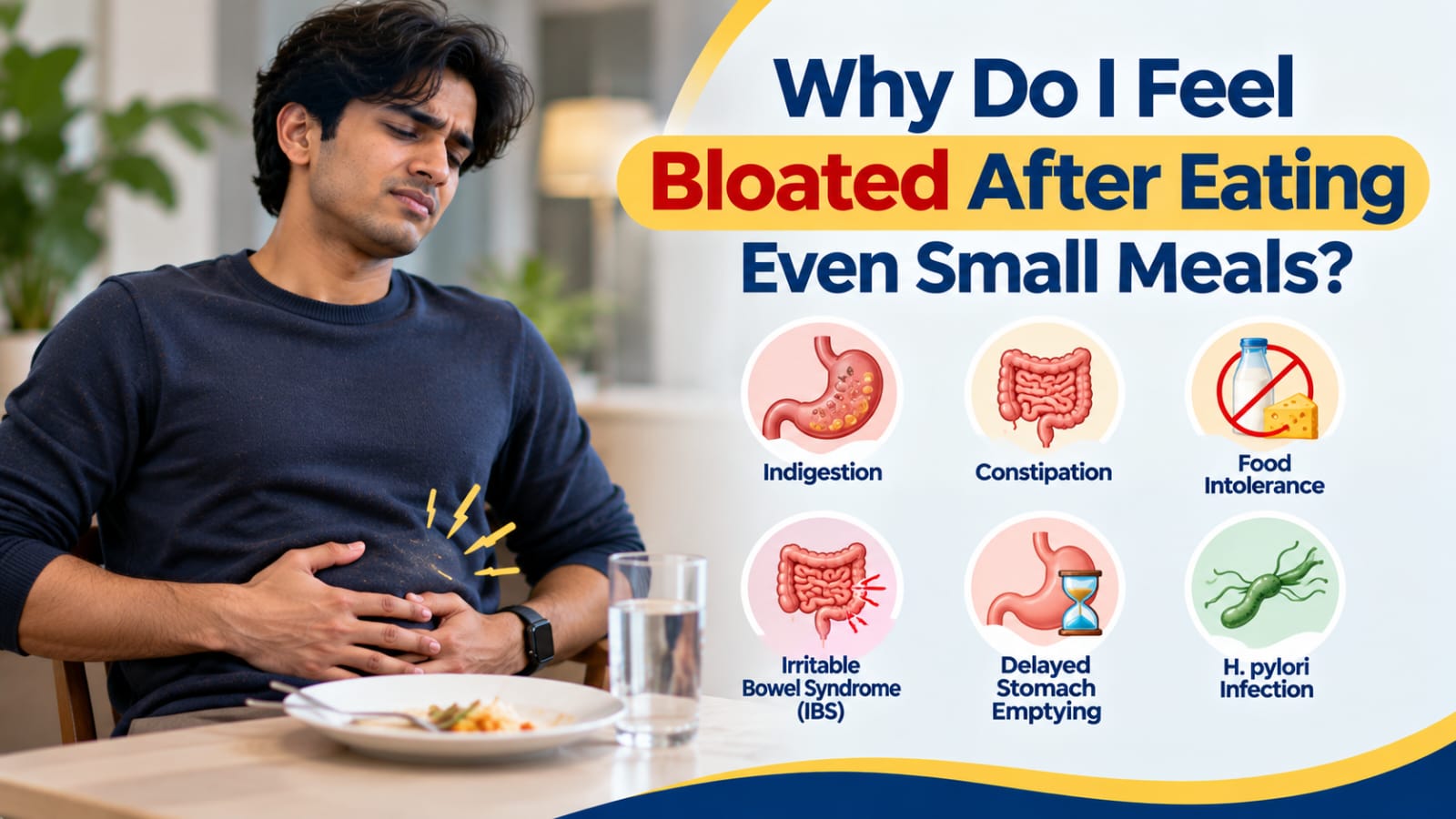
Feeling bloated after eating a large meal is common. But what if you feel unusually full, heavy or swollen after eating just a small portion of food?
You may notice that your stomach feels tight, your clothes become uncomfortable, or you start burping soon after eating. Sometimes, you may even feel as though you cannot eat another bite despite having eaten very little.
Occasional bloating is usually not a cause for concern. However, if it happens regularly, becomes uncomfortable or affects your appetite, it is worth understanding what may be causing it.
Feeling full after eating only a small amount is sometimes called early satiety. It can occur alongside indigestion, gas, constipation and other digestive problems. The cause is not always related to how much food you eat.
Let’s look at the possible reasons, when you should seek medical advice and whether any tests may help.
Why Do You Feel Bloated After Eating Small Meals?
Bloating is a sensation of fullness, pressure or swelling in your abdomen. It may happen because of excess gas, changes in digestion, constipation or increased sensitivity in your digestive system.
When you feel full much earlier than expected, even after eating a small portion, it may also be related to how your stomach responds to food.
Here are some common possibilities.
1. Indigestion (Dyspepsia)
Indigestion, also known as dyspepsia, is a common reason for feeling uncomfortable after eating.
You may experience:
- Feeling full after eating only a small amount.
- Bloating or heaviness in the upper abdomen.
- Frequent burping.
- Nausea after meals.
- Burning or discomfort in the upper stomach.
Indigestion can occur occasionally or become a recurring problem. Persistent symptoms may be associated with functional dyspepsia, stomach inflammation, peptic ulcers or other digestive conditions.
2. Constipation
You do not necessarily need to experience severe stomach pain to have constipation.
If stools remain in the intestine for longer than usual, you may experience abdominal fullness, gas and bloating.
Other signs include:
- Passing stools less frequently than usual.
- Hard or dry stools.
- Straining during bowel movements.
- Feeling that your bowel has not emptied completely.
Constipation can make you feel uncomfortable even when you have not eaten much.
3. Food Intolerance
Some people have difficulty digesting or absorbing certain foods or ingredients. These can trigger digestive symptoms.
For example, lactose intolerance can cause bloating, gas, abdominal discomfort and diarrhoea after consuming milk or dairy products.
Other possible dietary triggers include certain fruits, wheat-based foods, artificial sweeteners and foods containing fermentable carbohydrates.
If bloating repeatedly occurs after consuming a particular food, keeping a food and symptom diary may help you identify a pattern.
4. Irritable Bowel Syndrome (IBS)
Irritable bowel syndrome (IBS) is a digestive condition that affects how the gut functions.
People with IBS may experience:
- Repeated abdominal bloating.
- Stomach cramps or discomfort.
- Constipation, diarrhoea or alternating bowel habits.
- Symptoms that change after passing stools.
Certain foods, stress and changes in gut activity may trigger symptoms.
However, bloating alone does not mean you have IBS. A doctor needs to assess your symptoms and consider other possible causes.
5. Functional Dyspepsia
Sometimes, a person experiences persistent indigestion even when routine investigations do not reveal an obvious structural problem.
This may be functional dyspepsia, a disorder involving the interaction between the digestive system and the brain.
One of its common features is post-meal fullness or getting full too quickly.
It can affect how comfortably the stomach accommodates food and how digestive sensations are perceived.
6. Delayed Stomach Emptying (Gastroparesis)
Your stomach normally moves food into the small intestine gradually.
When this process becomes slower than normal, food may remain in the stomach for longer. This is known as gastroparesis.
Possible symptoms include:
- Feeling full soon after starting a meal.
- Feeling full for several hours after eating.
- Nausea and vomiting.
- Upper abdominal discomfort.
- Reduced appetite.
Diabetes, certain medicines and some medical conditions can contribute to delayed stomach emptying. It requires medical assessment and cannot be diagnosed from bloating alone.
7. Eating Habits and Lifestyle Factors
Sometimes, everyday habits can contribute to bloating.
Possible triggers include:
- Eating too quickly.
- Swallowing excess air while eating.
- Drinking carbonated beverages.
- Eating large amounts of fatty or gas-producing foods.
- Having irregular meal timings.
- Being physically inactive.
These factors may worsen existing digestive symptoms, although they are not necessarily the only cause.
When Should You Be Concerned About Frequent Bloating?
Occasional bloating after meals is common. However, persistent or unexplained bloating should not be ignored.
Pay attention if you experience:
- Feeling full after eating very small portions repeatedly.
- Unintentional weight loss.
- Loss of appetite.
- Frequent nausea or vomiting.
- Persistent abdominal pain.
- Changes in bowel habits that do not improve.
- Blood in your stool or black, tar-like stools.
- Difficulty swallowing.
Seek urgent medical attention if you develop sudden, severe abdominal pain, vomit blood, experience severe breathing difficulty, or have abdominal swelling with an inability to pass stool or gas.
Persistent early fullness, particularly when accompanied by weight loss or vomiting, needs medical evaluation rather than repeated self-treatment for gas or acidity.
What Tests Might a Doctor Recommend for Frequent Bloating?
There is no single blood test that can identify every cause of bloating. The appropriate investigation depends on your symptoms, medical history, physical examination and other risk factors.
Depending on the suspected cause, a doctor may recommend the following tests.
1. Complete Blood Count (CBC)
A Complete Blood Count (CBC) measures different components of your blood, including red blood cells, white blood cells and platelets.
It may help identify anaemia or changes in blood cells that require further evaluation. However, it does not directly diagnose the cause of bloating.
2. Liver Function Test (LFT)
A Liver Function Test (LFT) measures certain enzymes, proteins and other substances associated with the liver.
A doctor may recommend it when symptoms, examination findings or medical history suggest a possible liver-related problem.
3. Thyroid Function Test
Thyroid hormones influence several body functions, including metabolism and digestive activity.
A thyroid function test may be considered when symptoms suggest an underlying thyroid disorder, particularly if constipation or other related symptoms are also present.
4. H. pylori Testing
Helicobacter pylori (H. pylori) is a type of bacteria that can infect the stomach lining and contribute to gastritis and peptic ulcers.
Depending on your symptoms, a doctor may recommend:
- H. pylori stool antigen test.
- Urea breath test.
These tests help detect an active H. pylori infection. A blood antibody test may not reliably distinguish a current infection from a previous one.
5. Coeliac Disease Screening
Coeliac disease is an autoimmune condition in which consuming gluten damages the small intestine in affected individuals.
It may cause bloating, diarrhoea, abdominal discomfort and nutritional deficiencies.
A doctor may recommend specific blood tests, such as tissue transglutaminase IgA (tTG-IgA), along with total IgA.
Important: Do not stop eating gluten before coeliac disease testing unless your doctor advises you to do so, as this can affect the accuracy of the results.
6. Additional Digestive Investigations
Depending on your symptoms and clinical assessment, a doctor may also recommend:
- Abdominal ultrasound.
- Upper gastrointestinal endoscopy.
- Stool investigations.
- Gastric emptying studies.
These are not routine tests for everyone with bloating. They are considered when the clinical assessment suggests a need for further investigation.
How Can You Reduce Bloating After Eating?
If your symptoms are mild and occasional, a few changes to your eating habits may help.
Try these practical steps:
- Eat smaller portions: Instead of eating a large meal at once, try smaller meals at regular intervals.
- Eat slowly: Chew your food properly and avoid rushing through meals.
- Identify food triggers: Notice whether milk, certain vegetables, beans or carbonated drinks make your symptoms worse.
- Stay hydrated: Drink enough water throughout the day.
- Walk after meals: Gentle movement may help support normal digestion.
- Avoid lying down immediately: Give yourself some time after eating before lying down.
- Manage constipation: Include suitable fibre-rich foods and regular physical activity. Increase fibre gradually if it worsens your bloating.
Avoid eliminating multiple food groups without medical or dietitian guidance. If bloating continues despite lifestyle changes, consult a healthcare professional.
Frequently Asked Questions
1. Why do I feel full after eating only a little food?
This may be due to early satiety, indigestion, functional dyspepsia or delayed stomach emptying. If it happens regularly or affects your appetite, consult a doctor.
2. Can gas cause bloating even after eating a small meal?
Yes. Gas can build up in the digestive tract and create pressure or a feeling of fullness. Constipation, food intolerance and certain digestive conditions can contribute to this problem.
3. Can bloating be a sign of a vitamin deficiency?
Bloating alone is not a reliable sign of vitamin deficiency. However, certain digestive conditions can affect nutrient absorption and may lead to deficiencies such as vitamin B12 or iron deficiency.
4. Which blood test should I take for frequent bloating?
There is no universal blood test for bloating. Depending on your symptoms, a doctor may recommend a CBC, thyroid function test, coeliac disease screening or other investigations. H. pylori testing may also be considered for certain indigestion symptoms.
Get the Right Diagnostic Support with CPL Diagnostics
Frequent bloating after small meals can have several possible causes. The first step is understanding your symptoms and getting the right medical advice rather than choosing tests randomly.
At CPL Diagnostics (Calcutta Path Labs), we support patients and healthcare professionals with diagnostic testing through our laboratory services.
If your doctor recommends blood investigations or other laboratory tests, you can explore the available services at CPL Diagnostics.
Visit: https://www.cpl.net.in/
For appointments and test-related enquiries: +91 94330 26662
Medical Disclaimer: This article is intended for general health education and does not replace professional medical advice, diagnosis or treatment. Do not self-diagnose or order investigations solely based on the symptoms discussed here. Consult a qualified healthcare professional for an appropriate assessment.