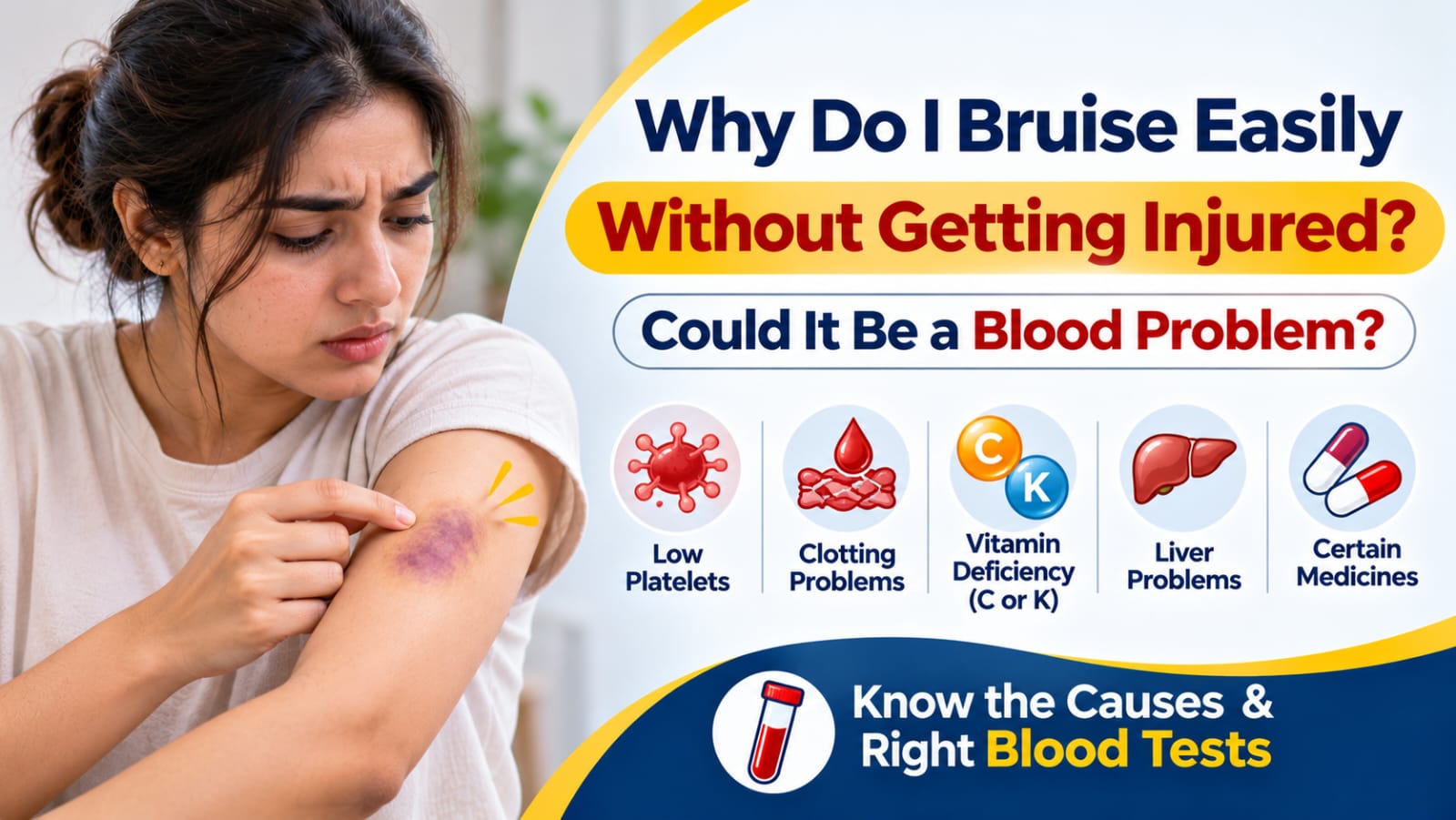
Have you ever noticed a blue, purple or reddish mark on your arm or leg without remembering hitting anything?
Perhaps you wake up with a bruise, notice several marks appearing on your skin, or find that even minor bumps leave noticeable bruises.
Occasional bruising is normal. However, if you bruise frequently, develop unusually large marks or notice bruises without an obvious cause, you may wonder whether something is wrong with your blood.
One possible explanation is a problem involving your platelets or blood-clotting system. However, certain medicines, nutritional deficiencies, liver conditions and age-related changes in the skin can also make you bruise more easily.
So, could unexplained bruising be a sign of a blood problem? And which blood tests might help identify the cause?
Let’s understand the possible reasons, warning signs and investigations that a doctor may recommend.
Why Do Bruises Appear on Your Body?
A bruise develops when tiny blood vessels beneath your skin break and leak blood into the surrounding tissues.
Normally, your body responds to this damage through a process called blood clotting, also known as haemostasis.
Three important components work together:
- Blood vessels: Help restrict blood loss after an injury.
- Platelets: Gather at the damaged area and form an initial plug.
- Clotting factors: Proteins in your blood that help strengthen and stabilise the clot.
If any part of this process does not work properly, you may experience excessive or unexplained bruising.
A bruise usually changes colour as the body gradually breaks down and reabsorbs the blood trapped beneath the skin.
Why Am I Bruising Easily Without an Injury?
There are several possible reasons for unexplained bruising. Some are relatively harmless, while others may require medical investigation.
1. Low Platelet Count (Thrombocytopenia)
Platelets are small blood components that help stop bleeding when a blood vessel is damaged.
When your platelet count becomes lower than normal, your body may find it harder to control bleeding. This condition is called thrombocytopenia.
Possible symptoms include:
- Bruising easily.
- Small red or purple spots on the skin (petechiae).
- Frequent nosebleeds.
- Bleeding gums.
- Heavy or prolonged menstrual bleeding.
- Bleeding that takes longer to stop after a minor cut.
Low platelet counts can develop due to infections, certain medicines, autoimmune conditions, liver or spleen disorders, and problems affecting blood cell production.
A Complete Blood Count (CBC) can help identify a low platelet count. A peripheral blood smear may also be recommended to examine the blood cells more closely.
2. Problems With Blood Clotting
Your blood needs specific proteins, known as clotting factors, to form stable clots.
If these proteins are missing, reduced or not functioning properly, bleeding may take longer to stop.
Some inherited conditions, such as haemophilia and von Willebrand disease, can affect normal clotting. Certain clotting problems can also develop later in life because of medical conditions or medicines.
Possible symptoms include:
- Large or frequent bruises.
- Prolonged bleeding after cuts.
- Frequent nosebleeds.
- Excessive bleeding after dental procedures or surgery.
- Heavy menstrual bleeding.
Doctors may recommend tests such as Prothrombin Time (PT), INR and Activated Partial Thromboplastin Time (aPTT) to investigate suspected clotting problems.
3. Vitamin C Deficiency
Vitamin C helps your body produce collagen, a protein that supports the structure of blood vessels, skin and other tissues.
Severe vitamin C deficiency can weaken blood vessels and make them more likely to bleed into surrounding tissues. This condition is known as scurvy.
Possible symptoms include:
- Easy bruising.
- Bleeding gums.
- Poor wound healing.
- Joint pain.
- Fatigue.
- Small reddish or purple spots on the skin.
Vitamin C deficiency is uncommon in people who consume a varied diet, but it may occur when dietary intake is severely inadequate over time.
A doctor may consider vitamin C testing when symptoms and dietary history suggest a deficiency.
4. Vitamin K Deficiency
Vitamin K is essential for producing several proteins involved in normal blood clotting.
A significant deficiency can interfere with clot formation and increase the risk of bleeding or bruising.
Possible contributing factors include:
- Poor nutritional intake.
- Certain conditions affecting fat absorption.
- Some prolonged antibiotic treatments.
- Certain liver or digestive conditions.
Vitamin K deficiency is relatively uncommon in healthy adults.
If a doctor suspects a clotting problem, they may recommend PT/INR testing and additional investigations rather than assuming that bruising is caused by low vitamin K.
5. Liver Problems
Your liver produces several proteins that help your blood clot normally.
When liver function becomes significantly impaired, the production of certain clotting factors may decrease. This can increase the risk of bleeding and bruising.
Other possible symptoms include:
- Yellowing of the skin or eyes.
- Swelling in the abdomen or legs.
- Poor appetite.
- Persistent tiredness.
- Dark urine.
A doctor may recommend a Liver Function Test (LFT), along with PT/INR and other investigations, depending on the suspected condition.
6. Certain Medicines and Supplements
Sometimes, unexplained bruising is related to medicines rather than an underlying blood disorder.
Medicines that may increase bruising include:
- Aspirin.
- Ibuprofen and certain other anti-inflammatory medicines.
- Anticoagulants such as warfarin, apixaban and rivaroxaban.
- Antiplatelet medicines such as clopidogrel.
- Certain corticosteroids.
Some supplements, including ginkgo biloba and high-dose fish oil, may also affect bleeding risk, particularly when combined with certain medicines.
If bruising begins after starting a new medicine or supplement, discuss it with your doctor.
Do not stop prescribed blood-thinning or other medication on your own. Some of these medicines are important for preventing serious medical complications.
7. Ageing and Thinner Skin
As people get older, their skin becomes thinner and the protective fatty layer beneath it may decrease.
This makes small blood vessels more vulnerable to minor bumps and pressure.
As a result, older adults may develop bruises more easily, particularly on their forearms and hands.
This type of bruising does not always indicate a blood disorder.
8. Other Underlying Medical Conditions
Certain medical conditions can affect blood cells, blood vessels or the clotting process.
Examples include:
- Autoimmune disorders.
- Bone marrow disorders.
- Certain blood cancers.
- Connective tissue disorders.
- Significant infections.
These conditions may cause bruising alongside other symptoms, such as fever, unusual tiredness, weight loss, recurrent infections or persistent bleeding.
Unexplained bruising does not automatically mean you have a serious disease. However, new, frequent or worsening bruising should be evaluated.
Which Blood Tests Should I Take for Unexplained Bruising?
There is no single blood test that identifies every cause of easy bruising.
Your doctor may ask about your symptoms, family history, medicines and previous bleeding episodes before recommending investigations.
Depending on the findings, the following tests may be considered.
1. Complete Blood Count (CBC)
A CBC is often one of the first investigations used when unexplained bruising is being evaluated.
It measures:
- Haemoglobin.
- Red blood cells.
- White blood cells.
- Platelet count.
- Red blood cell indices.
It can help identify low platelet counts and abnormalities in other blood cell components.
2. Peripheral Blood Smear
A peripheral blood smear involves examining a stained blood sample under a microscope.
It allows a laboratory professional to assess the appearance, size and shape of blood cells.
It may help investigate:
- Abnormal platelet appearance.
- Changes in red blood cells.
- Unusual white blood cell patterns.
- Certain blood cell production disorders.
It is often recommended alongside a CBC when additional information is needed.
3. Prothrombin Time (PT) and INR
PT measures how long blood takes to clot through one part of the clotting system.
INR is a standardised calculation based on PT.
These tests may help investigate:
- Certain clotting factor deficiencies.
- Vitamin K-related clotting problems.
- Liver-related clotting abnormalities.
- The effect of warfarin treatment.
4. Activated Partial Thromboplastin Time (aPTT)
The aPTT test measures clotting through another part of the blood-clotting system.
It may help investigate certain clotting factor deficiencies and other coagulation abnormalities.
Doctors may recommend PT/INR and aPTT together when evaluating unexplained bleeding or bruising.
5. Fibrinogen Test
Fibrinogen is a protein produced by the liver that helps form a stable blood clot.
A fibrinogen test measures its level in the blood and may be included in the initial investigation of suspected bleeding or clotting abnormalities.
6. Liver Function Test (LFT)
An LFT measures substances such as liver enzymes, bilirubin and proteins.
It can provide information about liver health and help investigate conditions that may affect the production of clotting proteins.
However, an LFT alone cannot determine whether your blood is clotting normally.
7. Additional Tests When Required
If initial investigations do not explain the bruising, your doctor may recommend more specific tests.
These may include:
- Von Willebrand factor antigen and activity.
- Specific clotting factor assays.
- Platelet function tests.
- Vitamin C or vitamin K assessment when indicated.
- Other specialised coagulation investigations.
Some inherited bleeding disorders can exist even when routine CBC, PT and aPTT results are normal. Further evaluation by a haematologist may therefore be necessary when symptoms or family history strongly suggest a bleeding disorder.
When Should You Be Concerned About Unexplained Bruising?
An occasional small bruise is usually not a reason to panic.
However, you should arrange a medical consultation if:
- You frequently develop bruises without remembering an injury.
- Bruises are unusually large or painful.
- Bruising suddenly becomes more frequent.
- You notice small red or purple spots on your skin.
- Your gums bleed frequently.
- You experience repeated nosebleeds.
- You have unusually heavy menstrual bleeding.
- You have a family history of bleeding disorders.
Seek urgent medical attention if you experience uncontrolled bleeding, blood in your urine or stool, black tar-like stools, vomiting blood, severe headache with unexplained bruising, fainting or significant weakness.
Sudden widespread bruising or unexplained bleeding accompanied by fever, marked fatigue or feeling seriously unwell also needs prompt assessment.
How Can You Reduce the Risk of Unexplained Bruising?
Not every bruise can be prevented, but a few practical habits can help protect your skin and support general health.
- Eat a balanced diet: Include foods containing vitamin C, vitamin K, iron and other essential nutrients.
- Review your medicines: Discuss possible side effects with your doctor if you notice increased bruising.
- Avoid unnecessary supplements: Some supplements can interact with medicines that affect blood clotting.
- Protect your skin: Wear suitable clothing during activities where minor injuries are likely.
- Maintain good nutrition: Include fruits, vegetables, protein sources and other nutrient-rich foods.
- Monitor recurring bruises: Note when they appear, where they occur and whether other bleeding symptoms are present.
Do not take iron, vitamin K or other supplements simply because you bruise easily. Treatment depends on the actual cause.
Frequently Asked Questions
1. Can low platelets cause bruises without an injury?
Yes. A low platelet count can make it harder for your body to stop bleeding from small damaged blood vessels. This may cause unexplained bruising, tiny red or purple spots and bleeding from the gums or nose.
2. Which blood test checks for low platelets?
A Complete Blood Count (CBC) measures your platelet count. A peripheral blood smear may also be recommended to examine the appearance of blood cells and help investigate abnormal results.
3. Can vitamin deficiency cause easy bruising?
Yes. Severe vitamin C deficiency can weaken blood vessels, while vitamin K deficiency can interfere with normal clotting. However, medication effects, platelet problems and other medical conditions are also possible causes.
4. Does easy bruising mean I have leukaemia?
No. Most people who bruise easily do not have leukaemia. However, unexplained bruising accompanied by persistent fever, weight loss, unusual fatigue, frequent infections or other bleeding symptoms should be evaluated promptly.
Get the Right Blood Investigations with CPL Diagnostics
Unexplained bruising can have several possible causes, ranging from medication effects and nutritional deficiencies to platelet and clotting disorders.
The right approach is to identify the underlying reason rather than assuming that every bruise is caused by a blood disorder.
At CPL Diagnostics (Calcutta Path Labs), we provide diagnostic laboratory services to support patients and healthcare professionals.
If your doctor recommends blood investigations for unexplained bruising, you can explore the relevant diagnostic services through CPL Diagnostics.
Some commonly considered investigations include:
- Complete Blood Count (CBC).
- Peripheral Blood Smear.
- Prothrombin Time (PT) and INR.
- Activated Partial Thromboplastin Time (aPTT).
- Liver Function Test (LFT).
The appropriate tests depend on your symptoms, medical history and doctor’s assessment. Not everyone with easy bruising needs every investigation listed above.
Explore diagnostic services: https://www.cpl.net.in/
For test-related enquiries and appointments: +91 94330 26662
CPL Diagnostics serves patients across Kolkata, Asansol and Patna. Contact the team to confirm test availability, sample collection arrangements and reporting timelines for your location.
Medical Disclaimer: This article is intended for general health education and does not replace professional medical advice, diagnosis or treatment. Frequent or unexplained bruising should be assessed by a qualified healthcare professional. Do not stop prescribed medication or start supplements without medical advice.