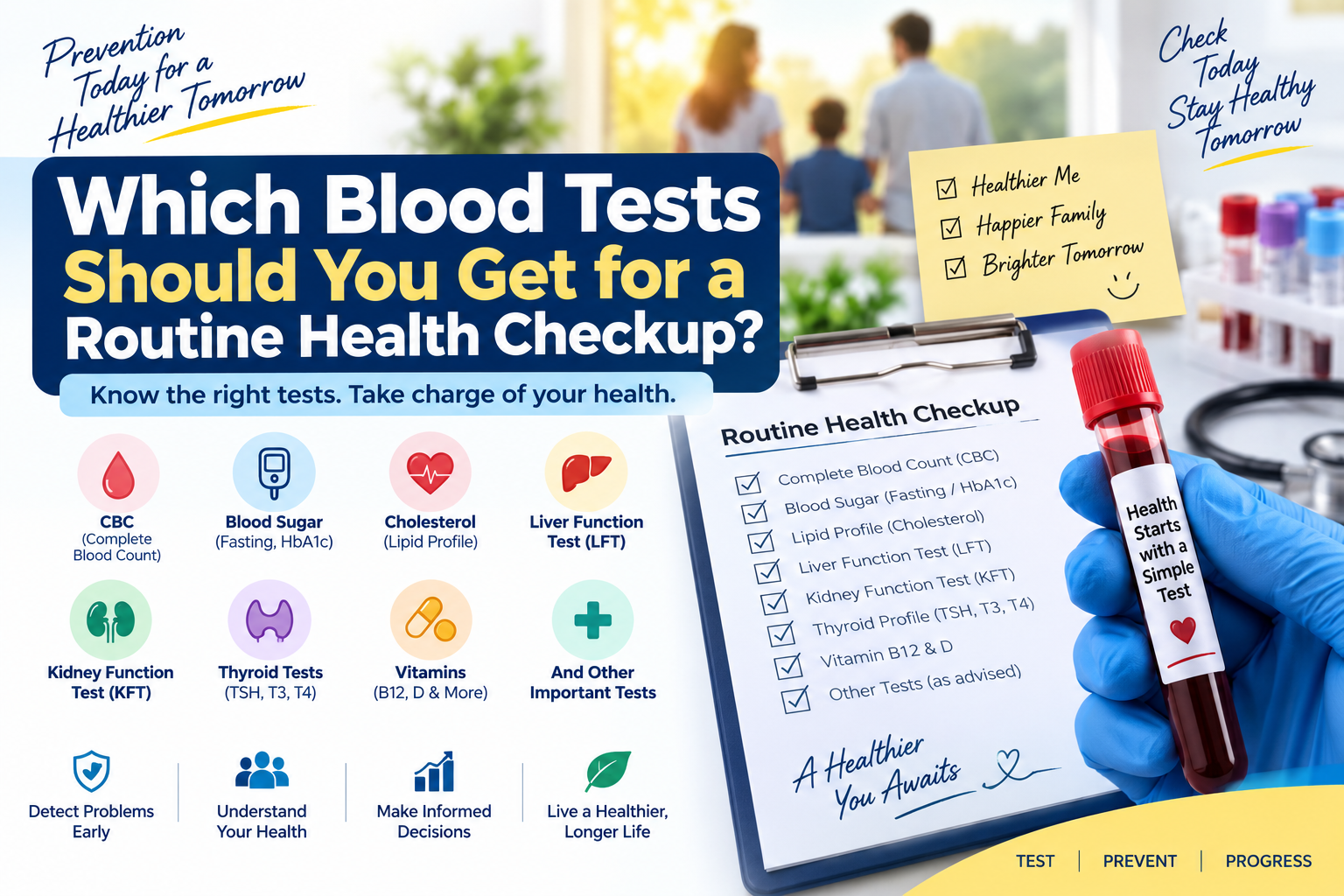
Wondering which blood tests you actually need for a routine health checkup? A blood test can provide valuable information about your blood cells, blood sugar, cholesterol, liver, kidneys and other aspects of your health—but there is no single list of tests that is right for everyone.
Your age, family history, lifestyle, existing health conditions, medications and risk factors can all influence which tests are appropriate.
In this guide, we’ll explain some of the most commonly considered blood tests for routine health checkups, what they can tell you, and when additional testing may be useful.
Why Are Routine Health Checkups Important?
Many health conditions can develop without obvious symptoms. Regular preventive care gives you and your healthcare professional an opportunity to identify risk factors early and decide whether further testing or treatment is needed.
A routine health checkup can include more than blood tests. Depending on your age and risk factors, it may involve checking blood pressure, weight, lifestyle factors, family history, vaccinations and age-appropriate screening tests, along with laboratory investigations when appropriate.
The goal isn’t simply to order as many tests as possible. The goal is to choose the right tests for the individual.
1. Complete Blood Count (CBC)
A Complete Blood Count (CBC) is one of the most commonly performed blood tests.
It measures different types of blood cells and related parameters, including:
- Red blood cells
- White blood cells
- Platelets
- Haemoglobin
- Haematocrit
- MCV and other red-cell indices
A CBC can help healthcare professionals investigate problems such as anaemia and certain infections or blood-related conditions.
Why might a CBC be included in a health checkup?
Depending on your health history and symptoms, a CBC may provide useful information about your general blood-cell status.
However, a CBC is not a test that can detect every disease, and a result outside the laboratory reference range does not automatically mean that you have a serious health problem.
2. Blood Glucose Test
Blood glucose testing helps assess your blood sugar level.
Diabetes and prediabetes can sometimes develop without obvious symptoms, which is one reason screening can be important for people with appropriate risk factors.
Common tests include:
- Fasting blood glucose
- Random blood glucose
- HbA1c
- Oral glucose tolerance testing, when indicated
The appropriate test depends on your circumstances.
3. HbA1c Test
The HbA1c test is particularly useful because it provides an estimate of your average blood glucose over approximately the previous 2–3 months.
For diabetes screening, commonly used categories are:
| HbA1c | Common interpretation |
|---|---|
| Below 5.7% | Normal |
| 5.7%–6.4% | Prediabetes |
| 6.5% or higher | Diabetes range |
These values are used for screening and diagnosis, but a healthcare professional may recommend additional or repeat testing before confirming a diagnosis.
Who may need HbA1c testing?
The need for diabetes screening depends on factors such as age, weight and other risk factors. For example, CDC guidance recommends A1C screening for adults over 45 and for younger adults with overweight plus additional risk factors.
4. Lipid Profile
A lipid profile, also called a cholesterol test, measures fats in your blood.
It commonly includes:
- Total cholesterol
- LDL cholesterol
- HDL cholesterol
- Triglycerides
High cholesterol often has no symptoms, so testing is an important way of identifying cardiovascular risk.
Your healthcare professional may interpret your cholesterol results alongside factors such as:
- Age
- Blood pressure
- Smoking
- Diabetes
- Family history
- Existing cardiovascular disease
- Other health conditions
For many healthy adults, cholesterol screening is repeated periodically, while people with certain risk factors may need testing more frequently.
5. Liver Function Tests (LFT)
Liver Function Tests (LFTs) are a group of blood tests used to assess different aspects of liver health.
Depending on the panel, tests may include:
- ALT/SGPT
- AST/SGOT
- Bilirubin
- Alkaline phosphatase
- Albumin
- Total protein
LFTs may be useful when there are symptoms, risk factors, medication concerns or other reasons to evaluate the liver.
An abnormal liver enzyme does not automatically mean that you have liver disease. Results need to be interpreted in context.
6. Kidney Function Tests (KFT/RFT)
Kidney function can be assessed using blood tests such as:
- Serum creatinine
- Urea
- eGFR
- Electrolytes, when indicated
Kidney assessment may also include urine testing, particularly when there is concern about kidney disease.
The National Institute of Diabetes and Digestive and Kidney Diseases identifies eGFR and urine albumin as important measures when evaluating chronic kidney disease.
A kidney function assessment can be especially important for people with conditions such as diabetes, high blood pressure or known kidney problems.
7. Thyroid Tests
Thyroid testing isn’t necessarily required for every healthy person at every routine checkup.
However, a doctor may recommend thyroid testing when symptoms, medical history or risk factors suggest that it could be useful.
Common thyroid tests include:
- TSH
- Free T4
- T3, when appropriate
- Thyroid antibody tests in selected situations
A thyroid profile should be interpreted according to the individual’s symptoms and clinical situation rather than by looking at one number in isolation.
8. Vitamin B12 and Vitamin D Tests
Vitamin B12 and vitamin D tests are commonly offered as part of some health-check packages.
But does everyone need them?
Not necessarily.
Testing may be more appropriate when there are symptoms, dietary risk factors, absorption problems, certain medical conditions or other reasons for concern.
Ordering every available vitamin test for every person isn’t necessarily better healthcare.
The most appropriate approach is to discuss your individual risk factors with a healthcare professional.
9. Iron Studies
Iron-related testing may be useful when there is concern about iron deficiency or anaemia.
Depending on the situation, your doctor may request:
- Serum ferritin
- Serum iron
- TIBC/transferrin
- Transferrin saturation
- CBC
A CBC can identify changes associated with anaemia, but additional iron studies may help investigate the underlying cause.
10. Electrolyte Tests
Electrolytes such as:
- Sodium
- Potassium
- Chloride
- Bicarbonate
play important roles in fluid balance, nerve function and muscle function.
Electrolyte testing may be especially relevant for people taking certain medications or those with kidney, heart or other medical conditions.
Whether these tests are needed as part of a routine checkup depends on the individual.
Do You Need All These Blood Tests Every Year?
No—not necessarily.
This is one of the most important points to understand about routine health checkups.
A large health package containing 30, 50 or even 100 tests doesn’t automatically mean that it is better than a smaller, targeted set of investigations.
Different people have different healthcare needs.
For example:
A healthy young adult
May need only selected preventive screening based on age, sex, family history and risk factors.
Someone with diabetes
May require regular monitoring of blood glucose, HbA1c, cholesterol and kidney health, among other assessments. ICMR guidance for people with type 2 diabetes includes assessments such as lipids, hemogram, renal measures and urine testing as part of ongoing care.
Someone with high blood pressure
May require assessment of cardiovascular and kidney risk depending on their medical history.
Someone with symptoms
May need targeted tests rather than a generic health package.
The right test is the one that answers a relevant clinical question.
Routine Health Checkup: Which Tests Are Commonly Considered?
Here’s a simple overview:
| Test | What it generally assesses | Is it needed for everyone? |
|---|---|---|
| CBC | Blood cells and haemoglobin | Depends on individual needs |
| Fasting glucose | Blood sugar | Often considered based on age/risk |
| HbA1c | Average blood sugar over 2–3 months | Based on risk/clinical need |
| Lipid profile | Cholesterol and triglycerides | Commonly recommended periodically |
| LFT | Liver-related markers | Based on symptoms/risk |
| KFT/RFT | Kidney function | Based on risk/clinical need |
| TSH/thyroid profile | Thyroid function | Based on symptoms/risk |
| Vitamin B12 | B12 status | Targeted when appropriate |
| Vitamin D | Vitamin D status | Targeted when appropriate |
| Iron studies | Iron status | Mainly when clinically indicated |
| Electrolytes | Fluid/electrolyte balance | Based on clinical need |
This isn’t a universal prescription. Your doctor may recommend a different combination depending on your individual circumstances.
What About a “Full Body Checkup”?
The term “full body checkup” can be misleading.
There is no single blood test—or single package—that can check every part of your body or rule out every disease.
A good preventive health assessment should be based on your:
- Age
- Sex
- Family history
- Lifestyle
- Medical history
- Current medications
- Previous test results
- Symptoms
- Individual risk factors
Research and international screening guidance caution against automatically treating large bundles of screening tests as beneficial simply because they contain many tests. Each screening test should have a clear purpose and a pathway for appropriate follow-up.
Should You Fast Before a Health Checkup?
It depends on the tests being performed.
Some blood tests don’t require fasting, while others may.
For example, HbA1c does not require fasting, although another test performed at the same appointment may require it.
Some cholesterol testing situations may also involve fasting depending on the circumstances and the test being requested.
Before your appointment, ask:
“Do I need to fast before my blood test?”
Your laboratory or healthcare professional can tell you exactly how to prepare.
Don’t stop prescribed medicines unless your doctor specifically tells you to do so.
How Often Should You Get a Routine Health Checkup?
There isn’t one schedule that applies to every adult.
The frequency of testing depends on your age, health status and risk factors.
For example, cholesterol testing may be performed every 4–6 years in many healthy adults, while people with diabetes, heart disease or a family history of high cholesterol may need more frequent testing.
Similarly, people with diabetes may require HbA1c and kidney monitoring more frequently than someone without diabetes.
Your healthcare professional can recommend the appropriate schedule for you.
What Other Health Screenings May Be Important?
Remember that routine health screening isn’t only about blood tests.
Depending on your age, sex and risk factors, preventive care may also include:
- Blood pressure measurement
- Weight and BMI assessment
- Eye examinations
- Dental checkups
- Cancer screening
- Vaccinations
- Mental health screening
- Lifestyle and nutrition assessment
For example, colorectal cancer screening is recommended for average-risk adults beginning at age 45 in current USPSTF guidance, while the appropriate screening method and frequency depend on the individual.
This is why a health checkup should be viewed as a complete preventive-health assessment, not simply a collection of blood tests.
Frequently Asked Questions About Routine Health Checkup Blood Tests
What is the most important blood test for a routine checkup?
There isn’t one blood test that is most important for everyone.
Depending on your age and risk factors, your doctor may consider tests such as CBC, blood glucose or HbA1c, lipid profile and other investigations.
Should everyone get a CBC every year?
Not necessarily. A CBC can be useful in many situations, but the need for annual testing depends on your individual health circumstances.
Is HbA1c better than fasting blood sugar?
They provide different information. HbA1c reflects average blood glucose over roughly 2–3 months, while fasting glucose measures blood sugar after a period without eating. Both can be useful depending on the clinical situation.
Should I get a thyroid test every year?
Not necessarily. Thyroid testing should generally be based on symptoms, medical history and clinical assessment rather than assuming everyone needs annual testing.
Do healthy people need routine blood tests?
Some people may benefit from preventive testing based on age and risk factors, but healthy people don’t necessarily need every available laboratory test.
Is a full-body health package necessary?
Not always. A targeted health assessment based on your individual risk factors may be more appropriate than automatically choosing the largest available package.
Can blood tests detect all diseases?
No. Blood tests are valuable diagnostic tools, but many conditions require other types of examination, imaging or specialized testing.
The Bottom Line
A routine health checkup isn’t about doing the maximum number of tests. It’s about choosing the right tests at the right time for the right person.
Commonly considered investigations can include CBC, blood glucose/HbA1c, lipid profile, liver function tests and kidney function tests, while thyroid, vitamin, iron and electrolyte testing may be appropriate depending on symptoms and risk factors.
If you’re planning a health checkup, talk to your doctor about your age, family history, lifestyle, existing conditions and any symptoms you have. This can help determine which tests are actually useful for you.
Regular preventive care can help you understand your health today and identify potential problems early before they become bigger concerns.