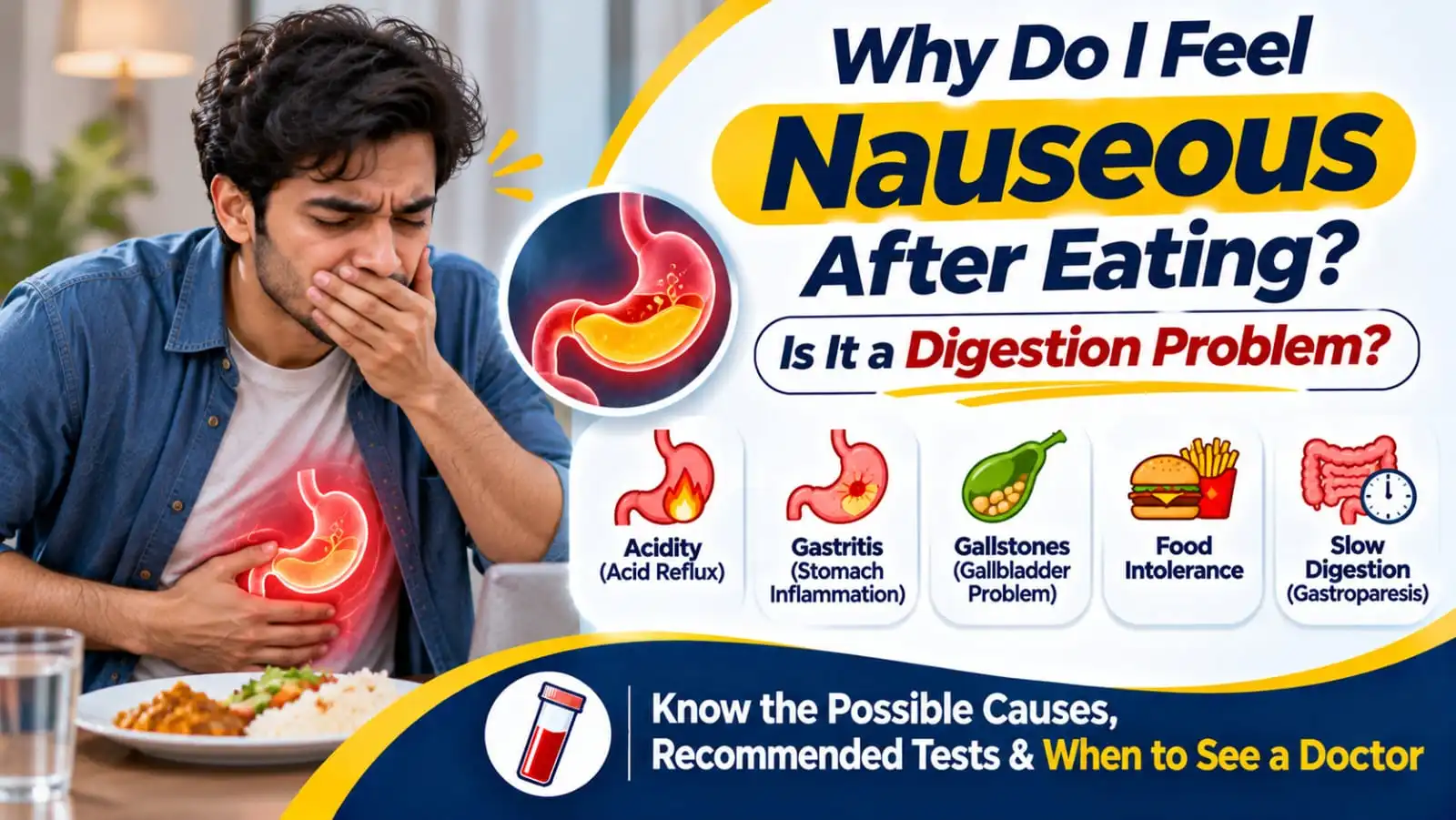
Feeling nauseous after eating can be uncomfortable, especially when it happens repeatedly. You may feel sick immediately after a meal, experience nausea an hour later, or notice it more often after eating oily, spicy or heavy food.
In many cases, the cause is related to digestion, such as indigestion or acid reflux. However, nausea after meals can also be associated with gastritis, gallbladder problems, food intolerance, delayed stomach emptying, medication side effects and other health conditions.
The important thing is to understand the pattern, look for other symptoms and avoid assuming that every episode of nausea is simply acidity.
What Does Nausea After Eating Mean?
Nausea is the unpleasant sensation that you may vomit. It can occur before, during or after eating. Some people experience it alongside bloating, excessive burping, stomach discomfort, heartburn or a feeling of fullness.
Occasional nausea may happen after overeating, eating too quickly or consuming food that does not agree with you. However, recurring nausea after meals deserves attention.
According to the NHS guidance on nausea, nausea can have several possible causes, including digestive problems, pregnancy, anxiety and medication side effects. The symptoms alone cannot confirm the underlying condition.
8 Possible Reasons You Feel Nauseous After Eating
1. Indigestion
Indigestion, also known as dyspepsia, is one of the common reasons people feel uncomfortable after meals.
It can happen when stomach acid irritates the digestive tract or when digestion is affected by eating habits and other factors.
You may experience:
- Nausea after eating
- Bloating or excessive burping
- Feeling uncomfortably full
- Heartburn or upper abdominal discomfort
- A bitter or acidic taste in your mouth
Eating too quickly, having large meals, and consuming fatty or spicy foods can make indigestion worse.
The NHS guide to indigestion explains common symptoms, possible triggers and when medical advice may be needed.
For a broader understanding of which blood tests doctors may consider as part of an overall health assessment, read CPL Diagnostics’ article on blood tests for a routine health checkup. These tests are not automatically required for indigestion; the choice depends on your symptoms and medical history.
2. Acid Reflux or GERD
Acid reflux occurs when stomach contents flow back towards the food pipe. When this happens frequently, it may be called gastroesophageal reflux disease (GERD).
Nausea may occur along with:
- A burning sensation in the chest
- Sour or bitter fluid coming back into the mouth
- Frequent burping
- Throat irritation
- Symptoms that become worse after lying down
Large meals, fatty foods and lying down soon after eating may worsen reflux symptoms in some people.
Repeated reflux symptoms should be discussed with a healthcare professional, particularly when they affect sleep, eating or daily activities.
3. Gastritis or H. pylori Infection
Gastritis refers to inflammation of the stomach lining. It can cause nausea, upper abdominal discomfort, bloating and a feeling of fullness.
One possible cause is infection with Helicobacter pylori (H. pylori), a bacterium associated with gastritis and peptic ulcers. Certain medicines, including some anti-inflammatory painkillers, can also irritate the stomach lining.
When a doctor suspects H. pylori infection, they may recommend an appropriate test based on the clinical situation.
One option is the H. pylori stool antigen test at CPL Diagnostics. This test looks for evidence of the bacterium in a stool sample and can help assess an active infection.
It is important to understand that H. pylori antibody blood tests and stool antigen tests are not interchangeable. Antibodies can remain detectable after an earlier infection, so an antibody result does not necessarily confirm an active infection or prove that treatment has worked.
The American College of Gastroenterology’s dyspepsia guideline discusses the role of H. pylori testing and treatment in the evaluation of persistent indigestion symptoms.
4. Gallbladder Problems or Gallstones
The gallbladder stores bile, which helps the body digest fat. Gallstones can sometimes block the flow of bile and cause symptoms.
Possible symptoms include:
- Pain in the upper right or middle part of the abdomen
- Nausea or vomiting
- Discomfort after fatty meals
- Pain that may spread towards the back or right shoulder
Nausea alone does not mean you have gallstones. However, recurring upper abdominal pain with nausea should be medically evaluated.
According to the National Institute of Diabetes and Digestive and Kidney Diseases (NIDDK), gallstone symptoms may include abdominal pain, nausea and vomiting. A doctor may recommend an ultrasound and blood tests when gallbladder disease is suspected.
A Liver Function Test (LFT) may be considered when a doctor needs to assess liver-related markers or investigate possible problems involving the liver and bile ducts. An LFT alone cannot confirm gallstones.
5. Food Intolerance or Sensitivity
Some people experience digestive discomfort after consuming particular foods or ingredients.
For example, lactose intolerance can cause symptoms after consuming milk or dairy products. Depending on the individual, symptoms may include bloating, gas, abdominal discomfort and diarrhoea. Some people may also report nausea.
Other food-related triggers can vary from person to person.
You may find it useful to keep a food diary. Record what you eat, when the nausea starts and whether other symptoms occur. This can help you and your doctor identify possible patterns.
Avoid eliminating several food groups from your diet without appropriate advice, as unnecessary restrictions can affect nutrition.
6. Gastroparesis or Delayed Stomach Emptying
Gastroparesis is a condition in which the stomach empties food into the small intestine more slowly than normal, without a physical blockage.
It may cause:
- Feeling full after eating only a small amount
- Nausea after meals
- Vomiting
- Bloating
- Feeling full for a long time after eating
Diabetes is one of the recognised causes of gastroparesis, although other factors may also contribute.
The NIDDK information on gastroparesis explains its symptoms and possible causes. When this condition is suspected, doctors may use investigations such as a gastric emptying scan to assess how quickly food leaves the stomach. More details are available in the NIDDK’s guide to diagnosing gastroparesis.
A gastric emptying test is not a routine investigation for everyone who experiences nausea after eating. It is generally considered when the symptoms and clinical assessment suggest delayed stomach emptying.
7. Pregnancy
Nausea during pregnancy is commonly called morning sickness, but it can happen at any time of the day.
Some people notice nausea after meals, sensitivity to certain smells or difficulty tolerating particular foods.
Anyone who may be pregnant and is experiencing persistent nausea can discuss suitable pregnancy testing and symptom management with a healthcare professional. Seek medical advice promptly if vomiting makes it difficult to keep fluids down.
8. Stress, Anxiety or Medication Side Effects
The digestive system and nervous system communicate closely. Stress and anxiety can affect appetite, digestion and how the gut responds to food.
Some medicines can also cause nausea as a side effect. This may include certain antibiotics, pain medicines and medicines used to manage other long-term conditions.
Do not stop a prescribed medicine on your own. Speak with your doctor about the timing of your symptoms and any medicines or supplements you take.
What Tests Might a Doctor Recommend for Nausea After Eating?
There is no single blood test that identifies every cause of nausea after meals. The investigations recommended will depend on your symptoms, medical history, physical examination and the conditions your doctor wants to investigate.
Depending on the situation, the doctor may consider:
Complete Blood Count (CBC)
A CBC provides information about red blood cells, white blood cells and platelets. It may be useful when a doctor is assessing possible anaemia, infection or other health concerns.
CPL Diagnostics offers a Complete Haemogram / CBC test.
Liver Function Test (LFT)
An LFT measures substances such as liver enzymes, bilirubin and proteins. It may be considered when symptoms or examination findings raise concerns about liver or bile-related conditions.
You can learn more about the Liver Function Test (LFT) at CPL Diagnostics.
Kidney Function Test (KFT)
A KFT assesses kidney-related markers such as creatinine and urea, with the exact parameters depending on the test profile.
A doctor may consider kidney function testing when there are concerns about dehydration, kidney-related problems or other conditions that could contribute to the symptoms.
CPL Diagnostics provides a Kidney Function Test (KFT).
H. pylori Stool Antigen Test
If symptoms suggest gastritis or peptic ulcer disease, a doctor may recommend testing for H. pylori.
The H. pylori stool antigen test can help detect an active infection. Your doctor will advise whether this test is appropriate and explain any preparation requirements.
Other Investigations
Depending on the suspected cause, other investigations may include:
- Blood glucose testing, particularly when diabetes or blood sugar-related problems are a concern.
- Abdominal ultrasound, when gallbladder, liver or other abdominal conditions need to be evaluated.
- Upper gastrointestinal endoscopy, when the doctor needs to examine the oesophagus, stomach or upper small intestine.
- Gastric emptying studies, when delayed stomach emptying is suspected.
Not everyone needs all these investigations. The doctor should select tests based on the clinical findings rather than ordering a standard panel for every case of nausea.
If you receive a blood test report and are unsure what the values mean, CPL Diagnostics’ guide on how to read a blood test report explains common parameters and why results should be interpreted in context.
When Should You See a Doctor?
Occasional nausea after a heavy meal may settle on its own. However, recurring or persistent nausea should not be ignored.
Seek medical advice if you experience:
- Nausea that keeps returning or lasts for several days
- Repeated vomiting
- Persistent abdominal pain or bloating
- Unexplained weight loss
- Difficulty swallowing
- Reduced appetite or difficulty eating normally
You can also read CPL Diagnostics’ article on unexplained weight loss, possible causes and blood tests to understand why persistent, unintended weight loss deserves medical evaluation.
Seek urgent medical attention if you have severe or sudden abdominal pain, vomit containing blood or material that looks like coffee grounds, black tarry stools, signs of significant dehydration, or yellowing of the skin or eyes with abdominal pain or fever.
Nausea accompanied by chest pain, shortness of breath or pain spreading to the arm, back, neck or jaw may indicate a medical emergency. Do not assume it is indigestion.
What Can You Do to Reduce Nausea After Eating?
A few practical changes may help reduce mild, occasional nausea:
- Eat smaller meals: Large meals may worsen fullness and discomfort. Try smaller portions spread throughout the day.
- Eat slowly: Take your time while eating and chew your food properly.
- Limit personal food triggers: Notice whether oily, spicy or particularly rich foods make your symptoms worse.
- Stay upright after meals: Avoid lying down immediately after eating.
- Drink fluids regularly: Take small, regular sips of water, particularly if you feel sick.
- Keep a food and symptom diary: Record what you eat, when nausea occurs and any accompanying symptoms.
- Review medicines with your doctor: Discuss possible side effects rather than stopping prescribed treatment yourself.
These steps may help with mild symptoms, but they do not replace medical evaluation when nausea is persistent, recurring or accompanied by warning signs.
Frequently Asked Questions
1. Why do I feel nauseous immediately after eating?
Nausea immediately after eating may be associated with indigestion, acid reflux, gastritis, food-related triggers or other digestive problems. The timing can offer clues, but it cannot confirm the cause by itself.
2. Can acidity cause nausea after meals?
Yes. Acid reflux and indigestion can cause nausea, especially when accompanied by heartburn, burping, bloating or a sour taste in the mouth. Repeated symptoms should be discussed with a healthcare professional.
3. Can H. pylori infection cause nausea after eating?
H. pylori can contribute to gastritis and peptic ulcers, which may cause upper abdominal discomfort, nausea and indigestion. A doctor may recommend an appropriate test, such as an H. pylori stool antigen test, depending on your symptoms.
4. Which blood tests are needed for nausea after eating?
There is no fixed blood test panel for everyone. Depending on the suspected cause, a doctor may consider a CBC, LFT, KFT or blood glucose testing. Other investigations, such as an ultrasound, H. pylori test or endoscopy, may be more appropriate in some cases.
5. When is nausea after eating serious?
Nausea needs prompt medical assessment when it is persistent, repeatedly accompanied by vomiting, or occurs with severe abdominal pain, unexplained weight loss, difficulty swallowing, blood in vomit, black stools or signs of dehydration. Chest pain or breathing difficulty requires emergency attention.
6. Can stress cause nausea after eating?
Stress and anxiety can affect digestive function and may contribute to nausea or changes in appetite. However, recurring symptoms should not automatically be attributed to stress without considering other possible causes.
Final Takeaway
Feeling nauseous after eating does not always mean you have a serious digestive problem. It may be related to indigestion, acid reflux, food intolerance or eating habits. However, recurring nausea can also be associated with conditions such as gastritis, gallbladder disease or delayed stomach emptying.
Pay attention to when the symptoms occur, what other symptoms accompany them and whether they are becoming more frequent. Consult a healthcare professional rather than trying to diagnose the cause yourself.
When investigations are needed, the right tests depend on the doctor’s assessment. CPL Diagnostics offers laboratory testing, including CBC, LFT, KFT and H. pylori stool antigen testing, with services across Kolkata, Asansol and Patna.
Explore CPL Diagnostics for test information and sample collection services